
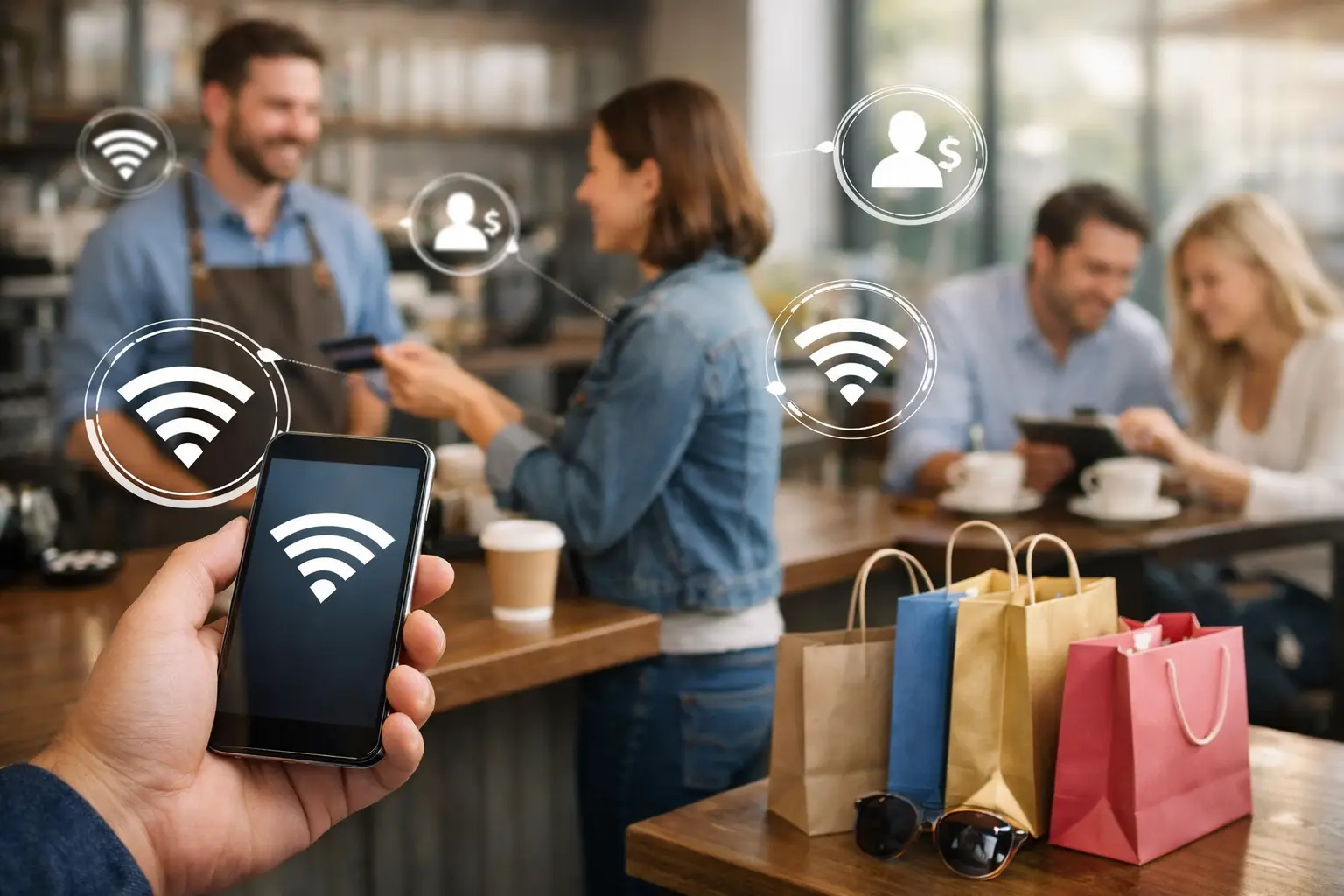
A guest who connects to your WiFi has already raised their hand. They are in your restaurant, hotel, store, clinic, or venue right now, with a reason to be there. Knowing how to build WiFi audiences turns that otherwise anonymous visit into a permission-based opportunity to continue the conversation after they leave.
This is not about collecting contacts for the sake of a bigger database. A useful WiFi audience connects first-party customer data with visit behavior, campaign timing, and a clear commercial goal. Done well, it gives physical businesses a lower-cost way to promote return visits, fill slower periods, build loyalty, and make digital advertising work harder.
Start with a business outcome, not a login screen
The captive portal is the customer-facing part of WiFi marketing, but it should not be the starting point for your strategy. First decide what a connected guest should help you accomplish. A quick-service restaurant may want to drive lunch repeat visits. A hotel may want to increase direct booking and on-property spend. A retailer may want to identify shoppers by location and product interest. An airport lounge may focus on service updates and future access offers.
That objective determines what information to request, how to segment it, and what communications to send later. When the goal is vague, operators often ask for too much data at sign-in and then send the same promotion to everyone. That creates friction at the door and weakens engagement after the visit.
A better approach is to capture the minimum information needed to begin a relevant relationship. For many venues, that means an email address or mobile number, clear marketing consent, a preferred language, and basic visit data such as location, date, and time. Additional questions can be introduced carefully when they create a visible benefit for the guest.
How to build WiFi audiences with a high-converting portal
Your guest WiFi portal should feel like part of the venue experience, not a technical obstacle. Use your branding, make the value exchange obvious, and keep the connection process short. “Connect for free WiFi and receive member-only offers” is more compelling than a generic form that gives guests no reason to share their details.
Authentication options matter. Social sign-in can reduce friction, while email or SMS sign-in may provide a more direct path to owned contact data. The right choice depends on your audience and your follow-up plan. A casual cafe may prioritize a fast email login; a hospitality property with a loyalty program may use more detailed enrollment fields. Requiring several form fields from a customer who only needs a connection for 20 minutes is usually a poor trade-off.
Consent must be clear and separate from access where required. Guests should understand what they are agreeing to, the type of messages they may receive, and how to opt out. Email, SMS, and WhatsApp each have different consent and communication requirements. Treat compliance as part of customer experience, not a legal checkbox added at the end of deployment.
A strong portal can also collect declared preferences without feeling intrusive. A hotel might ask whether a guest is interested in dining, spa services, or local experiences. A shopping center could invite visitors to select categories such as fashion, family activities, or dining. Those choices create more useful segments than a contact list organized only by the date of sign-in.
Turn connection data into segments your team can use
The difference between a contact database and an audience is context. Your WiFi platform should attach each authenticated guest to meaningful attributes: venue, brand, visit frequency, last visit, dwell time where available, device behavior, and consent status. Multi-location businesses should also retain location-level data, because an offer from a store 30 miles away is rarely relevant.
Start with segments that support immediate campaigns. For example, a restaurant group can separate first-time visitors from repeat guests. A retailer can create an audience of shoppers who visited a specific location during a weekend event. A hotel can identify guests who connected during their stay and are eligible for post-stay feedback or a return offer.
As the database grows, build segments around behavior rather than broad demographics alone. High-frequency visitors, guests absent for 30 days, visitors to a newly opened location, and people who engaged with a prior promotion all deserve different messaging. Segmentation makes your marketing more relevant while reducing wasted sends and advertising spend.
For operators with multiple brands or properties, audience governance is equally important. Define which teams can access which locations, how data is labeled, and whether contacts can receive communications from related brands. Centralized cloud management makes this easier, but it still requires commercial rules. A corporate marketing team needs visibility across the estate; local managers need practical controls without being able to overwrite brand-wide standards.
Build automation around the moments that matter
The best follow-up is timely. A guest who connected yesterday is more likely to recognize your brand than someone who visited six months ago. Automated workflows make that timing repeatable without asking staff to export lists or send campaigns manually.
A simple welcome sequence can thank a new guest, introduce loyalty benefits, and offer an incentive for a second visit. For a restaurant, that may be a weekday offer delivered a few days after the first connection. For a retailer, it may be a product category message tied to the store they visited. For a hotel, it may be a post-stay message that requests feedback before presenting a direct-booking benefit.
Re-engagement workflows are equally valuable. If a previously active guest has not returned within a defined period, send a message with a reason to come back. The offer should fit the economics of the business. A high-value hotel guest may justify a personalized concierge message through WhatsApp, while a high-volume coffee shop may use a simple email incentive for an off-peak visit.
Do not automate every possible message. Frequency caps, suppression rules, and opt-out management protect customer trust. A guest who has made a purchase may not need the same acquisition promotion they received before converting. Your system should recognize that change and move them into the next relevant journey.
Extend WiFi audiences into paid media carefully
First-party WiFi data can also improve remarketing. With appropriate consent and proper platform configuration, businesses can create audience strategies for channels such as Facebook and Google, then measure whether campaigns drive visits or additional engagement. This is especially useful when advertising costs are rising and generic targeting is becoming less reliable.
The value is not simply showing more ads. It is reducing guesswork. A mall can promote an event to recent visitors rather than a broad geographic audience. A restaurant can exclude customers who visited in the last few days and focus spend on lapsed guests. A multi-location brand can tailor creative by market instead of running one generic campaign across every store.
Measurement should connect activity to business decisions. Track portal conversion rate, consent rate, audience growth, campaign engagement, return visits where measurable, redemption, and revenue attributable to promotions. No single metric tells the whole story. A large contact capture rate is not useful if the contacts never engage, just as a high email open rate means little if offers do not influence visits or sales.
Make deployment operationally reliable
Audience-building fails when guest WiFi is unreliable, staff cannot explain it, or the marketing system is disconnected from the network. Hardware compatibility, remote configuration, branded portal setup, and dashboard training all affect results. A pilot at one or two locations can expose operational issues before a broader rollout.
Train staff on a short, practical script. They do not need to become network experts. They should know how guests connect, what the benefit is, and where to direct someone who needs help. At the same time, marketing teams need a documented process for approving campaigns, managing consent, reviewing reports, and responding to customer requests.
Wifi Marketing helps businesses combine these operational pieces into a managed WiFi marketing program, from network configuration and captive portals to segmentation, automation, analytics, and messaging. The technology matters, but consistent execution is what turns it into a revenue channel.
Your first audience does not need to be large to be valuable. Start with one location, one consented data path, and one campaign designed for a clear return-visit moment. When guests see useful value and your team can measure the response, WiFi stops being a cost of doing business and starts becoming a practical customer growth asset.
Comments are closed