A hotel guest checks out on Sunday, a restaurant regular has not returned in three weeks, and a shopper leaves a store without buying. The value of those visits depends on what happens next. In the SMS versus push notifications decision, the best channel is not the one with the newest feature. It is the one that can reach the right customer, with the right message, at a moment that can produce revenue.
For physical businesses, both channels can strengthen loyalty, increase repeat visits, and make guest data more useful. But they operate very differently. SMS can reach a customer directly on nearly any mobile phone. Push notifications can be highly contextual and cost-efficient, but generally require an installed app and explicit notification permission. Understanding that distinction prevents businesses from investing in campaigns that look good in a dashboard but fail to generate action.
SMS Versus Push Notifications: The Core Difference
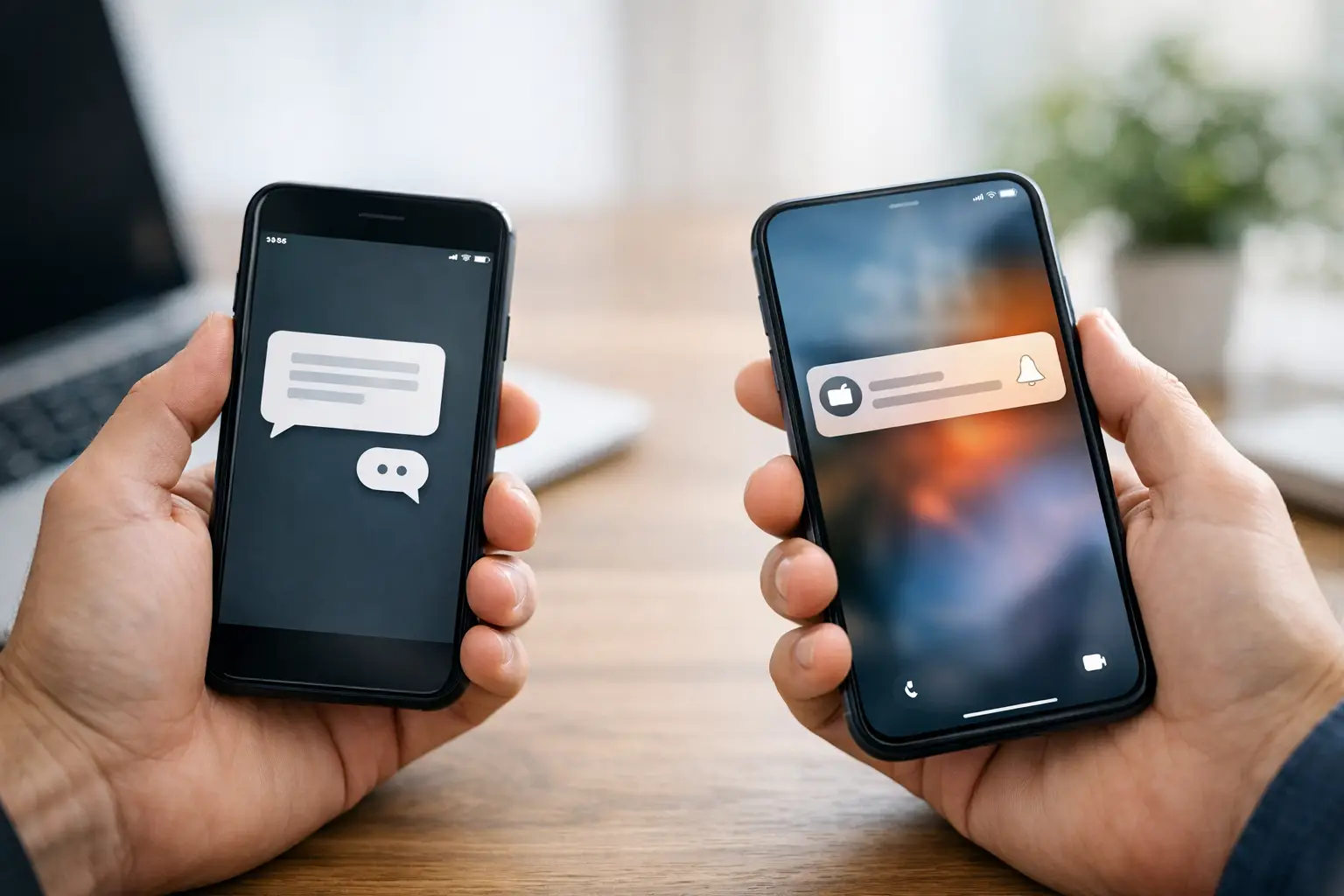
SMS is a text message delivered through the mobile carrier network. A customer does not need to install an app, create a new account, or be connected to Wi-Fi when the message is sent. This makes SMS especially useful for guest-facing businesses that want to reconnect with visitors after they leave the venue.
Push notifications are messages sent by a mobile application to a phone or browser. They can appear on a lock screen, in a notification center, or inside an app experience. Push is effective when customers already use an app regularly, such as a hotel loyalty app, retail app, transit app, or ordering platform.
The operational difference is significant. A restaurant that captures opted-in phone numbers through a guest Wi-Fi portal can begin building SMS campaigns without asking guests to download anything. A national retailer with an established shopping app may use push to alert active app users about local inventory, rewards, or curbside pickup status.
Neither channel automatically outperforms the other. The practical question is whether your business has the consent, customer relationship, technology, and campaign objective required to use each channel well.
When SMS Is the Better Business Channel
SMS is built for reach and immediacy. It is often the stronger choice when a business needs to communicate with a broad base of opted-in customers, including people who may never install a branded app.
This matters for hotels, restaurants, retail locations, malls, healthcare facilities, and transportation venues. These businesses interact with many visitors who are willing to use free Wi-Fi but have little reason to download a separate app for a single visit. A captive portal can turn that Wi-Fi interaction into a permission-based customer record, including contact details, visit behavior, preferred location, and marketing consent.
Once consent is captured, SMS can support high-value use cases such as a weekday lunch offer for past restaurant guests, a return-stay incentive for hotel visitors, an appointment reminder, or a limited-time promotion tied to a nearby store. Because text messages are familiar and visible, they are well suited to time-sensitive communication.
SMS also works when the customer journey continues beyond the venue. A guest can receive a follow-up after checkout, a loyalty offer after several weeks of inactivity, or a review request after a confirmed purchase. With segmentation, businesses can avoid sending the same message to every contact and instead target audiences based on location, visit frequency, customer status, or campaign engagement.
The trade-off is that SMS has direct messaging costs and strict compliance obligations. Businesses need clear opt-in language, recordkeeping, appropriate sending hours, and a simple way to opt out. In the United States, SMS campaigns should be designed around TCPA requirements and applicable carrier rules. Treating consent as a marketing asset rather than a checkbox protects the brand and improves list quality.
Where Push Notifications Have an Advantage
Push notifications are powerful when an app is already part of the customer experience. They can be fast, personalized, and inexpensive to send at scale once the app infrastructure is in place. They also support richer interactions than traditional SMS, including deep links that open a specific screen, loyalty balance alerts, order status updates, and location-aware messages.
For example, a retail brand with a strong mobile app can send a push notification to a customer who has saved items in a cart. A hotel can notify a loyalty member that mobile check-in is available. A transit provider can send service updates to riders who have chosen a route or station. These are useful communications because the app already provides a clear reason for the customer to engage.
Push can also reduce message fatigue when used for in-app utility rather than constant promotion. A customer may welcome an alert that their order is ready or that a gate has changed. That same customer may disable notifications after receiving too many generic discounts.
The limitation is adoption. A push campaign cannot reach someone who has not downloaded the app or denied notification permission. For many local businesses, that creates a small addressable audience compared with the full number of guests walking through the door. Browser push has similar permission challenges and should not be treated as a replacement for a durable, consented customer contact strategy.
Choose Based on the Customer Journey
Channel selection should start with the desired customer action. If the goal is to bring back a lapsed diner, fill a slow service period, confirm an appointment, or promote a local event, SMS is usually the more reliable choice. It reaches customers without assuming app adoption and can connect an in-person visit to a direct follow-up campaign.
If the goal is to support an active digital experience, push may be the better fit. It is particularly effective for real-time service communications, loyalty app engagement, order management, and product features that require the customer to open the app.
Many organizations need both. SMS can acquire and re-engage customers across the broader opted-in database, while push supports the more engaged segment that has installed an app. The channels should have different jobs, not compete for the same generic message.
A hotel, for instance, might use SMS to send an opt-in welcome offer before a future stay and push notifications for mobile key updates during an active reservation. A restaurant group could use SMS to invite guests back after a Wi-Fi visit, then use push to alert loyalty-app members that a reward is about to expire. This is a coordinated communications strategy, not a channel preference.
Make First-Party Data the Starting Point
The real advantage does not come from sending more messages. It comes from knowing who visited, where they visited, how often they return, and which messages influence behavior. Guest Wi-Fi can provide the bridge between physical traffic and digital engagement by capturing permission-based first-party data at the point of visit.
That data becomes more valuable when it is organized across locations and connected to automation. A multi-location restaurant can create separate audiences for guests who visit downtown versus suburban sites. A retailer can identify repeat visitors who have not purchased recently. A hotel operator can separate local event guests from business travelers and adjust offers accordingly.
Wifi Marketing helps businesses turn guest Wi-Fi into this type of measurable customer communication channel. Through captive portals, data capture, segmentation, and automated outreach, operators can build campaigns around actual visit behavior instead of relying solely on expensive paid advertising or unconnected email lists.
Build Campaigns That Respect Attention
SMS and push notifications are both interruptive channels. That is why relevance matters more than volume. A campaign should give the recipient a clear reason to act now: a useful update, a timely offer, a loyalty benefit, or a service-related reminder.
Start with a small number of high-intent automations. Send a welcome message after Wi-Fi registration, a return-visit offer after a defined period of inactivity, and a loyalty message after repeat visits. Measure delivery, opt-outs, clicks where available, redemption, and the incremental revenue connected to each audience.
Avoid sending every promotion to every contact. Frequency caps, location-based segmentation, and suppression rules for recent purchasers protect customer trust. If an offer applies only to a specific venue, the message should say so. If a customer has already redeemed it, the automation should stop.
For businesses using WhatsApp as part of a concierge or service experience, the same principle applies. Use the channel customers selected for helpful, expected communication, then keep marketing outreach permission-based and relevant to the relationship.
The most productive next step is to map one customer journey from venue visit to repeat purchase. Identify what data you can capture with permission, what action you want the customer to take, and which message channel removes the most friction. That exercise will usually make the SMS versus push notifications choice clear.