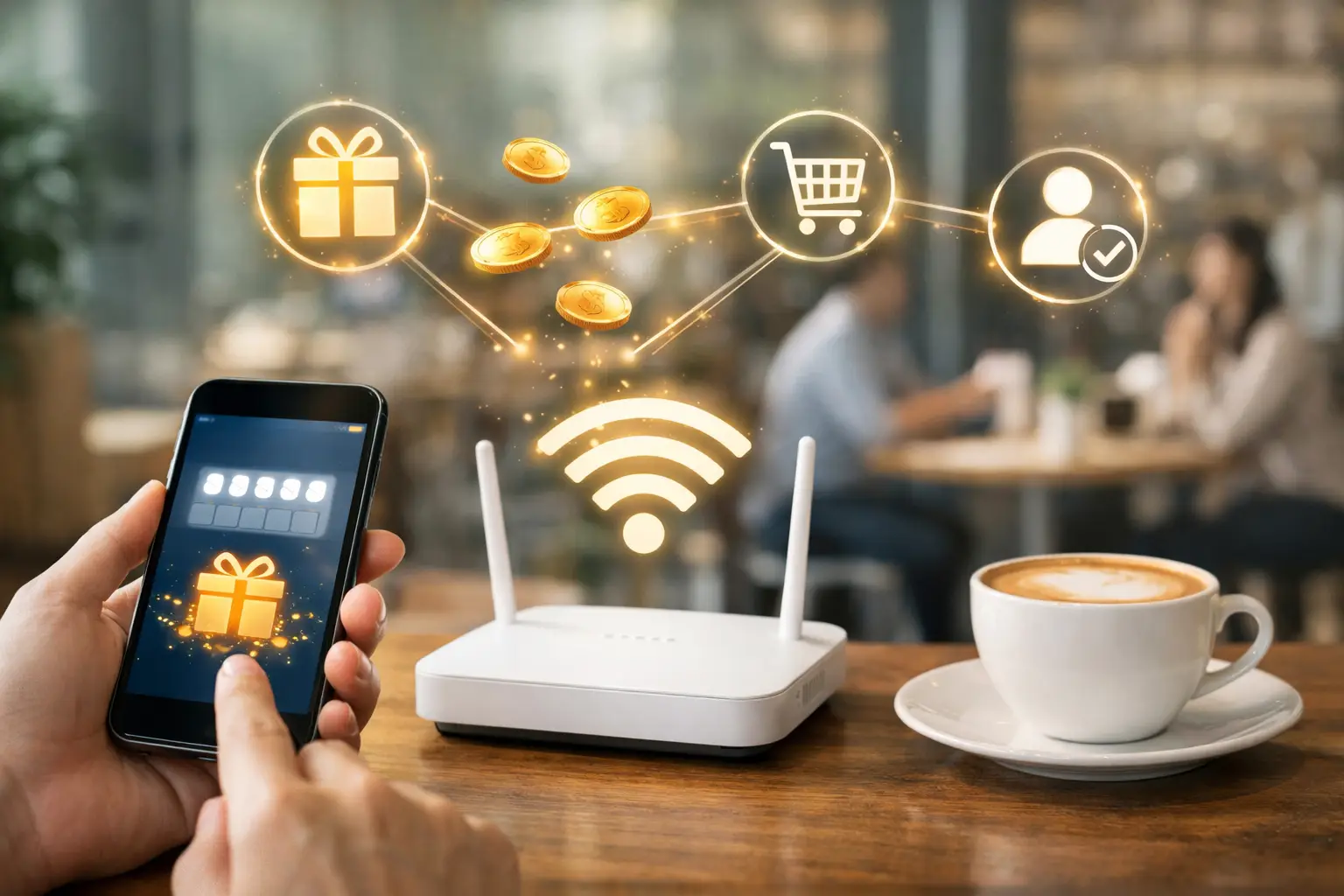
A guest connects to Wi-Fi at your restaurant, hotel, store, or venue. That simple moment can become the start of a measurable retention program instead of an anonymous internet session. When you automate loyalty rewards through guest Wi-Fi, you can recognize returning visitors, trigger relevant offers, and build first-party customer data without placing more work on frontline staff.
For physical businesses, loyalty often breaks down after the first transaction. A customer enjoys the experience, leaves, and is never contacted again. Advertising then becomes the expensive answer to a problem that better data and smarter automation could have prevented. Guest Wi-Fi gives operators a practical way to connect on-site behavior with digital follow-up.
Why automate loyalty rewards instead of managing them manually?
Manual loyalty programs work only until participation grows. Staff may forget to mention the program during busy periods, customers lose physical cards, and marketing teams spend time exporting lists and sending one-off campaigns. The result is inconsistent engagement and limited visibility into whether rewards actually produce return visits.
Automation changes the operating model. A customer can enter through a branded Wi-Fi portal, provide consent and contact details, and receive communications based on their visit history or profile. The system handles the recurring work: identifying audiences, applying eligibility rules, sending messages, and recording results.
That does not mean every customer should receive the same reward. A first-time cafe guest may need a reason to return within seven days. A frequent hotel visitor may value a room upgrade offer, late checkout, or a personalized concierge message on WhatsApp. A retail customer who visits repeatedly but has not purchased recently may respond better to a limited-time incentive than a generic points reminder.
The value is not simply fewer manual tasks. It is a more consistent customer experience and a clearer path from physical foot traffic to repeat revenue.
Build loyalty around the customer data you can actually use
A loyalty program is only as useful as the data behind it. Traditional point systems may track transactions, but they often miss valuable context: when a visitor arrived, how often they returned, which location they visited, and whether they engaged with previous campaigns.
A guest Wi-Fi platform can capture permission-based customer data at the point of visit. Depending on the portal configuration and consent requirements, that may include a name, email address, phone number, birthday, preferred language, visit frequency, location, and device behavior. This creates a first-party audience that the business controls rather than an audience rented from an advertising platform.
For multi-location operators, location-level data matters. A customer who frequently visits one restaurant location should not receive a reward that can only be redeemed across town. A hotel group can distinguish local guests from travelers. A mall operator can create campaigns around specific zones, events, or tenant categories.
Data collection must remain purposeful. Asking for too much information at login can lower conversion, while asking for too little limits segmentation later. Start with the minimum information needed to communicate and reward customers, then enrich profiles through preferences, repeat visits, and campaign interactions.
Use consent as part of the value exchange
Customers are more willing to share information when the benefit is clear. Explain that Wi-Fi access, member-only offers, birthday perks, or faster service are tied to enrollment. Consent language should be visible, specific, and aligned with applicable email and SMS requirements.
This is also where automated programs need discipline. Email, SMS, and WhatsApp each have different permission and messaging expectations. The best program uses the channel a customer has agreed to receive, gives them a meaningful reason to engage, and makes opting out straightforward.
How to automate loyalty rewards in a practical workflow
The strongest programs begin with simple rules linked to real business objectives. Avoid launching with dozens of segments and complex point calculations. First prove that automated follow-up can increase second visits, recover inactive guests, or raise average transaction value.
A practical workflow starts when a visitor joins guest Wi-Fi through a branded captive portal. Their contact information and consent status enter the customer database. From there, automation can classify the visitor by whether they are new, returning, frequent, inactive, or tied to a particular location.
A new visitor might receive a welcome email shortly after their visit with a return offer valid for the next 10 days. A returning visitor could receive a reward after their third Wi-Fi visit, such as a complimentary add-on, early access to an event, or a discount above a minimum spend. An inactive visitor may receive a reactivation message after 30 or 60 days without a detected visit.
The timing should fit the business cycle. Quick-service restaurants often benefit from short redemption windows that encourage another visit this week. Hotels may use pre-arrival, in-stay, and post-stay sequences. Retailers may align rewards with seasonal launches, local events, or replenishment periods. Transportation and public venues can use location and time-based messages to guide guests toward relevant services while they are on site.
Choose rewards that protect margin
Discounts are easy to understand, but they are not always the best loyalty incentive. If a customer would have returned anyway, a broad discount reduces margin without changing behavior. Consider rewards that add value while controlling cost: a free upgrade, a bonus item with a qualifying purchase, priority access, a bundled service, or a partner benefit.
For businesses with transactional integrations, reward eligibility can be based on spend and purchase behavior. For venues that do not have direct point-of-sale integration, repeat Wi-Fi visits can still serve as a useful engagement signal. It is not a perfect substitute for transaction data, particularly in high-traffic public environments, but it can support retention campaigns with far less operational friction.
Segment before you send
Automation performs poorly when it treats every contact as identical. A message sent to every Wi-Fi user may create short-term activity, but it can also train customers to wait for discounts or opt out because the offers are irrelevant.
Segmenting by visit frequency, location, customer status, campaign engagement, and stated preferences makes rewards more credible. A frequent guest should feel recognized. A first-time visitor should receive a clear next step. A customer who has ignored three promotional emails may need a different channel, a stronger offer, or fewer messages.
For example, a restaurant group could target lunch regulars with weekday offers and dinner guests with reservation-driven promotions. A hotel can separate business travelers from leisure visitors based on stay patterns and preferences. A shopping center can build audiences around event attendance, repeat connectivity, and opted-in interests.
Wifi Marketing helps operators configure these journeys through branded Wi-Fi access, data capture, cloud-based automation, and targeted outreach across email, SMS, WhatsApp, and remarketing audiences. The objective is operational: turn information collected on premises into campaigns that can be measured, adjusted, and scaled.
Measure behavior, not just enrollments
A large loyalty database is not automatically a successful one. The numbers that matter are whether enrolled customers return more often, redeem offers at profitable rates, spend more over time, and remain engaged without excessive discounting.
Track enrollment rate from Wi-Fi sessions, consent rate, repeat visit rate, offer delivery, open and click performance where applicable, redemption rate, and revenue associated with each campaign. Compare automated audiences against a control group when possible. If customers who receive a second-visit reward return meaningfully more often than similar customers who do not, the program has evidence of incremental value.
Be careful with attribution. A customer may connect to Wi-Fi but purchase later without using a coupon. Another may redeem an offer they would have used anyway. No single metric tells the full story. Review campaign performance alongside visit patterns, transaction data when available, and margin impact.
Common mistakes that weaken automated rewards
The first mistake is overcomplicating the launch. A loyalty program does not need a mobile app, extensive points catalog, or custom development to create value. A focused welcome offer, a repeat-visit trigger, and an inactive-customer campaign can establish a strong foundation.
The second is setting rewards without redemption controls. Every offer should have clear rules, expiration dates, location eligibility, and a process for staff to verify use when needed. If employees do not understand the reward, customers will not experience the program as promised.
The third is treating automation as a set-it-and-forget-it project. Customer behavior changes, offers fatigue, and locations perform differently. Review results regularly, test message timing and incentive types, and retire campaigns that do not create profitable action.
A well-designed loyalty program should make the next visit feel timely and worthwhile, not automated for its own sake. Start with the customer behavior you most want to influence, build one reliable trigger around it, and let the results determine what you automate next.