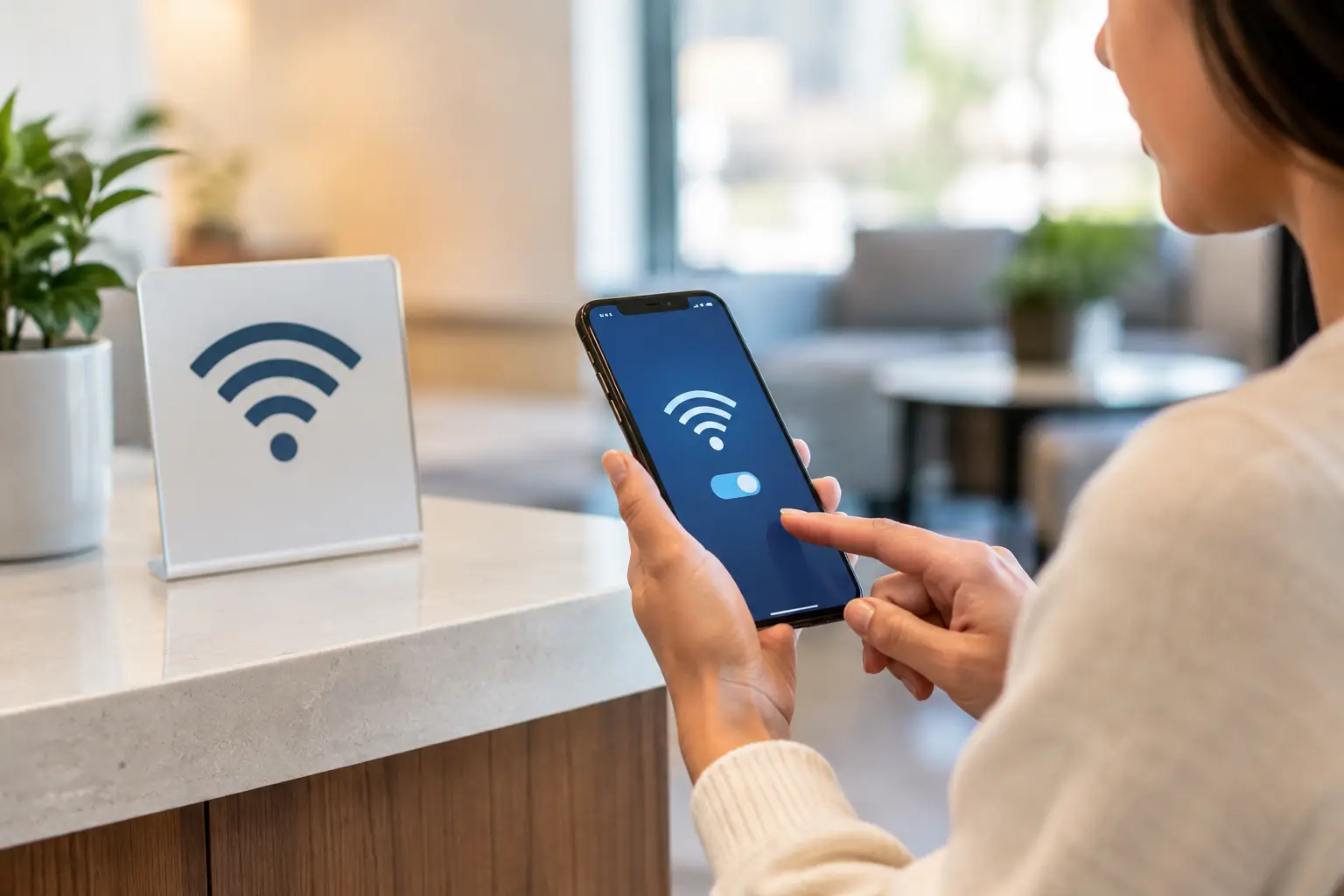

A guest walks into a restaurant, connects to Wi-Fi, looks at the menu, and leaves without ordering. Another guest makes a purchase but never joins the Wi-Fi network. Both visits matter, but they tell very different stories. WiFi data versus POS data is not a question of which source is better. It is a question of which customer decisions each source can help your business make.
For hotels, restaurants, retailers, healthcare facilities, transit locations, and public venues, POS data records transactions. Guest Wi-Fi data captures engagement around the physical visit, including people who may not buy on that day. Used together, they give operators a clearer path from foot traffic to follow-up, loyalty, and measurable revenue.
WiFi Data Versus POS Data: The Core Difference
POS data is transactional. It typically tells you what was purchased, when it was purchased, how much was spent, which location processed the sale, and sometimes which employee, service type, or product category was involved. It is essential for understanding revenue performance, inventory movement, average ticket size, and sales trends.
Wi-Fi data is visit and engagement data. When guests opt in through a captive portal, a Wi-Fi marketing platform can capture permissioned contact details and connect them to the time, location, and frequency of their visits. Depending on the configured login flow and consent language, the business may also collect preferences, birthdays, survey responses, language preferences, or other useful first-party data.
The distinction matters because a POS system usually sees the completed sale. Guest Wi-Fi can see the opportunity around the sale: the visitor who arrived, stayed, returned, interacted with a promotion, or left before converting.
Neither dataset is complete on its own. A quick-service restaurant that relies only on POS reports can see lunch revenue fall, but may not know whether fewer people entered, repeat guests visited less often, or guests came in but chose not to purchase. A Wi-Fi dashboard may show steady visits, but without transaction data, it cannot confirm whether a campaign increased spend. Combining the two brings context to both questions.
What POS Data Does Best
POS data should remain the financial source of truth. It is the right dataset for measuring sales performance and understanding what customers buy.
For a retail operator, POS records can reveal that a particular product category performs better on weekends. For a hotel restaurant, they can show breakfast covers, beverage attach rates, and average spend by daypart. For a multi-location brand, they can help compare store performance and identify locations that need operational attention.
POS data is also valuable for customer value analysis when purchases can be tied to an identifiable customer through a loyalty account, receipt capture, online order, reservation, or integrated customer profile. That connection can help a brand recognize high-value buyers, reward frequent purchasers, and avoid wasting discounts on customers who would have purchased at full price anyway.
There are limits. Many point-of-sale transactions are anonymous. A card payment may confirm that a sale happened, but it does not necessarily create a usable permissioned marketing relationship. POS data can also miss non-buying visitors, companions who influenced the purchase, and guests who visited a venue for an event, appointment, pickup, or research trip.
What Wi-Fi Data Does Best
Guest Wi-Fi turns an existing connectivity expense into a first-party marketing channel. A properly configured captive portal gives visitors a reason to identify themselves before connecting, while the business can present consent options, offers, surveys, brand messaging, or loyalty enrollment prompts.
The commercial advantage is timing. The guest is physically present, on a mobile device, and already interacting with the venue. That creates opportunities that a post-purchase email alone cannot match.
A venue can use Wi-Fi data to identify first-time versus returning visitors, build audiences by location, and trigger communications based on visit behavior. A mall can promote a seasonal event to recent visitors. A restaurant can send a return offer to guests who have not connected again within 30 days. A hotel can provide pre-arrival or on-property information through an intelligent customized concierge on WhatsApp, reducing front-desk pressure while improving the guest experience.
Wi-Fi data is particularly effective for solving a common marketing problem: businesses often spend heavily to attract people once, then lose the ability to reach them again. When a guest provides valid marketing consent, Wi-Fi enrollment creates a direct channel for email, SMS, WhatsApp, and remarketing audiences. That can reduce dependence on continually paying for the same audience through broad acquisition campaigns.
Still, Wi-Fi data has its own limitations. Not every visitor connects, some guests use cellular service, and a device connection does not prove a purchase. The data must also be collected transparently, with clear consent choices and responsible retention practices. A larger database is not automatically better if the contacts are not permissioned, accurate, or relevant.
Where the Data Becomes More Valuable Together
The strongest strategy connects visitor behavior to commercial outcomes. This does not always require a perfect one-to-one match between every device and every receipt. Even location-level, time-based, and campaign-level analysis can produce useful decisions.
Consider a coffee chain launching an afternoon offer through its guest Wi-Fi portal. Wi-Fi data can show how many eligible guests saw the offer, clicked it, and returned within the following weeks. POS data can show whether afternoon transactions, average order values, or promoted product sales changed during the campaign period. Together, the business can evaluate whether the message produced incremental revenue rather than simply engagement.
For businesses with customer identity available in both systems, the opportunity becomes more precise. A marketer can segment guests who visited frequently but have not purchased recently, or customers who purchased once but never returned. They can then tailor the message: a loyalty benefit for a high-frequency visitor, a personalized product recommendation for a known buyer, or a service-oriented reminder for a hotel guest approaching a future stay.
This approach also improves advertising efficiency. Instead of building remarketing audiences solely from website behavior, a physical business can create permissioned audiences based on real on-site visits. A retailer may promote a new collection to recent in-store visitors. An airport lounge may communicate membership benefits to qualified guests. A hospital cafeteria can promote meal plans to recurring visitors, subject to appropriate privacy policies and restrictions.
Build a Practical Data Strategy Before Adding More Tools
The goal is not to collect every possible field. It is to define the few customer signals that support a clear business outcome.
Start with the question your operation needs to answer. If the challenge is low repeat visitation, focus on visit frequency, last-seen date, consent status, and return campaign performance. If the challenge is low average order value, connect POS category data with targeted promotions and measure redemption or sales lift. If multiple locations compete for attention, track which venues generate the strongest opt-ins, returns, and campaign-driven transactions.
Your data design should include these operational foundations:
- A clear guest Wi-Fi login experience that explains value and collects consent appropriately.
- Consistent location naming and campaign tags across Wi-Fi, POS, CRM, and advertising systems.
- Segments based on behavior, not only broad demographics, such as first-time visitors, frequent visitors, lapsed guests, and high-value buyers.
- Automated messages with a defined trigger, timing, offer, and success metric.
- A reporting process that reviews conversion, repeat visits, revenue impact, opt-outs, and message fatigue.
The technology should support the strategy, not dictate it. Wifi Marketing combines captive portal configuration, cloud-based audience management, automated outreach, pixel-based remarketing, and implementation support so operators can move from connection data to campaigns without building a complex internal stack.
Avoid the Most Common Measurement Mistakes
First, do not treat Wi-Fi logins as revenue. A high opt-in rate is useful, but it is an audience-building metric. Track what happens after the opt-in: return visits, bookings, purchases, offer redemptions, and long-term customer value.
Second, do not expect POS data to explain every missed opportunity. Sales reports reveal outcomes, not always intent. If traffic is stable but transactions decline, Wi-Fi engagement, dwell time, campaign interaction, and guest feedback may point to the real issue.
Third, avoid sending the same promotion to every contact. A guest who visited yesterday needs a different message from someone who has been absent for 90 days. Relevance protects margins, improves response rates, and reduces unsubscribes.
Finally, respect privacy as part of performance. Explain what guests are signing up for, honor communication preferences, secure the data, and limit access to teams that need it. Trust is not separate from retention marketing. It is what makes repeat communication sustainable.
The most valuable customer view is not a spreadsheet full of disconnected records. It is a working picture of who visited, who bought, who may return, and what message gives them a credible reason to do so. When Wi-Fi and POS data support that picture, guest Wi-Fi becomes more than an amenity. It becomes a measurable part of the revenue operation.