
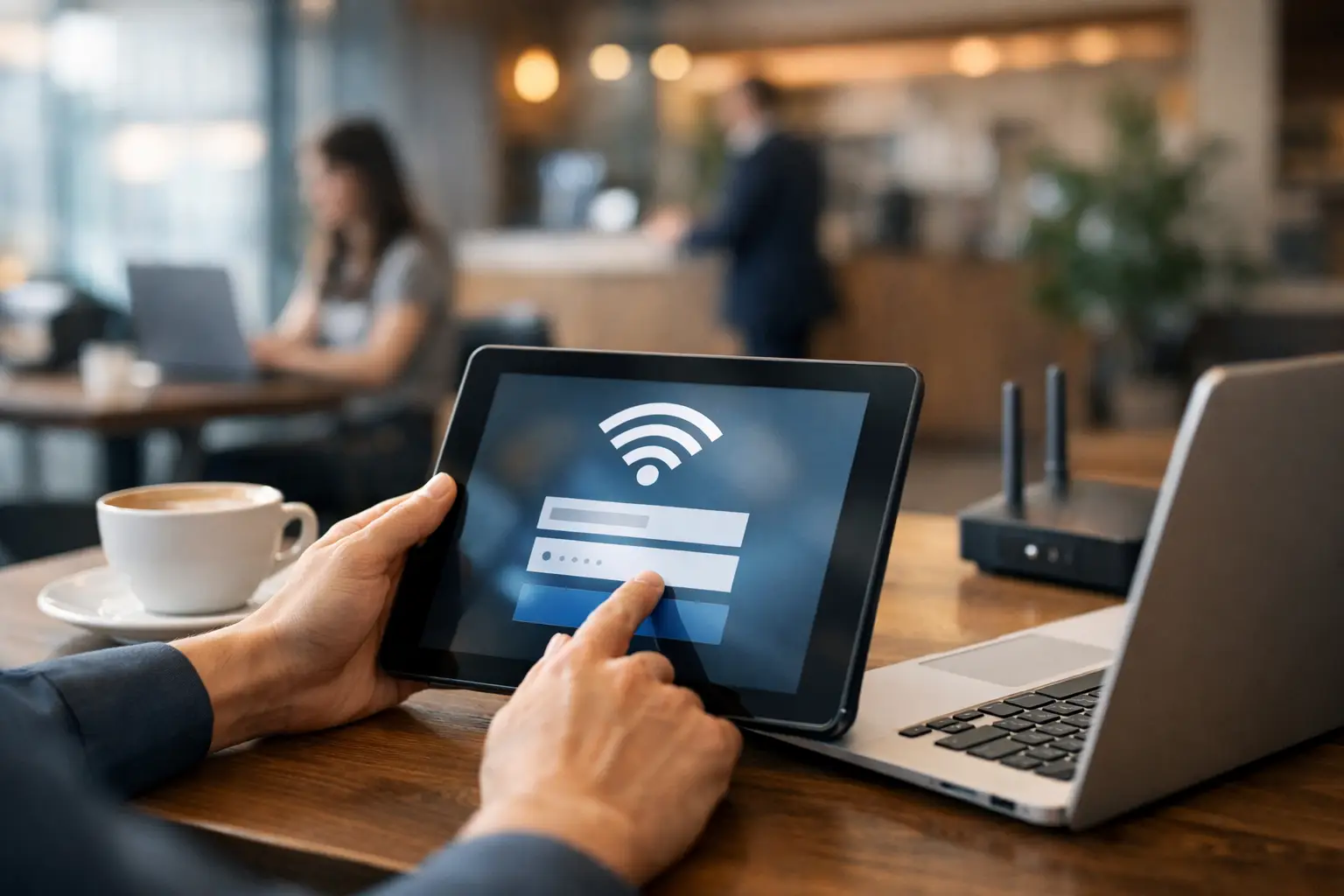
A guest walks into your hotel lobby, restaurant, store, or waiting area and asks for the WiFi password. That moment is more valuable than it looks. Can guest WiFi collect emails? Yes – when the network uses a captive portal designed to request customer details and record clear marketing consent before granting access.
For physical businesses, this turns a utility customers already expect into a practical first-party data channel. Instead of an anonymous visit ending at the door, your team can begin a permission-based relationship that supports retention, targeted offers, loyalty programs, and measurable follow-up.
Can Guest WiFi Collect Emails Legally?
Guest WiFi can collect email addresses, but the method matters. The central requirement is transparency: visitors should understand what information they are providing, why it is being collected, and whether they are agreeing to receive promotional communications.
A properly configured WiFi login page can ask for an email address as part of the access process. It should also present a visible privacy notice and a separate, unambiguous opt-in for marketing messages. Accessing the network and subscribing to marketing are not the same action. Treating them separately protects the customer experience and gives your business a stronger consent record.
The precise compliance requirements depend on your location, customer base, and how you use the data. US businesses should consider applicable state privacy rules, email marketing requirements, and their own industry obligations. Hotels, healthcare-adjacent environments, transportation operators, and public venues may have additional operational considerations. Work with qualified legal counsel to shape your privacy language and retention policy.
From a commercial standpoint, clear consent is not just a compliance exercise. A customer who knowingly chooses to hear from your business is more likely to engage than a contact collected through unclear terms or a forced subscription.
How Email Capture Works on Guest WiFi
The technology behind the process is a captive portal. This is the branded page that appears when a visitor connects to your guest network and opens a browser. Rather than sharing a generic password at the counter, the business can present a simple sign-in experience tailored to its goals.
A visitor may enter an email address, confirm a checkbox for offers, and accept the WiFi terms before receiving access. Depending on the configuration, the portal can also support social login, SMS verification, loyalty enrollment, survey questions, voucher delivery, or a returning-visitor login flow.
The information is then passed to a centralized dashboard or connected marketing system. That makes the difference between collecting contacts and actually using them. A spreadsheet of email addresses has limited value. A structured customer profile connected to visit behavior, location, consent status, and campaigns can support useful automation.
For example, a multi-location restaurant can identify first-time visitors who opted into email and send a welcome offer the next day. A hotel can invite guests to join its loyalty program, then follow up after checkout with a return-stay incentive. A retail center can segment contacts by location and promote events or tenant offers relevant to where they visited.
What Information Should You Request?
The best guest WiFi form is usually shorter than operators expect. Every additional field can reduce completion rates, especially when a visitor simply wants to get online quickly. Start with the information required for the immediate goal, then expand only when the value exchange is clear.
For many venues, an email address and a marketing consent option are enough to begin. A first name can make welcome emails more personal. Phone numbers can be valuable for SMS or WhatsApp campaigns, but they require more careful consent language and should not be requested without a clear reason. Asking for age, address, job title, or several survey responses at initial login is rarely justified unless the venue has a defined use case.
The portal should also capture operational data automatically, such as the venue or access point used, date and time of connection, device type, visit frequency, and consent selection. This helps create segments without making the form burdensome.
A practical rule is simple: request data in proportion to the benefit the customer receives. Free high-speed WiFi, an instant coupon, loyalty points, event information, or concierge support can justify a brief sign-in. An unexplained request for extensive personal information cannot.
From Email Address to Revenue Channel
The strongest WiFi marketing programs do not stop at lead capture. They define what happens after the connection.
First, send a prompt welcome email that confirms the value of opting in. This could include a first-visit offer, a link to loyalty enrollment, useful venue information, or an invitation to reply with questions. The message should reflect the customer’s real context. A guest who connected at an airport lounge needs different content than a visitor at a neighborhood café.
Next, build segments based on behavior. A single location might separate new visitors, repeat visitors, frequent visitors, and customers who have not returned in 30, 60, or 90 days. Multi-site operators can segment by specific property, city, store category, or visit pattern. These audiences are more useful than one large, undifferentiated email list.
Then automate follow-up around commercial moments. Restaurants can promote slow-day offers to recent diners. Retailers can announce new arrivals to shoppers who visit specific locations. Hotels can automate pre-arrival guidance, on-property service messages, and post-stay offers. Malls and public venues can communicate event updates or targeted promotions without relying solely on expensive paid media.
With the right integrations, WiFi-captured audiences can also inform remarketing on advertising platforms. This allows businesses to connect physical foot traffic with digital campaign activity, while continuing to respect consent choices and platform rules.
Common Mistakes That Reduce Results
The most common mistake is making the login page feel like a barrier. If the form is slow, confusing, or overloaded with required fields, guests may abandon it, ask staff for help, or use mobile data instead. The portal should load quickly, work well on mobile devices, and make the access path obvious.
Another mistake is burying consent language in dense terms and conditions. Legal language may be necessary, but marketing permission should be clear enough for a customer to understand at a glance. Use an unchecked opt-in box where appropriate, identify the business sending communications, and make unsubscribing straightforward.
Businesses also lose value when data sits in an isolated system. If email records do not flow into your CRM, email platform, or campaign workflows, teams end up managing manual exports and delayed follow-up. That creates avoidable friction and makes performance difficult to measure.
Finally, do not judge the program only by the number of captured emails. Track opt-in rate, valid email rate, welcome-email engagement, repeat visits, offer redemption, and revenue influenced by campaigns. A smaller list of genuinely interested local customers can outperform a large list built with poor consent or weak targeting.
Selecting a Guest WiFi Email Capture Solution
Before choosing a platform, assess both the marketing capabilities and the deployment reality. Your existing access points, network architecture, number of locations, staff resources, and brand requirements all affect the right setup. A solution that supports remote configuration and multi-brand hardware compatibility can reduce implementation complexity for growing operators and channel partners.
Look for customizable captive portals, configurable consent fields, email and messaging automation, audience segmentation, analytics, and integrations with the tools your team already uses. If you operate multiple venues, centralized reporting and location-level controls are essential. If your business serves guests who prefer conversational support, an intelligent WhatsApp concierge can extend the relationship beyond the login page.
Wifi Marketing approaches guest WiFi as a customer communication system, combining portal configuration, data capture, automated outreach, analytics, and implementation support. The goal is not simply to provide internet access. It is to make each connection measurable and commercially useful.
The most effective next step is to map one specific customer journey before building the portal. Choose a high-value moment – a first hotel stay, a first restaurant visit, a retail promotion, or an event check-in – and decide what useful, permission-based communication should happen next. When the follow-up has a clear purpose, email capture becomes a service to the customer as well as a growth asset for the business.
Comments are closed