A concierge chatbot review should begin with a business question, not a technology question: can this system help guests get answers faster while giving your team more opportunities to convert, retain, and understand them? For hotels, restaurants, retail locations, transportation providers, and public venues, a concierge chatbot is valuable only when it improves the guest experience and produces measurable operational or marketing outcomes.
The strongest concierge chatbots do more than respond to common questions. They can guide a hotel guest toward an upgrade, help a restaurant customer confirm wait times, direct a mall visitor to a store, or reconnect with a previous visitor through WhatsApp. The difference is not the chatbot interface. It is the quality of the customer journey behind it.
What a Concierge Chatbot Should Actually Do
A concierge chatbot is a conversational service designed to assist customers before, during, and after an on-site visit. In a practical business setting, it should manage routine questions, deliver relevant information based on customer context, and route complex requests to a human team member when needed.
For a hotel, that might mean answering questions about check-in, breakfast hours, parking, local recommendations, late checkout, and spa availability. For a restaurant, it may involve reservations, menu questions, directions, event details, loyalty offers, or feedback collection. A retail or public venue deployment may focus on wayfinding, store information, promotions, amenities, and service alerts.
The review standard should be higher than “does it answer questions?” A useful system should reduce repetitive staff workload while creating a clear path to revenue-producing actions. If the chatbot only provides static information, it may be convenient, but it is not yet functioning as a growth channel.
Concierge Chatbot Review: The Criteria That Matter
Conversation quality and business accuracy
A concierge chatbot must reflect how your operation actually works. Generic responses are a fast way to frustrate customers and create more work for staff. Review whether the platform can be configured with your hours, policies, services, promotions, venue details, and escalation rules.
It should also handle natural customer language without forcing people through rigid menus. Guests rarely phrase requests exactly as a business expects. Someone might ask, “Can I leave my bags before my room is ready?” rather than “What is your luggage storage policy?” The chatbot should recognize the intent and provide a useful next step.
Accuracy matters especially in industries where information changes often. Hotel availability, restaurant wait times, event schedules, and store promotions should be easy to update. A system that requires technical support for every small operational change can become a bottleneck.
WhatsApp as the service channel
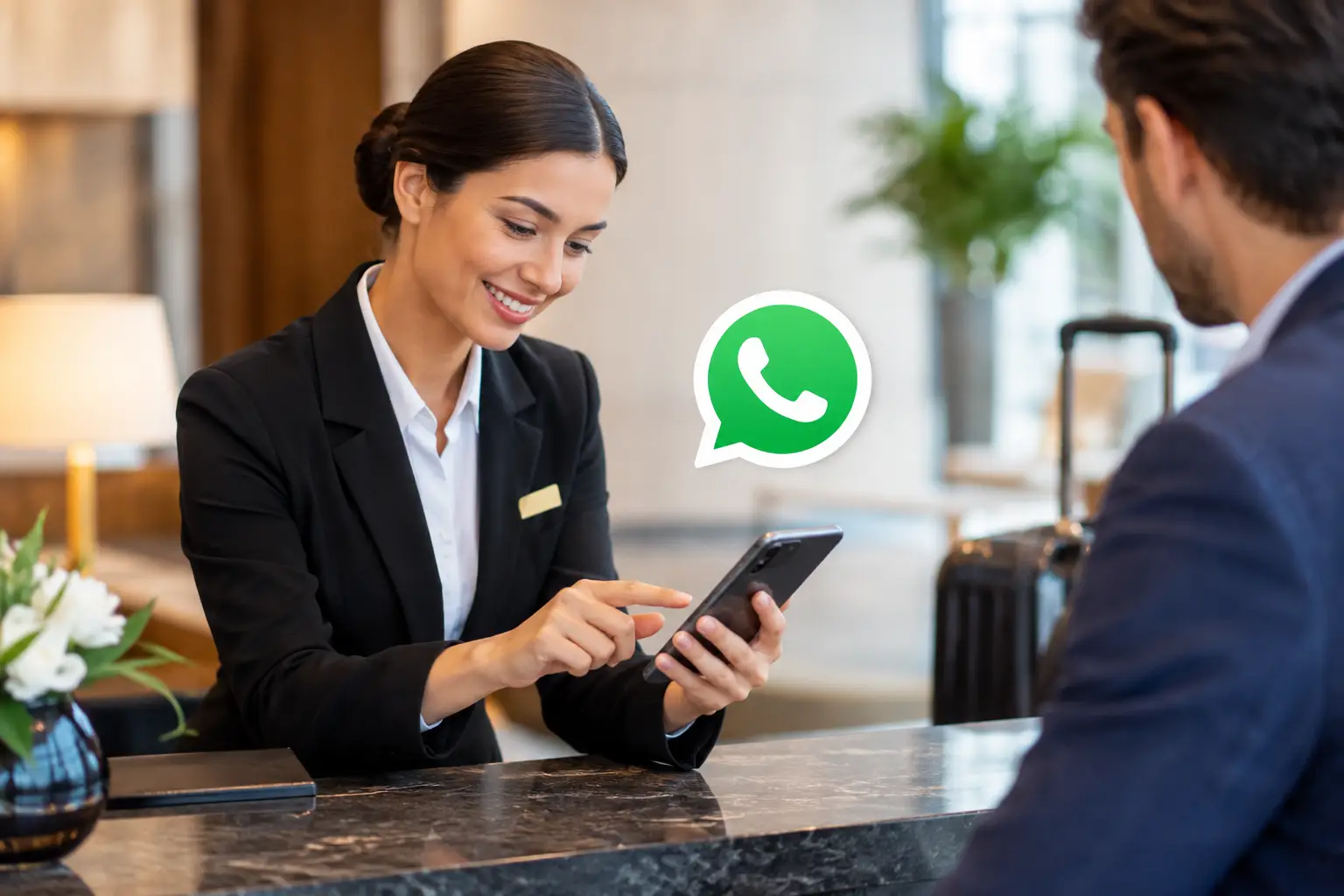
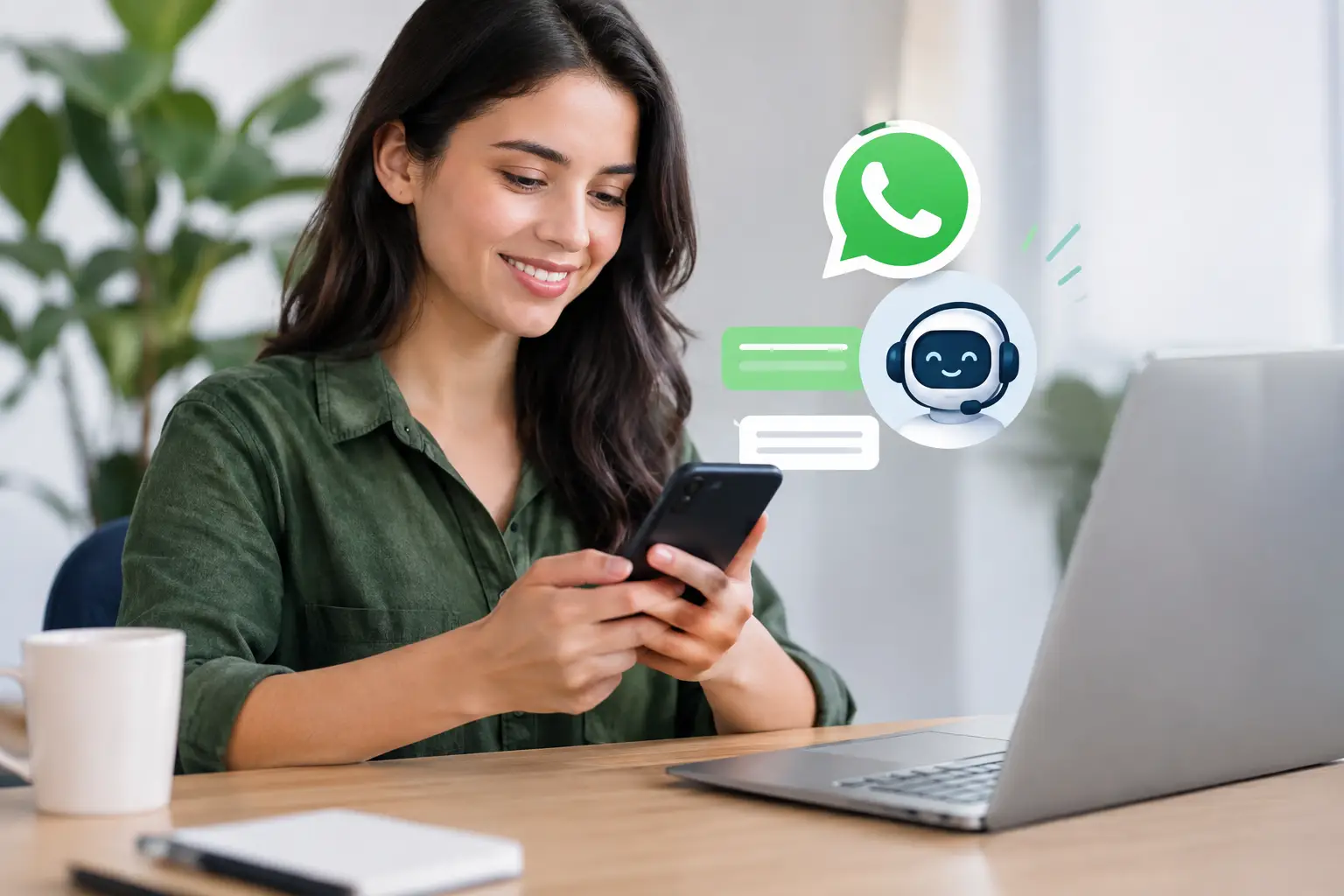
For many guest-facing businesses, WhatsApp is where concierge automation becomes practical. Customers already use it daily, and it creates a direct, familiar communication channel without requiring another app download or account login.
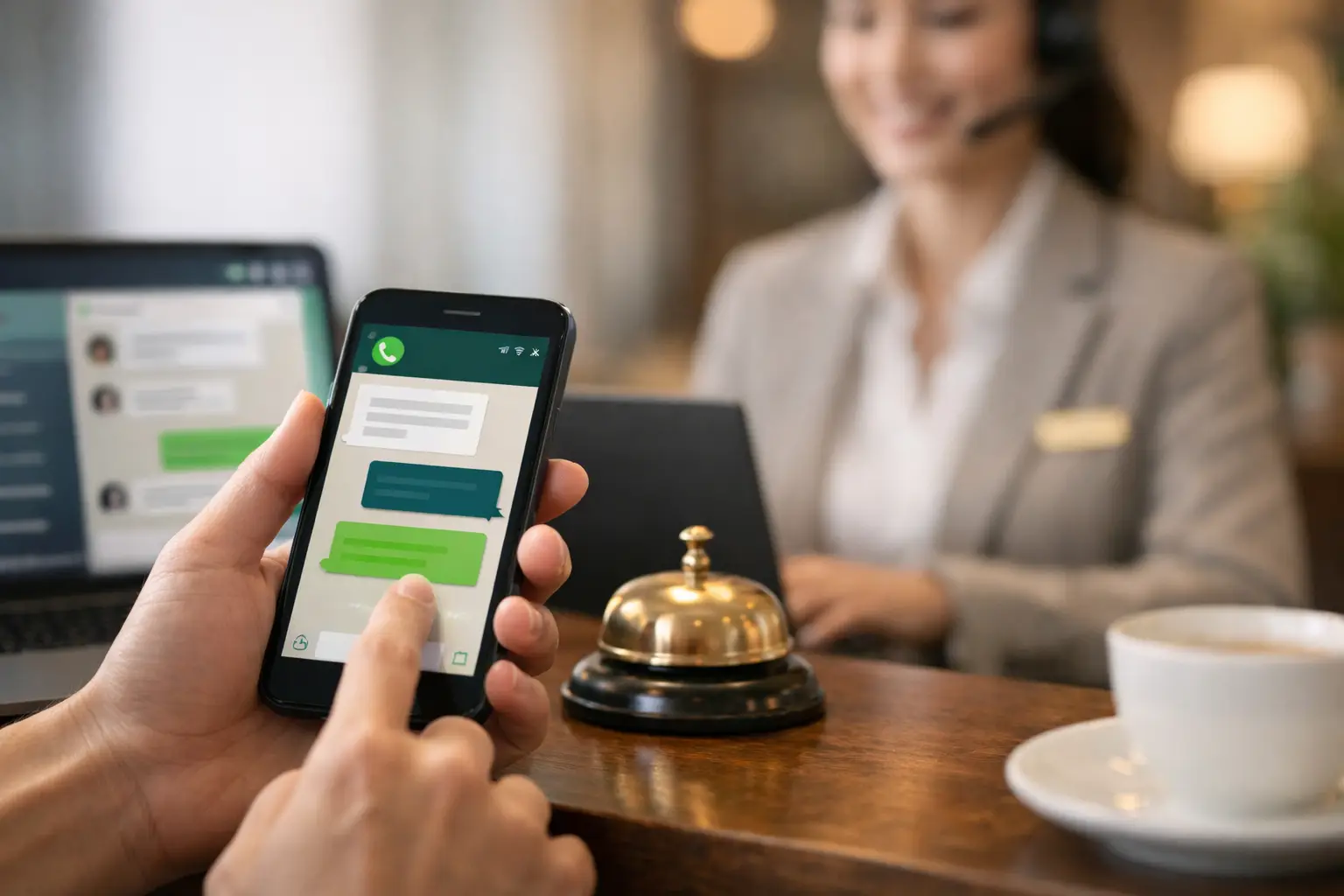
A WhatsApp concierge can support pre-arrival questions, live stay assistance, post-visit feedback, and follow-up promotions from the same conversation thread. This continuity is valuable. A guest who asked about airport transportation before arrival can later receive relevant information about check-in, dining, or departure services without starting over.
However, WhatsApp should not be treated as a broadcast tool alone. The strongest deployments use consent-based messaging, relevant timing, and clear customer value. Sending generic offers to every contact may increase opt-outs and weaken trust. Sending a restaurant offer to someone who visited that location recently, or a return-stay incentive to a past hotel guest, is far more likely to produce a response.
Human handoff and service recovery
No chatbot should pretend it can solve every problem. A delayed room, a billing dispute, an accessibility concern, or a dissatisfied customer requires human judgment. A key part of any concierge chatbot review is examining how the system handles escalation.
The transition should be quick and visible. Customers should not have to repeat their issue when a staff member joins the conversation. Ideally, the employee sees the conversation history, the customer’s request, and relevant context before responding.
This is where operational design matters. Establish clear handoff rules for urgent requests, complaints, high-value sales opportunities, and questions outside the bot’s approved knowledge base. Automation handles volume; people handle exceptions and relationship-critical moments.
Data capture without creating friction
A concierge chatbot can become a valuable first-party data source, but only if data collection feels appropriate to the interaction. Asking for a name, phone number, visit date, preference, or reason for inquiry may be useful when it helps deliver a better response. Asking for too much too soon can cause abandonment.
The best approach is progressive profiling. Collect only the information needed for the immediate request, then build a fuller customer record across future interactions. A hotel guest asking about a local attraction may reveal travel interests. A restaurant customer asking about vegetarian options provides preference data. These signals can support more relevant future communication.
For businesses with guest Wi-Fi, the opportunity is even stronger. When Wi-Fi access, captive portal data capture, and WhatsApp concierge conversations are connected, operators can link physical visitation with digital engagement. That makes segmentation more useful and reduces dependence on expensive, anonymous advertising audiences.
Where Concierge Chatbots Create Revenue
The revenue case depends on the venue and the customer journey. A chatbot is not automatically profitable because it is automated. It becomes commercially valuable when it is positioned at moments where guests need information, reassurance, or a reason to act.
Hotels can use concierge messaging to promote upgrades, early check-in options, dining reservations, late checkout, transportation, and on-property services. Restaurants can convert menu browsing into bookings, promote events during slower periods, and encourage repeat visits after a guest leaves. Retailers and malls can direct shoppers to participating stores, distribute location-based offers, and capture feedback after a visit.
There is also a retention benefit. Many businesses spend heavily to attract customers once, then fail to build a direct relationship. A well-managed concierge conversation creates permission-based contact data and a reason to continue the relationship through personalized outreach.
Wifi Marketing’s customized intelligent concierge service is designed around this operating model, using WhatsApp communication alongside customer data capture, segmentation, and automated follow-up. The objective is not to add another disconnected tool. It is to connect the on-site guest experience with measurable communication and remarketing activity.
Integration Is Often the Deciding Factor
A chatbot can sound impressive in a product demonstration and still create limited value if it operates in isolation. Before selecting a provider, assess whether it can work with the systems your team already uses.
For hotels, that may include property management, booking, CRM, or guest Wi-Fi systems. For restaurants, it may involve reservation tools, point-of-sale data, loyalty platforms, and event calendars. Multi-location brands need centralized management with the flexibility to localize information, offers, and workflows by property or venue.
Integration does not always require a complex enterprise implementation. But it should create a usable flow of information. If customer data remains trapped inside the chatbot, your marketing team cannot segment it effectively. If staff cannot access conversations easily, service teams will avoid using it. If reporting cannot connect conversations to bookings, visits, or sales, leadership will struggle to justify the investment.
Metrics to Review After Launch
The right metrics should reflect both service performance and commercial impact. Track response time, resolution rate, human handoff rate, and the most common customer intents. These measures reveal whether the chatbot is reducing friction or simply redirecting it.
Then measure outcomes connected to your business model: lead capture rate, booking requests, upsell conversions, return visits, offer redemptions, opt-in growth, and campaign revenue. A venue with high conversation volume but no meaningful conversion may need better calls to action, more relevant offers, or a clearer path to staff assistance.
It also helps to review failed conversations regularly. When customers ask questions the bot cannot answer, that is not merely a product limitation. It is often a signal about missing information, unclear policies, or an unmet customer need. Improving these moments over time is what turns an initial chatbot deployment into an effective concierge program.
The Right Fit Depends on the Operation
A concierge chatbot is not a replacement for hospitality, sales expertise, or well-trained staff. It is a system for making those resources more available where they matter most. Businesses with high volumes of repeat questions, frequent guest communication, multiple locations, or limited staff coverage typically see the clearest value.
Smaller operators can benefit too, particularly when they need to respond outside business hours or want a practical way to build a direct customer database. The trade-off is that automation requires ownership. Someone must maintain information, review performance, refine offers, and ensure that human handoffs are handled well.
The best next step is to map the five questions your customers ask most often, the moments where they hesitate before buying, and the customer data your business is currently failing to capture. That is where a concierge chatbot can begin creating value quickly.