
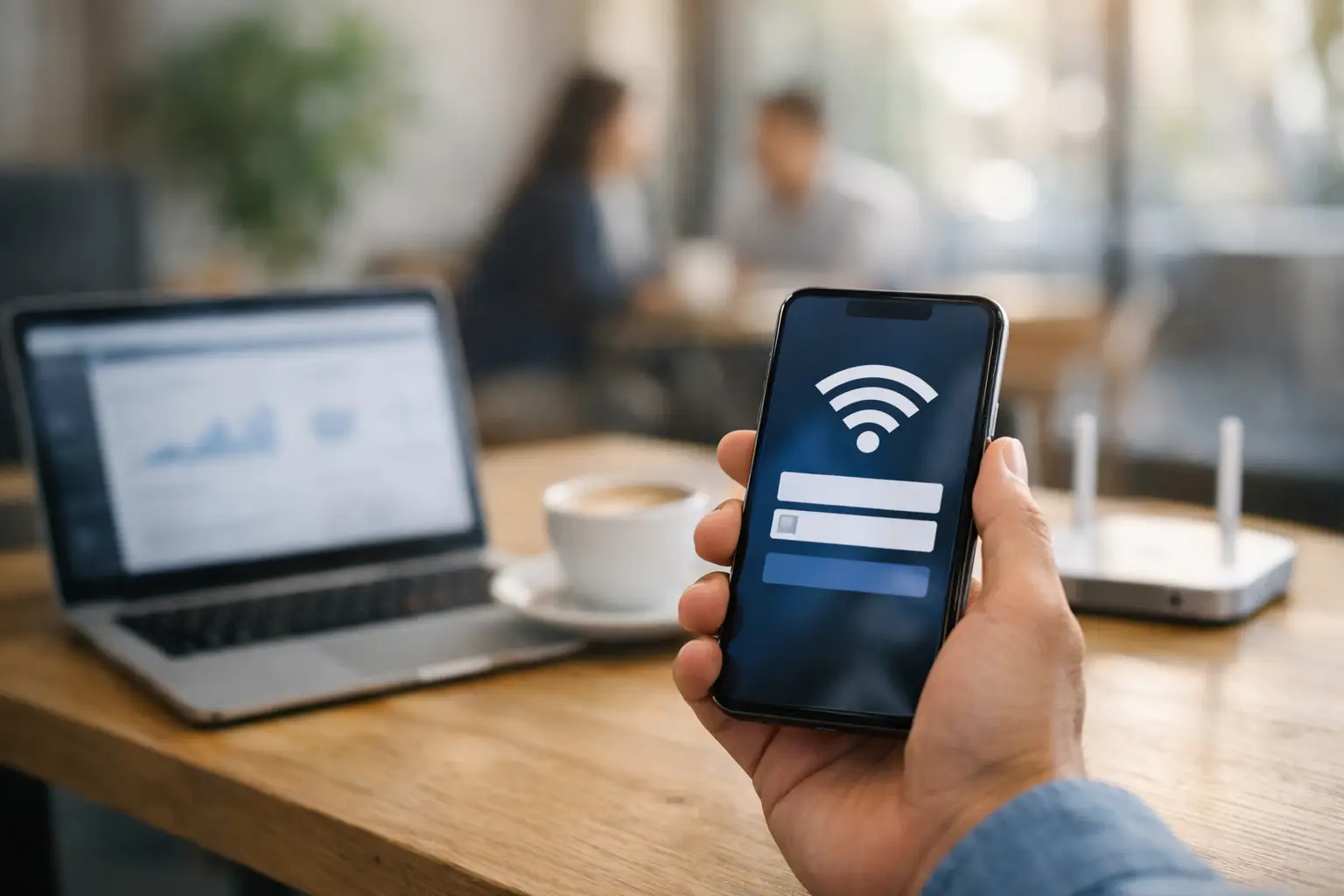
A guest asks for the Wi-Fi password, connects in seconds, and then disappears from your marketing view the moment they leave. That gap is exactly why wifi lead capture strategies matter. For businesses with steady foot traffic, guest Wi-Fi is not just an amenity. It is one of the most practical ways to collect first-party data, segment visitors, and create measurable follow-up without adding friction to the in-person experience.
The difference between average results and strong results is rarely the Wi-Fi itself. It is the strategy behind the login flow, the value exchange, the data you collect, and what happens after the visitor connects. If your current setup only gives people internet access, you are leaving a high-intent customer touchpoint underused.
What effective wifi lead capture strategies actually do
The strongest systems do more than collect an email address. They connect on-site traffic with digital marketing execution. That means identifying visitors, gathering consent, tracking repeat visits, and triggering communication based on behavior.
For a restaurant, that might mean sending a return-visit offer after a guest connects but does not come back within two weeks. For a retail chain, it could mean segmenting shoppers by location and frequency, then running paid remarketing to specific audiences. For a hotel, it may involve combining guest Wi-Fi with pre-arrival messaging and post-stay retention campaigns.
This is where many businesses get it wrong. They treat Wi-Fi capture as a one-time form fill instead of a structured acquisition channel. The form matters, but the commercial value comes from the workflow behind it.
Strategy 1: Make the login experience feel worth it
If the captive portal looks generic, asks for too much too soon, or feels disconnected from the venue experience, completion rates drop. People will tolerate a short login process when the benefit is obvious and immediate. They will abandon a clunky one.
The most effective approach is to make the exchange clear. Free Wi-Fi, faster access, member perks, local offers, loyalty benefits, or useful updates all work, depending on the venue. A coffee shop may do well with a simple email capture and a bounce-back offer. A hospital or airport may need a faster, lower-friction portal because convenience matters more than promotion.
Branding also matters more than many operators expect. A well-designed captive portal reassures users that the network is legitimate and professionally managed. That trust improves completion rates and supports data accuracy.
Strategy 2: Ask for the right data, not the most data
One of the most common mistakes in wifi lead capture strategies is overbuilding the form. Every extra field reduces conversions. The better question is not, «What else can we collect?» but «What data will we actually use?»
In many cases, name, email, mobile number, consent, and location are enough to start. If you operate across multiple venues, property-level or store-level attribution is especially valuable because it lets you personalize follow-up and compare site performance. For some verticals, collecting birthday month or customer type can add value. But only if it supports a real campaign or automation.
There is always a trade-off. Shorter forms increase volume. Slightly richer forms can improve segmentation. The right balance depends on your sales cycle, visit frequency, and customer value. A quick-service restaurant may prioritize speed. A hotel group or premium retailer may justify one or two more fields because the downstream customer value is higher.
Strategy 3: Use social login carefully, not blindly
Social login used to be the default recommendation for guest Wi-Fi capture. It can still work in the right context, but it is no longer a universal answer. Some users prefer email login because it feels faster and less invasive. Others may not want to connect a social profile at all.
A practical approach is to offer more than one path. Email login, SMS-based access, and social options can coexist. This gives users control and usually improves completion rates across different audience types. It also protects your capture strategy from changes in third-party platforms.
What matters most is consent and usability. If you collect data through any login method, the user should understand what they are agreeing to receive. Better compliance tends to produce better lists anyway, because opted-in contacts are more likely to engage.
Strategy 4: Trigger follow-up while visit intent is still high
The value of guest Wi-Fi data drops when nothing happens after capture. Timing matters. If someone connected in your venue today, that is a strong signal of interest or presence. Waiting three weeks to send a generic campaign wastes that signal.
A better model is event-driven follow-up. Send a welcome message shortly after login. Follow with a targeted offer, helpful information, or a review prompt based on venue type. Then move the contact into a segmented email, SMS, or WhatsApp journey.
This is where operational marketers get better returns than teams relying only on monthly newsletters. Real-time or near-real-time communication turns a passive database into an active revenue channel. Businesses using platforms like Wifi Marketing often see stronger outcomes when guest Wi-Fi is connected to automation rather than treated as a standalone access tool.
Strategy 5: Segment by behavior, not just demographics
A large contact database is not the goal. Useful segmentation is. The best wifi lead capture strategies divide audiences according to how they behave in physical locations and how often they return.
A first-time visitor should not receive the same message as a loyal customer. Someone who connects at a mall on weekends should not be treated the same as a weekday commuter in a transit hub. Repeat visits, dwell patterns, venue location, campaign source, and previous engagement all create stronger targeting opportunities than basic profile data alone.
This is particularly important as acquisition costs rise. Better segmentation lowers waste in email campaigns, improves SMS relevance, and builds cleaner remarketing audiences across paid channels. It also gives operators a clearer picture of which venues generate repeat traffic and which need attention.
Strategy 6: Connect Wi-Fi capture to your broader marketing stack
Lead capture becomes far more valuable when it feeds the rest of your marketing ecosystem. If your Wi-Fi platform operates in isolation, your team ends up exporting lists manually, losing speed and consistency.
A stronger setup connects captured leads to CRM records, email platforms, SMS workflows, analytics dashboards, and remarketing tools such as Meta and Google audiences. This creates a much more complete view of the customer journey, from physical visit to digital engagement to conversion.
For multi-location businesses, this integration also improves reporting. You can compare sites, identify high-performing locations, and attribute results more accurately. For agencies and technology partners, it makes Wi-Fi marketing a scalable service rather than a one-off install.
The key point is simple. Guest Wi-Fi should support your existing growth engine, not sit beside it.
Strategy 7: Measure outcomes that matter to revenue
If success is measured only by Wi-Fi connections, the strategy will stay shallow. Connection volume tells you activity, not business impact. The better metrics are opted-in leads, verified contact quality, repeat visit rate, campaign engagement, conversion rate, and revenue influenced by follow-up.
A retail operator may care most about store revisit behavior and offer redemption. A hotel may focus on guest profile growth, upsell engagement, and return bookings. A hospital or public venue may prioritize communication efficiency and audience reach. The point is that metrics should reflect the business model.
This is also where many operators discover weak points quickly. If portal conversions are high but campaign engagement is poor, your value exchange may be attracting low-intent users. If lead quality is strong but repeat visits lag, the issue may be your follow-up cadence or message relevance. Measurement should guide optimization, not just reporting.
Why venue type changes the best approach
Not every venue should use the same playbook. Restaurants often benefit from speed, simple offers, and return-visit automation. Hotels usually need more guest journey coordination, including pre-stay, on-property, and post-stay messaging. Retail environments gain the most from location-based segmentation and remarketing. Airports, malls, and hospitals often need a lighter-friction portal because the user’s primary goal is access and convenience.
That is why strategy should be shaped around visitor intent, visit frequency, and the commercial actions you want to drive. A system that works well for a boutique retailer may underperform in a transit environment. Good deployment starts with the customer journey, not the hardware.
The real opportunity in guest Wi-Fi
Most businesses already pay for connectivity, maintain physical foot traffic, and invest in digital marketing. Wi-Fi lead capture sits at the intersection of those assets. When configured properly, it turns an existing utility into a first-party data channel that improves retention, lowers wasted ad spend, and creates more relevant customer communication.
The opportunity is not just to collect more contacts. It is to make each in-person visit more measurable and more marketable. For businesses that want stronger attribution and better follow-up without adding unnecessary complexity, that is a smart place to build.
Comments are closed