
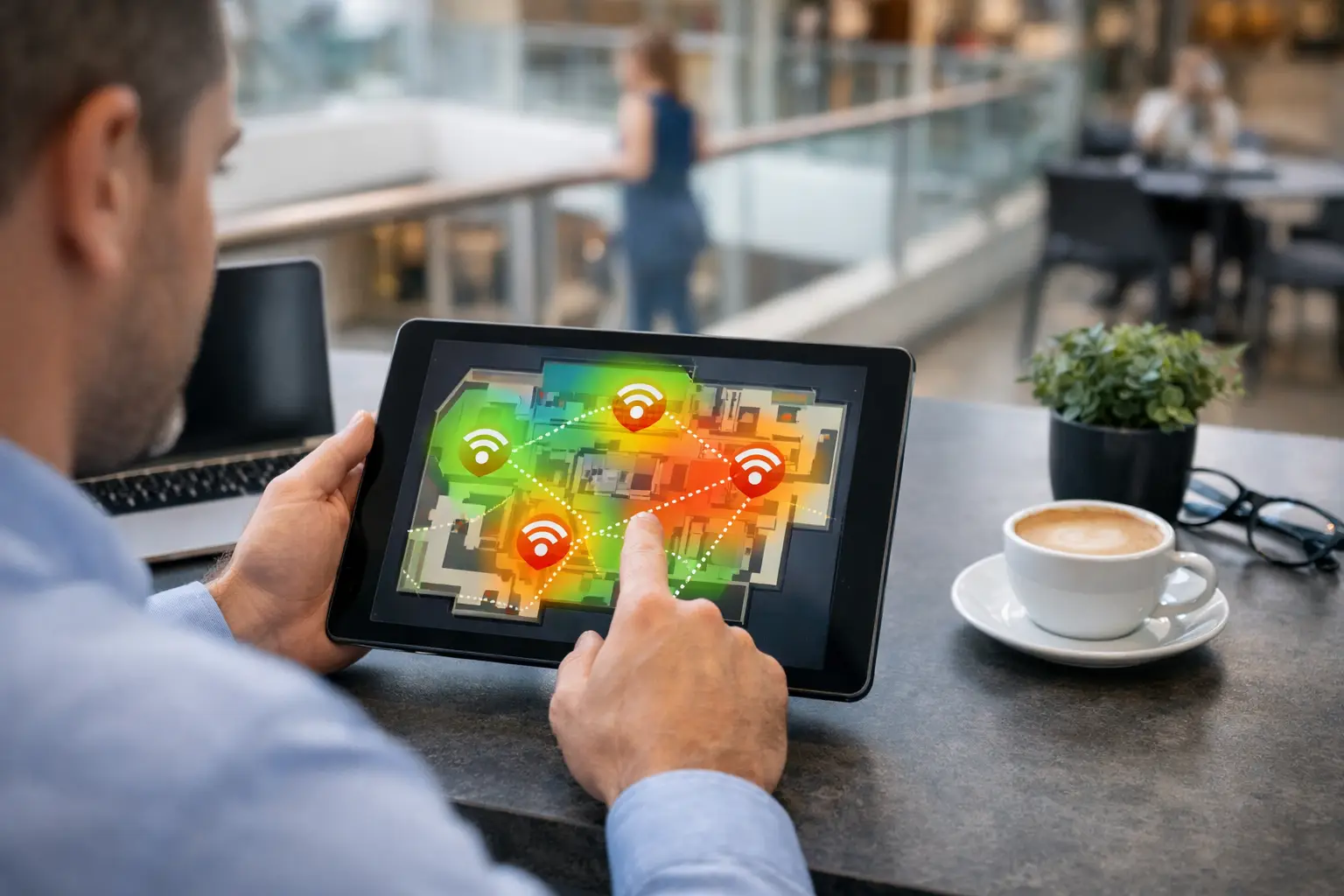
A guest connects to WiFi in your lobby, browses for 20 minutes, leaves, and returns three weeks later. Most businesses see two anonymous visits. With customer journey WiFi mapping, that activity becomes a usable picture of intent: a first visit, a gap in engagement, a return visit, and an opportunity to send the right message at the right time.
For customer-facing businesses, the customer journey does not begin when a purchase is made or end when a guest walks out. It includes the moments before arrival, time spent on-site, repeat visits, and digital follow-up. Guest WiFi can connect those moments into a measurable marketing workflow without asking staff to manually track every interaction.
What Customer Journey WiFi Mapping Actually Means
Customer journey WiFi mapping is the process of using guest WiFi touchpoints to understand how visitors interact with a physical location over time. When guests access a branded captive portal, they can provide consent-based contact details such as email address, phone number, birthday, language preference, or marketing interests. Their connection activity then helps build a profile around visit frequency, recency, location, and engagement.
The goal is not to monitor people in a vague or intrusive way. The goal is to replace anonymous foot traffic with permission-based first-party data that supports useful communication. A restaurant can distinguish a first-time lunch guest from a regular visitor. A hotel can recognize a returning traveler. A retail operator can identify locations with high first-visit volume but low return rates.
This matters because physical businesses often spend heavily to drive visits, then lose visibility the moment a customer leaves. WiFi mapping creates a practical bridge between on-site behavior and email, SMS, WhatsApp, remarketing, and loyalty activity.
Why WiFi Journey Mapping Has Commercial Value
A customer journey map is only valuable when it changes a decision. WiFi data becomes commercially useful when it helps teams decide who should receive a message, what the message should say, and when it should be delivered.
Consider a hotel guest who uses the WiFi after check-in but has not booked a future stay. The property can send a post-stay offer after departure, request feedback, and use a future return visit as a trigger for a personalized welcome. A quick-service restaurant can send a first-time guest a return incentive, while regular guests receive a loyalty-focused offer instead of another generic discount.
This approach can lower reliance on paid media alone. Rather than repeatedly paying to reacquire a customer who has already visited, the business can use its own consented audience for retention campaigns. Paid advertising still has a role, especially for acquisition, but first-party data improves the efficiency of every channel.
The trade-off is that data collection must earn the guest’s participation. A captive portal that asks for too much information or provides no clear value will reduce connection rates. The best experience is simple: easy access, a clear explanation of the benefit, and an appropriate consent flow.
The Key Stages to Map Through Guest WiFi
Every venue has a different customer journey, but most WiFi mapping programs can organize visitors around a few high-value stages.
First Visit and Data Capture
The first connection is the moment to establish a branded experience and collect permission-based data. The portal should match the business identity and work well on mobile devices. It may offer WiFi access in exchange for an email address, phone number, social login, survey response, or loyalty enrollment.
For a mall, airport, or public venue, the priority may be simple access and visitor segmentation. For a restaurant or retail store, the login experience can also present a welcome offer. The right approach depends on the value exchange. Guests are more likely to share information when they receive a meaningful benefit, not just an access gate.
On-Site Engagement
Once connected, the customer can receive real-time messages based on location, visit type, or time of day. A retailer may promote a current offer. A hotel can use an intelligent WhatsApp concierge to answer common questions, share amenities information, or direct guests to services during their stay.
Real-time engagement should solve an immediate need. Sending too many promotional messages while someone is on-site can feel disruptive. A better strategy is to combine service-focused communication with one relevant commercial prompt, such as a dining offer for hotel guests or a same-day promotion for retail visitors.
Repeat Visits and Loyalty Signals
Repeat connections are one of the strongest signals available to a venue operator. They indicate that the guest has returned to the property, even if no purchase data is immediately available. This is especially valuable in businesses where transactions are fragmented across separate systems or where customers do not always identify themselves at checkout.
A returning visitor does not always need a discount. In some cases, recognition is more effective. A coffee shop can invite frequent guests to join a rewards program. A hospital or transportation provider may prioritize service updates rather than promotions. Journey mapping should reflect the context of the venue and the reason people are there.
Lapsed Visitors and Re-Engagement
When a known guest has not returned within a defined period, automation can trigger a re-engagement campaign. The timing should reflect the normal purchase cycle. A casual dining restaurant might define lapsed visitors after 30 or 45 days, while a hotel may use a longer window based on travel patterns.
The message should acknowledge the relationship without pretending to know more than the data supports. A simple return invitation, seasonal offer, or helpful update often performs better than aggressive discounting. The objective is to create another reason to visit, not train every customer to wait for a coupon.
Building a Customer Journey WiFi Mapping Program
A useful program starts with business questions, not hardware. Before configuring a captive portal, define what the venue wants to improve. Is the priority growing an email database, increasing repeat visits, promoting a loyalty program, improving guest service, or measuring campaign impact by location?
Next, establish the data points that are truly needed. Email and mobile number are often enough for follow-up campaigns, while a short preference question can improve segmentation. Asking for a full profile at login may create friction. Progressive profiling lets a business collect additional information later, after it has delivered value.
Then connect the WiFi platform to the marketing stack. Customer records should flow into the systems used for email automation, SMS, WhatsApp communication, CRM activity, and advertising audiences. With Facebook Pixel and Google Pixel capabilities, businesses can also build remarketing strategies around consented visitors and measure how on-site traffic contributes to later digital engagement.
Finally, create a small set of automated journeys before expanding. For many operators, the best starting point is a welcome message, a first-visit follow-up, a repeat-visitor loyalty prompt, and a lapsed-guest re-engagement campaign. These workflows are manageable, measurable, and directly tied to revenue opportunities.
Measure Outcomes, Not Just Connections
High WiFi connection volume is encouraging, but it is not the final metric. The more useful measures are portal conversion rate, consent rate, contact capture rate, repeat visit rate, campaign opens, clicks, redemption, and revenue or bookings influenced by follow-up activity.
Location-level reporting is particularly valuable for multi-site brands. One store may collect many contacts but generate weak repeat behavior, while another may have lower traffic and much stronger retention. This gives marketing and operations teams evidence for where to adjust offers, staff training, guest experience, or local campaign strategy.
Privacy and compliance also belong in the measurement framework. Consent language, opt-in records, unsubscribe management, and data retention practices should be configured from the start. Responsible data practices protect the business and improve customer trust, which directly affects long-term participation.
Make the Map Useful to Operations
The strongest customer journey maps are not static diagrams created for a planning meeting. They are operational systems that trigger communication, inform campaigns, and show teams what is happening across physical locations.
Wifi Marketing helps businesses turn existing guest WiFi infrastructure into this type of marketing asset through configurable portals, cloud-based management, data capture, automation, and analytics. The technology matters, but execution matters just as much: the right login experience, the right segments, and campaigns that match how customers actually visit.
Start with one customer moment that is currently invisible after a guest leaves. When that moment can trigger relevant, permission-based communication, your WiFi network begins doing more than providing access. It begins helping every visit create the conditions for the next one.
No responses yet