
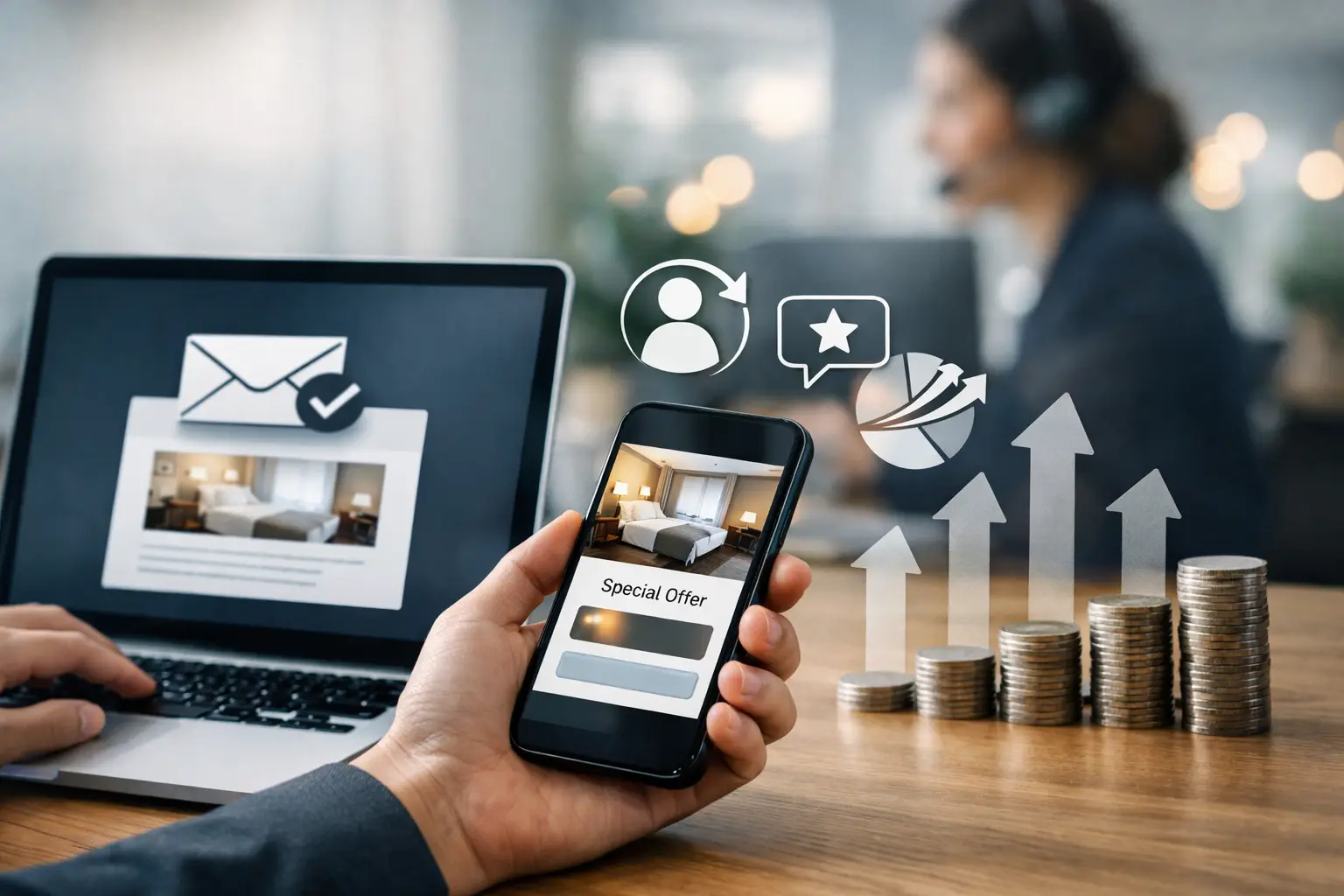
A guest connects to your Wi-Fi, browses the menu, maybe even starts an order, and then disappears. Or they stay once, leave satisfied enough, and never return. For most physical businesses, that loss is easy to miss because it happens quietly. Automated guest recovery campaigns are built for exactly this gap – re-engaging visitors who showed intent, visited recently, or went inactive before that lost revenue compounds.
For hotels, restaurants, retail stores, transportation hubs, and healthcare environments, recovery is no longer just a service issue. It is a marketing and operations issue. If you already have guest Wi-Fi, you already have one of the strongest entry points for turning anonymous foot traffic into first-party audience data and timed follow-up.
What automated guest recovery campaigns actually do
At a practical level, automated guest recovery campaigns identify a trigger, segment the guest, and send a follow-up message designed to bring that person back. The trigger might be a one-time visit, a long gap between visits, a failed booking flow, a short dwell time, or a negative feedback signal. The follow-up could be an email, SMS, WhatsApp message, or ad audience sync based on the data captured through the Wi-Fi portal and connected systems.
The key difference between a standard remarketing blast and a true recovery campaign is intent. Recovery is not about sending the same promotion to everyone in your database. It is about responding to a guest behavior that suggests drop-off, missed conversion, or declining engagement.
That distinction matters because broad promotions often waste budget and train customers to wait for discounts. Recovery campaigns work better when they are behavior-based, time-sensitive, and specific to what the guest actually did or failed to do.
Why automated guest recovery campaigns matter more now
Physical businesses are under pressure from two sides. Ad costs keep rising, and customer acquisition keeps getting harder. At the same time, many venues already have steady foot traffic but are not capturing enough value from it after the visit.
This is where automated guest recovery campaigns become commercially useful. They reduce dependence on constant top-of-funnel spending by improving conversion from traffic you already earned. If a customer visited once, connected to Wi-Fi, and gave you permission to communicate, that is a warmer opportunity than a cold audience click from a paid ad.
There is also a data advantage. Third-party targeting is less reliable than it used to be, while first-party behavioral data is becoming more valuable. Guest Wi-Fi gives businesses a direct way to collect consented customer information on-site and feed it into re-engagement workflows without building custom infrastructure from scratch.
The inputs that make recovery campaigns work
A strong recovery campaign depends less on creative flair and more on signal quality. If the only data you hold is an email address and a visit date, your follow-up options are limited. If your guest Wi-Fi flow captures visit frequency, location, dwell time, feedback, device recognition, and engagement preferences, your campaigns become far more precise.
For example, a restaurant can target guests who visited once in the last 30 days but did not return within a typical repeat window. A hotel can identify travelers who connected to Wi-Fi during a stay but never enrolled in loyalty communications. A retail chain can segment by store location and send a tailored follow-up based on recent footfall patterns rather than a national campaign that ignores local behavior.
This is also where integrations matter. Recovery improves when Wi-Fi data connects with CRM records, booking tools, POS data, ad platforms, and messaging channels. Without that connection, automation tends to stop at a generic «thanks for visiting» message. With it, campaigns can reflect actual customer value and intent.
Where most businesses get it wrong
The common mistake is treating recovery as a one-off promotion instead of an automated lifecycle function. A team notices traffic is down, sends a mass offer, and hopes for a short-term lift. That can produce a spike, but it rarely creates a repeatable system.
Another issue is timing. If a guest drops off and the business waits three weeks to respond, the recovery window may already be gone. Good automation narrows the response gap. If someone leaves negative feedback, abandons a booking inquiry, or fails to revisit within an expected timeframe, the message should go out while the interaction is still relevant.
Channel choice matters too. Email is efficient and scalable, but it is not always the fastest route to action. SMS and WhatsApp can produce stronger response rates for urgent or localized recovery, especially when the message is short and clearly relevant. That said, not every guest wants the same level of immediacy. The best campaign mix depends on consent, context, and customer expectations.
How to structure automated guest recovery campaigns
The most effective approach is to organize campaigns around business moments rather than around tools. Start with the recovery scenarios that directly affect revenue.
Lapsed guest reactivation
This is the simplest use case. A guest visited, connected to Wi-Fi, and then stopped returning. The campaign should define what «lapsed» means for that business. In quick-service dining, that may be 14 days. In a hotel context, it could be 90 days or more. Once that threshold is crossed, the system can trigger a message with a relevant reason to come back, not just a discount.
Missed conversion follow-up
Some guests show intent without finishing the action you wanted. They browse, ask for information, start a reservation, or visit a venue and leave without a measurable purchase. Recovery here works best when it removes friction. A message that answers the next likely question often outperforms a generic promotion.
Service recovery after poor feedback
When a customer reports a bad experience, speed matters. Automated workflows can route the issue internally and trigger a follow-up that acknowledges the problem and invites a second chance. This is not the place for hard selling. The goal is to preserve the relationship before the guest defects permanently.
Frequency recovery for high-value segments
Not all guests are equal in economic value. A business should not spend the same recovery effort on every segment. Frequent visitors, high spenders, and loyalty members deserve a different campaign path than low-intent or one-time visitors. Automated segmentation allows that prioritization without creating manual work for staff.
Industry examples where recovery drives ROI
In hospitality, guest recovery often centers on post-stay communication, repeat booking cycles, and reputation management. A hotel that captures guest data through Wi-Fi can trigger a tailored sequence after checkout, especially for travelers who did not book a future stay or ignored loyalty enrollment.
In restaurants and cafes, recovery is usually faster and more frequency-driven. If a lunch guest has not returned within a normal revisit window, a timely message can bring them back before habits shift to a competitor. The value comes from consistency, not from one oversized promotion.
In retail, automated guest recovery campaigns can connect in-store visits with digital retargeting and direct outreach. That is especially useful for multi-location operators who want store-level visibility into which visitors are returning and which are slipping away.
For airports, malls, hospitals, and public venues, the model is slightly different. The goal may be tenant support, repeat visitation, concierge assistance, or service communication rather than a direct sale. Even then, behavior-based recovery can improve engagement and help convert transient traffic into an owned audience.
What to measure beyond opens and clicks
If recovery campaigns are tied to revenue, they should be measured that way. Open rates and click-through rates can be useful diagnostics, but they are not the core outcome. The more meaningful metrics are repeat visit rate, time to return, recovered bookings, incremental spend, segment-level conversion, and cost per recovered guest.
It is also worth tracking suppression logic. If someone already returned, booked, or resolved their issue, they should exit the recovery flow. Automation works best when it prevents over-messaging as well as under-messaging. Too many businesses forget this and end up creating irritation where they intended retention.
The operational advantage of using guest Wi-Fi as the trigger layer
Guest Wi-Fi is often treated as a convenience service, but it is much more valuable as a data and activation layer. It gives businesses a direct, consent-based way to identify visitors, understand repeat behavior, and trigger communication based on real-world presence.
That changes the economics of recovery. Instead of guessing which digital users also visited a location, you can work from verified on-site interactions. For operators with multiple locations or partner networks, cloud-based deployment and centralized dashboards make this scalable without adding heavy operational overhead. This is one reason platforms like Wifi Marketing are increasingly relevant to businesses that want measurable follow-up tied to physical traffic.
Automated guest recovery campaigns are not magic, and they do not fix weak offers or poor service. But when the customer experience is solid and the data foundation is right, they give you a disciplined way to recover missed revenue, strengthen repeat behavior, and make your existing traffic work harder. A lot of businesses are still spending to replace customers they could have re-engaged with one well-timed message.
Comments are closed