
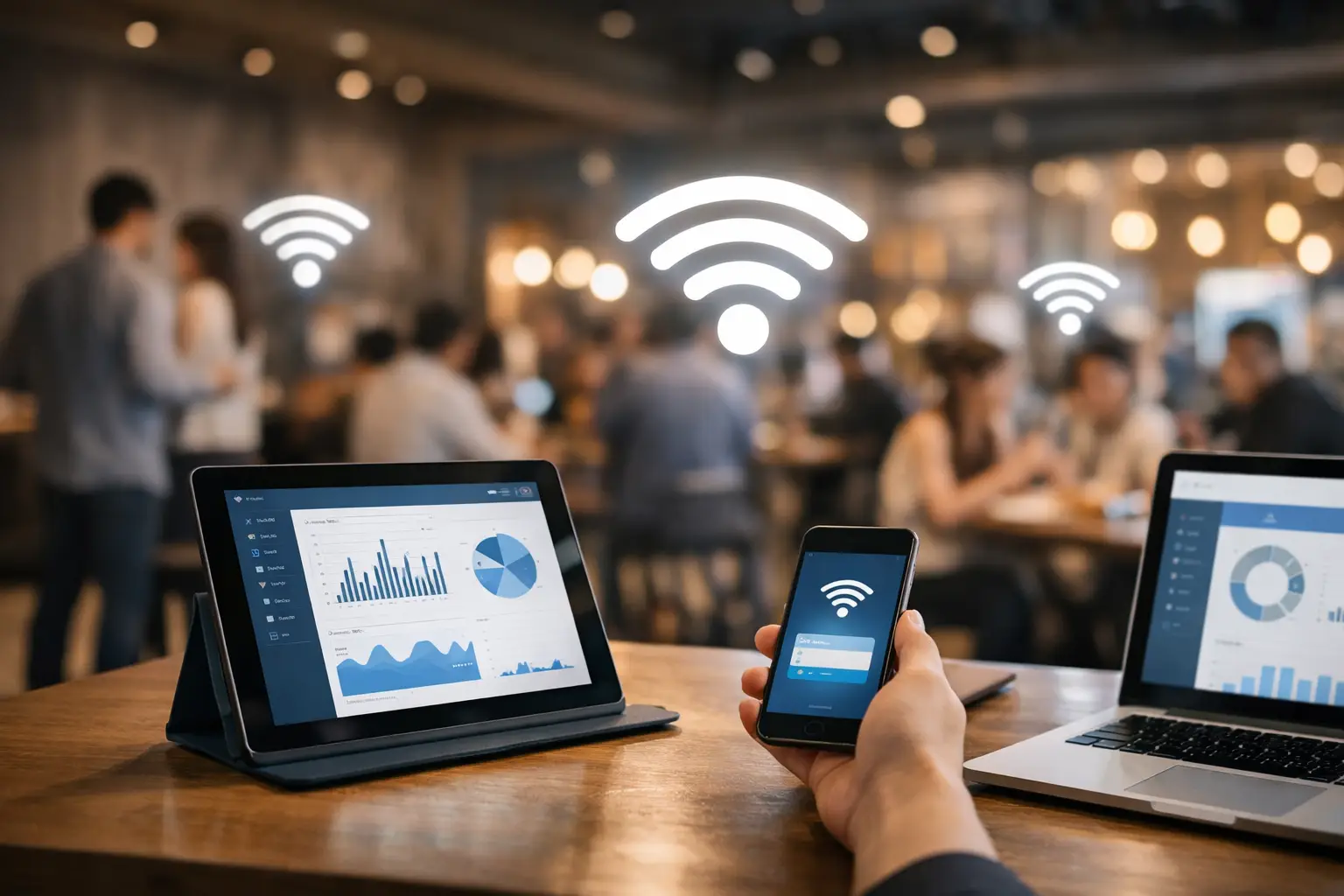
A guest connects to your Wi-Fi, stays 42 minutes, opens your welcome page, and then disappears without a trace. That is the gap the best wifi engagement tools are built to close. For hotels, restaurants, retail stores, hospitals, airports, and multi-site venues, guest Wi-Fi should not sit in the background as a basic utility. It should function as a measurable channel for customer acquisition, segmentation, repeat visits, and direct communication.
The challenge is that not every tool marketed in this category does the same job. Some focus only on access control. Others collect customer data but stop short of automation. A few connect the full chain – login, consent, segmentation, messaging, analytics, and remarketing – so operators can tie physical visits to digital follow-up. If you are evaluating platforms, that difference matters more than a flashy feature list.
What the best wifi engagement tools actually do
At a practical level, the best wifi engagement tools turn guest access into a business workflow. They capture first-party customer data through branded captive portals, apply rules based on visit behavior or profile details, and trigger follow-up through email, SMS, WhatsApp, or ad audiences. They also give operators visibility into traffic patterns, dwell time, repeat visits, and campaign response.
That sounds straightforward, but the value depends on execution. A coffee chain may need a fast social login flow that reduces friction during busy morning hours. A hotel may care more about pre-arrival messaging, upsells, and concierge interactions. A hospital or airport may prioritize scale, consent management, and support for multiple locations with different policies. The right tool is usually the one that matches your operating model, not the one with the longest brochure.
10 best wifi engagement tools to consider
1. Full-service WiFi marketing platforms
This is the strongest fit for businesses that want more than login management. A full-service platform combines captive portals, data capture, segmentation, automated campaigns, ad platform integrations, analytics, and implementation support. That matters for operators who do not want to piece together separate systems for hardware, portal design, messaging, reporting, and training.
The real advantage is speed to value. Instead of spending months coordinating vendors, you can deploy a system that connects on-site traffic with digital remarketing and retention campaigns. For multi-location brands and agencies, that centralization is often the difference between a pilot and a scalable program.
2. Captive portal builders
If your starting point is branding and data capture, captive portal builders are usually the first layer. These tools let you create login pages that ask for email, phone number, social login, room number, loyalty details, or custom fields. The strongest options support branded design, conditional flows, and clear consent collection.
The trade-off is that a portal on its own does not guarantee engagement. If the platform captures contacts but cannot route them into automated messaging or audience sync, your team still has to do manual work later. For venues with lean marketing teams, that gap becomes expensive quickly.
3. Email and SMS automation connected to Wi-Fi data
This category matters because data without follow-up has limited commercial value. Tools that trigger campaigns from Wi-Fi behavior can send welcome offers, bounce-back promotions, satisfaction surveys, review requests, or win-back messages based on visit timing and frequency.
The strongest systems make this simple. A first-time visitor receives a welcome incentive. A repeat guest gets a loyalty message. A customer who has not returned in 30 days gets a reactivation offer. That type of automation lowers campaign costs and improves relevance because the messaging is tied to real-world behavior.
4. WhatsApp engagement and concierge tools
For hospitality, transportation, healthcare, and high-service retail, WhatsApp can move beyond promotion into customer support and revenue generation. A good WhatsApp engagement layer lets venues respond to questions, deliver service updates, and maintain a direct line with guests after login.
This works especially well when it is customized to the property or location. A hotel can handle concierge requests. A clinic can share appointment guidance. A transport hub can answer service questions. The key is not just having a chat channel, but connecting it to customer profiles and visit context so the conversation feels relevant.
5. CRM and marketing platform integrations
The best wifi engagement tools do not trap data in a dashboard. They connect captured contacts and behavior signals to the rest of your marketing stack. That can include CRM systems, email platforms, customer data tools, and advertising audiences.
This is where many evaluations become too narrow. A Wi-Fi platform may look fine during a demo, but if it cannot pass data cleanly into your wider workflow, your reporting and segmentation break down fast. Integration quality often matters more than interface design.
6. Analytics and visitor intelligence tools
Operators need more than connection counts. Useful analytics show new versus returning visitors, average dwell time, peak usage windows, location-level trends, opt-in rates, campaign results, and profile growth over time. For multi-site groups, cross-location reporting is especially valuable because it shows which venues are underperforming and why.
The right reporting also changes budget decisions. When you can see that guest Wi-Fi campaigns drive return visits or coupon redemptions, it becomes easier to justify spend and refine offers. Without that visibility, Wi-Fi stays in the IT budget instead of becoming part of revenue planning.
7. Social login and review generation tools
Some venues want to reduce friction and encourage social interaction or reviews. Tools in this group support social login, post-login prompts, and review requests tied to customer satisfaction campaigns. They can be effective in hospitality and food service where social proof affects bookings and foot traffic.
That said, social login is not always the best primary method. Privacy expectations have changed, and some users prefer email or phone-based access. It is often better as one option in a broader login strategy rather than the only path.
8. Multi-brand and hardware-compatible platforms
For agencies, integrators, franchises, and enterprise operators, compatibility matters. The platform should work across different access point brands, support cloud deployment, and allow remote configuration across sites. Otherwise every rollout becomes a custom project.
This is one of the most overlooked buying criteria. A feature-rich platform loses appeal if it only works smoothly on a narrow hardware stack or requires heavy manual setup at each location. Operational fit is part of the product, not a side issue.
9. Consent, privacy, and data governance features
Any tool that collects guest data needs clear consent handling, policy presentation, and data controls. This is not just a legal checkbox. It affects trust, opt-in rates, and long-term usability of the data you collect.
A strong platform makes consent visible and manageable without making the login experience clumsy. It should support configurable fields, clear acceptance records, and controls that fit the venue type. Hotels and healthcare settings, for example, often need more careful workflows than a casual retail environment.
10. Managed deployment and support services
Software alone does not guarantee a working program. Many venues need help with network configuration, portal setup, campaign logic, staff training, and reporting. That is why managed deployment belongs on this list of the best wifi engagement tools, even though buyers sometimes treat it as a separate service.
In practice, implementation quality shapes results. A platform with average features and strong onboarding may outperform a technically superior option that your team never fully deploys. This is especially true for distributed businesses with multiple stakeholders across IT, operations, and marketing.
How to choose the best wifi engagement tools for your business
Start with the commercial outcome, not the dashboard. If your goal is customer acquisition, prioritize strong login conversion, data capture, and audience sync for remarketing. If retention is the priority, look harder at automation, segmentation, and repeat-visit analytics. If service quality matters most, as it often does in hospitality and healthcare, direct messaging and concierge-style communication should move higher on the list.
Then look at the operating environment. A single-location restaurant can tolerate more manual setup than a regional chain. An airport or hospital needs reliability, scale, and governance. A marketing agency needs a platform it can roll out repeatedly across client accounts without rebuilding the process each time.
It is also worth asking what happens after the customer logs in. That is the simplest test of value. If the answer is vague – maybe a dashboard, maybe an export, maybe a campaign later – the platform is probably too limited. If the answer includes segmentation, triggered messaging, audience creation, and measurable reporting, you are closer to a real engagement tool.
Where many businesses get this wrong
The most common mistake is treating guest Wi-Fi as an IT utility instead of a marketing asset. That leads to buying decisions based on bandwidth, splash pages, and access control alone. Those features matter, but they do not create repeat business by themselves.
The second mistake is buying disconnected tools. One vendor handles the portal, another handles SMS, another manages email, and nobody owns the customer journey end to end. The result is more complexity, weaker reporting, and slower execution.
A better approach is to choose a platform partner that can connect infrastructure, communication, and analytics in one operating model. That is where solutions like Wifi Marketing stand out, especially for venues that want deployment support along with automation, remarketing, and customized WhatsApp concierge communication.
Guest Wi-Fi already touches your foot traffic every day. The real question is whether it will remain a cost center or become one of the most direct channels you own for turning visits into identifiable customers, repeat purchases, and stronger lifetime value.
Comments are closed