
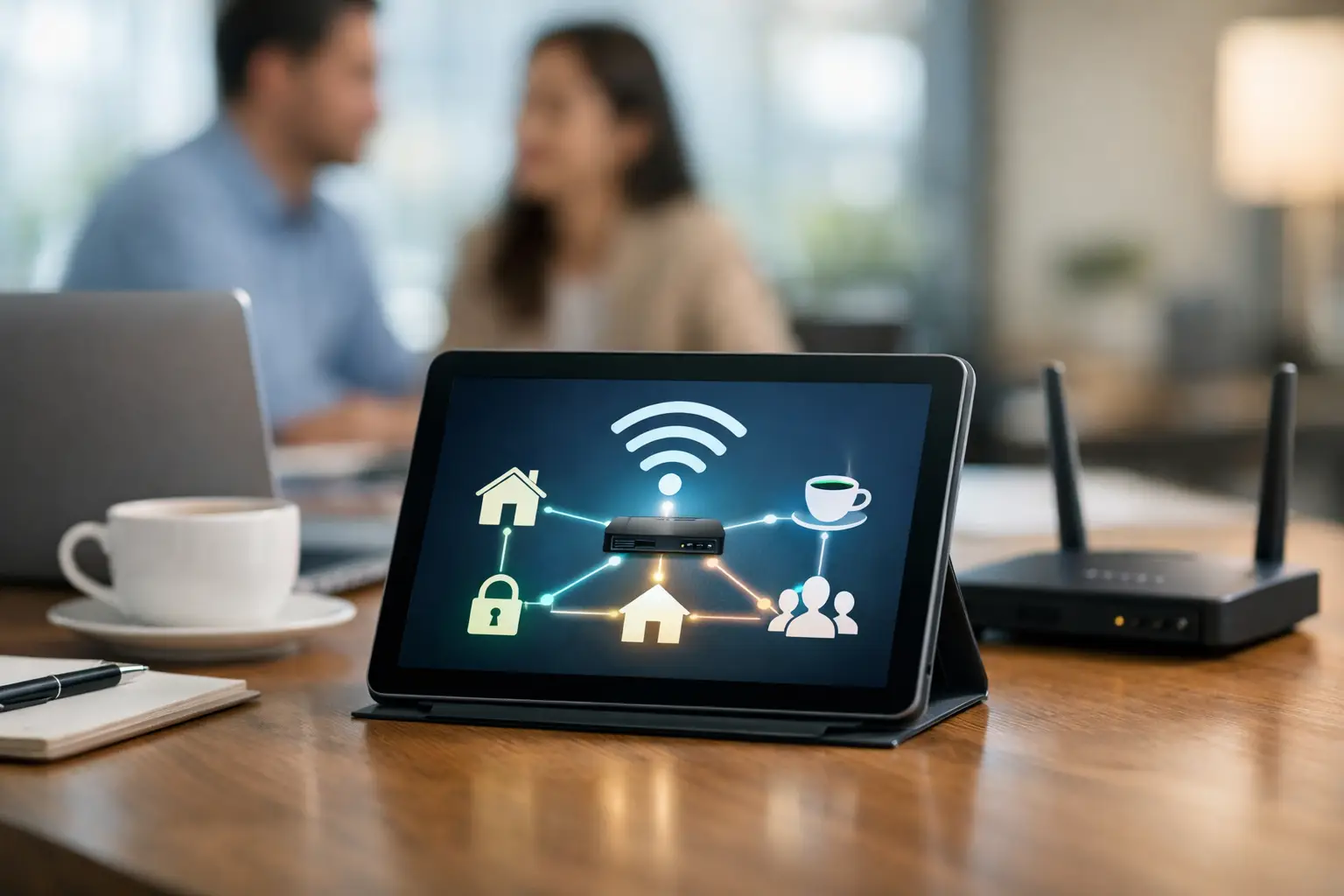
A guest who visits your restaurant every Friday should not receive the same message as someone who connected once six months ago. Yet many businesses treat every Wi-Fi login as one undifferentiated contact record. A practical wifi segmentation strategy guide changes that approach by turning guest Wi-Fi from a utility into a source of actionable first-party data.
For hotels, restaurants, retailers, healthcare facilities, transportation hubs, and public venues, segmentation creates the difference between broad outreach and relevant communication. It helps teams recognize high-value guests, respond to declining visit frequency, promote the right offer at the right location, and measure what happens after a customer leaves the property.
Start With the Business Outcome, Not the Data Fields
Wi-Fi platforms can collect useful signals: login details, visit frequency, dwell time, device behavior, venue location, campaign responses, and more. The mistake is collecting everything before deciding what the business needs to improve.
Start with a commercial question. A restaurant group may want to increase weekday traffic. A hotel may want more direct bookings and on-property spend. A retailer may want to bring back shoppers who have not visited in 60 days. An airport lounge may focus on improving repeat usage among eligible travelers.
Once the goal is clear, define segments that can support a specific action. A segment without a corresponding message, offer, or service workflow is simply a report. The purpose is not to create dozens of audience labels. It is to create a manageable set of groups that produce better marketing decisions.
Build Your WiFi Segmentation Strategy Around Behavior
Demographic data has value, but behavior usually provides the strongest starting point for venue-based marketing. A guest’s actions tell you what relationship they have with your business right now.
Segment by visit frequency and recency
Frequency and recency are foundational because they identify loyalty and risk. Guests who connected multiple times in the past 30 days are active customers. They may be candidates for loyalty enrollment, VIP benefits, personalized recommendations, or referral offers.
Guests who were once regular but have not returned for 45, 60, or 90 days deserve a different approach. A reactivation campaign can acknowledge their absence with a relevant reason to come back, such as a limited-time menu item, a service reminder, or a location-specific incentive.
The right timing depends on the business. A coffee shop may consider 14 days inactive. A hotel may measure return behavior across several months. Avoid applying one threshold across every location or customer type.
Segment by location and venue type
Multi-location operators gain significant value from location-based segmentation. A customer who visits a downtown location may have different needs than one who visits a suburban store or an airport kiosk. Sending a promotion for the wrong location reduces relevance and can train customers to ignore future messages.
Location segments also reveal operational insights. If one site generates many first-time Wi-Fi users but few repeat visits, the issue may be service, product mix, local competition, or follow-up marketing. If another location produces high repeat usage, its campaigns and customer experience can provide a model for the wider business.
For brands with different venue formats, keep audiences separate where the customer experience differs. A hotel restaurant guest, a meeting attendee, and an overnight guest may all connect to the same network, but they should not automatically enter the same communication journey.
Segment by time, day, and dwell patterns
Connection timing can guide highly practical campaigns. A quick-service restaurant might identify breakfast-only visitors, lunch regulars, and late-evening customers. Retailers can distinguish weekend shoppers from weekday visitors. Hotels can identify guests who consistently use Wi-Fi during conference periods or seasonal travel windows.
Dwell time adds context, particularly for hospitality, malls, waiting areas, and public venues. A guest who stays for several hours may be using a workspace, attending an event, or waiting for transportation. That may justify different messaging than a guest who connects briefly at the entrance.
Dwell data should be used thoughtfully. It is a useful signal, not a complete description of intent. Pair it with other data points before making major assumptions about customer preferences.
Use the Captive Portal to Collect Better Data
Segmentation quality depends on data quality. The captive portal is the first point of interaction, so it should capture information that supports future marketing without creating unnecessary friction.
For many businesses, a mobile number or email address, consent status, preferred language, and basic customer category are sufficient starting points. A hotel may ask whether the guest is staying overnight, attending an event, or visiting the restaurant. A retail center may ask for interests such as dining, fashion, or family activities.
Every added field can lower completion rates. That trade-off matters. Ask only for information you can use in a defined campaign or service process. Progressive profiling can collect additional preferences later through follow-up messages, loyalty enrollment, surveys, or concierge conversations.
Consent management must also be built into the experience. Marketing teams need clear permission records, appropriate opt-in language, and channel-specific rules for email, SMS, and WhatsApp communication. Good segmentation is not just more precise. It is permission-based and operationally trustworthy.
Turn Segments Into Automated Customer Journeys
The value of segmentation appears when it triggers timely communication. Manual campaign exports are useful for occasional promotions, but they do not scale across multiple locations or customer lifecycle stages.
A new guest can receive a welcome message shortly after connecting, followed by an invitation to join a loyalty program. A repeat guest can receive a personalized reward after a defined number of visits. A lapsed customer can enter a re-engagement sequence after their normal visit cadence stops.
Consider four practical automation paths:
- New visitors receive a welcome offer or an introduction to the venue’s loyalty benefits.
- Repeat visitors receive recognition, relevant upgrades, and incentives that protect loyalty.
- Lapsed visitors receive a measured win-back message based on their previous location or behavior.
- High-value guests receive priority service, exclusive offers, or a WhatsApp concierge option when appropriate.
Automation should not mean constant messaging. Set frequency limits and suppression rules so a customer does not receive overlapping promotions from multiple campaigns. The goal is to make every communication feel connected to a real visit, not to turn guest Wi-Fi into another source of inbox noise.
Connect Wi-Fi Audiences With Your Marketing Stack
Wi-Fi data becomes more valuable when it supports the systems your team already uses. Customer records can inform CRM lists, email automation, SMS outreach, paid remarketing audiences, loyalty workflows, and location-level reporting.
For example, a retailer can create an audience of guests who visited a specific store but did not return within 30 days, then use email or paid media to bring them back. A restaurant can build a segment of lunch visitors and promote a new weekday menu item. A hotel can identify on-property guests and present relevant dining, spa, or concierge services during their stay.
Pixel-based remarketing can extend the relationship beyond the venue, but it should be used with clear consent practices and campaign controls. The strongest results often come from combining channels rather than relying on one message. An email may introduce an offer, while a carefully timed SMS reminder drives action near the end of the campaign window.
Measure Revenue Signals, Not Just Logins
A higher number of Wi-Fi connections is not automatically a marketing win. Track whether segmented audiences engage, return, redeem, book, purchase, or increase their visit frequency.
Useful performance measures include repeat-visit rate, reactivation rate, offer redemption, campaign conversion by location, revenue per campaign, list growth with valid consent, and cost per returning customer. Compare segmented campaigns against broad campaigns when possible. That comparison helps show whether personalization is producing incremental value rather than simply reaching people who would have returned anyway.
Review results by location and audience type. A campaign that performs well for loyal guests may fail with first-time visitors. A discount may reactivate price-sensitive customers but reduce margin among guests who would have returned without one. Segmentation gives operators the visibility to make those distinctions.
Keep the Strategy Simple Enough to Operate
Many organizations begin with an overly complex segmentation map and struggle to maintain it. Start with a small set of high-impact audiences: new visitors, repeat visitors, lapsed visitors, and location-based groups. Add more detail only when the business has a clear campaign use case and the data supports it.
Wifi Marketing helps customer-facing businesses configure guest Wi-Fi, capture permission-based data, and activate automated journeys across email, SMS, WhatsApp, and remarketing channels. The technology matters, but the operational model matters just as much: clear segments, relevant messaging, consistent measurement, and teams that know how to act on the dashboard insights.
Your guest network already sees the moment a customer enters the venue. The next opportunity is to recognize what that visit means and respond with communication that earns the next one.
Comments are closed