
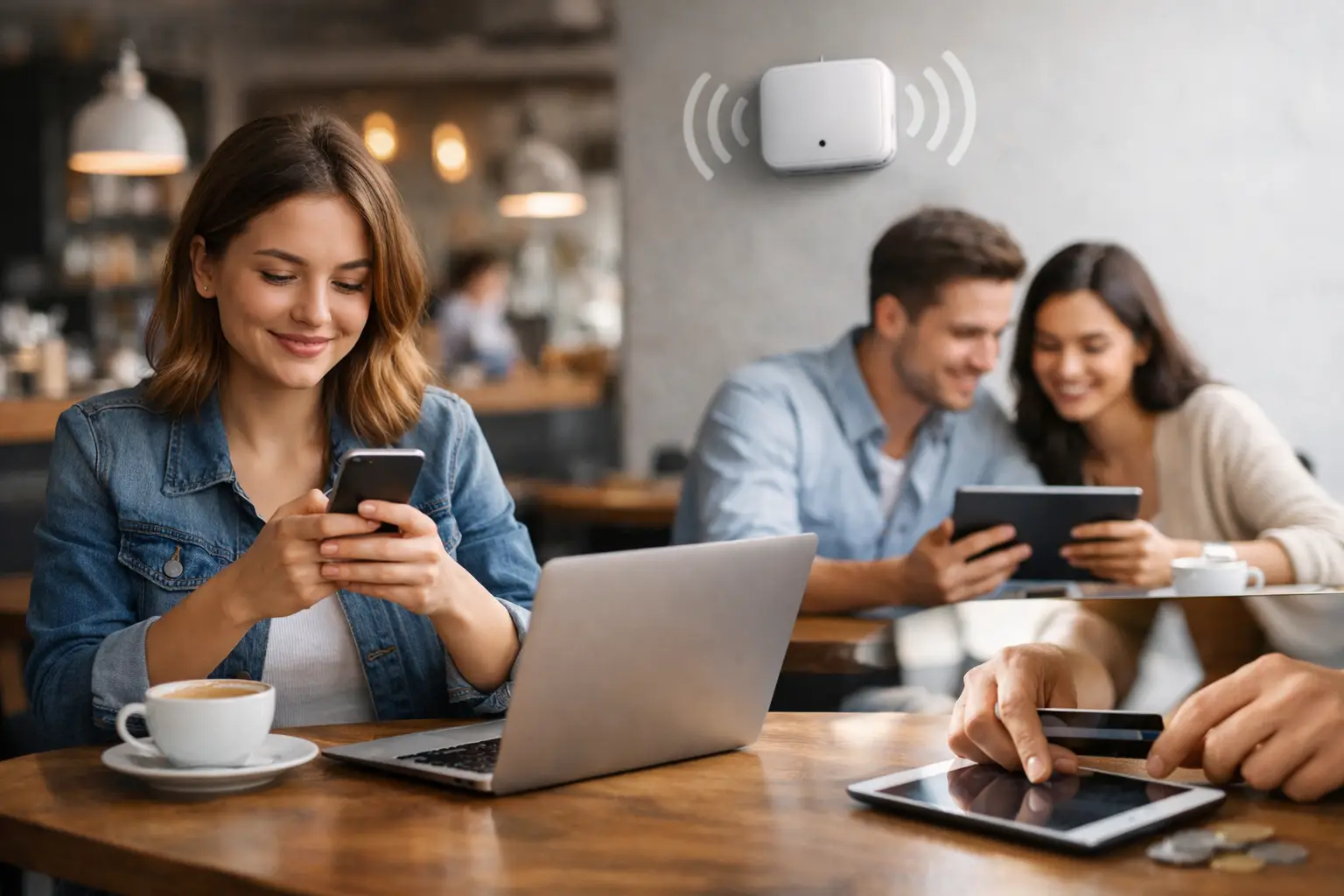
A full dining room, a busy hotel lobby, or a crowded retail floor should create more than a one-time transaction. Yet most businesses still treat guest internet access as a utility expense instead of a marketing asset. A guest wifi marketing solution changes that by turning on-site visits into first-party data, permission-based communication, and repeat revenue.
That shift matters more now because paid acquisition keeps getting more expensive while customer attention gets harder to win back. If a visitor connects to your Wi-Fi, spends time on-site, and leaves without entering your CRM or receiving any follow-up, you are losing value from traffic you already paid to attract. For hotels, restaurants, malls, clinics, airports, and public venues, that is a missed operational opportunity as much as a missed marketing one.
What a guest wifi marketing solution actually does
At a basic level, it replaces a plain password-sharing experience with a branded access journey. Instead of posting a code at the front desk or on a wall, the business presents a captive portal where guests can log in, accept terms, and optionally share contact details or authenticate through social and digital channels. That single change turns anonymous foot traffic into identifiable audiences.
The real business value starts after login. A serious guest WiFi marketing solution can segment visitors by venue, visit frequency, dwell time, device behavior, or campaign source. It can then trigger automated messaging through email, SMS, or WhatsApp, build remarketing audiences, and give operators visibility into who came back, when, and how often.
This is where many buyers make the wrong comparison. They evaluate guest Wi-Fi as if it were only connectivity infrastructure. In practice, the stronger comparison is with customer acquisition software, loyalty tools, and retention platforms. The network is just the delivery layer. The real product is customer communication tied to physical presence.
Why free Wi-Fi alone is not enough
Offering complimentary internet may improve guest satisfaction, but satisfaction by itself does not create measurable growth. A password printed on a receipt or shared by staff gives the customer access, but it gives the business almost nothing in return. There is no profile enrichment, no consent-based follow-up, no audience segmentation, and no campaign attribution.
That gap becomes expensive at scale. A restaurant group might serve thousands of guests each week and still rely on broad social ads to bring those same people back. A hotel may have a steady flow of guests but no structured way to re-engage them after checkout. A retail chain may generate strong walk-in traffic yet remain dependent on discounts because it cannot personalize post-visit communication.
A guest wifi marketing solution helps close that loop. It takes traffic you already have and makes it addressable. For operators under pressure to improve ROI without increasing ad spend, that is often the fastest win available.
Where the revenue impact comes from
The most valuable outcome is not simply collecting emails or phone numbers. It is building a system that turns visits into future action. That can mean sending a bounce-back offer after a restaurant visit, promoting spa upgrades to hotel guests, inviting clinic visitors to complete forms before their next appointment, or re-engaging mall visitors with seasonal campaigns.
The effect is cumulative. First, you collect first-party data at the point of visit. Then you segment based on behavior and location. After that, you automate follow-up rather than depending on staff or one-off campaigns. Over time, this lowers the cost of reactivation because you are marketing to known visitors instead of constantly paying to reach cold audiences.
That said, the best results depend on execution. If the login experience is too intrusive, conversion rates can drop. If the follow-up messaging is generic, the database grows but revenue does not. If teams never use the analytics, the platform becomes another underused dashboard. The technology matters, but the operating model matters just as much.
What to look for in a guest WiFi marketing solution
Not every platform goes beyond basic access control. For business buyers, the difference between a simple hotspot tool and a true marketing platform is substantial.
A strong solution should support branded captive portals, flexible data capture, customer consent management, and automated workflows across multiple channels. It should also connect with advertising and analytics tools so that physical visits can inform digital remarketing and campaign measurement. If your team operates more than one site, multi-location management is not optional. Neither is remote configuration.
Hardware compatibility also matters more than many buyers expect. Some businesses already have network equipment in place and want to layer in marketing capabilities without a full rip-and-replace project. Others need a provider that can handle hardware setup, deployment support, and ongoing optimization. The right fit depends on your internal resources, venue complexity, and how standardized your environments are across locations.
This is one reason implementation support deserves more attention in the buying process. A platform can look impressive in a demo and still stall if no one helps with configuration, portal design, training, and campaign setup. For many operators, especially those managing distributed sites, the vendor needs to function as both software provider and practical deployment partner.
Best-fit industries and use cases
Hospitality is one of the clearest fits because guest Wi-Fi is already expected. Hotels can use the login process to support direct communication before, during, and after the stay. That opens the door to upsell campaigns, concierge-style messaging through WhatsApp, satisfaction follow-up, and return-visit promotions.
Restaurants and cafes benefit from frequency-based marketing. A guest who visits once should not receive the same message as someone who comes in every week. Wi-Fi data makes that distinction possible without adding friction at the register.
Retail stores and shopping centers can use Wi-Fi engagement to extend the in-store visit into a digital relationship. Instead of relying only on footfall counts, operators can identify returning visitors, build remarketing pools, and tailor promotions by location or shopper behavior.
Healthcare and transportation environments have a different dynamic. The opportunity there is often less about promotion and more about communication efficiency, service updates, and patient or traveler experience. Even so, the same principle applies: the network becomes a channel for timely, relevant outreach rather than a passive amenity.
The operational questions buyers should ask
The first question is not what features exist. It is what business problem you want to improve. If your biggest issue is low repeat visits, the platform should be judged on segmentation and automation. If your challenge is poor visibility across multiple venues, analytics and centralized management should lead the conversation. If you need a partner channel offer, white-label flexibility and deployment support matter more.
You should also ask how success will be measured. Common benchmarks include opt-in rates, repeat visit frequency, audience growth, campaign conversion, and cost per re-engaged customer. Without those targets, it is easy for a Wi-Fi marketing project to be treated as a connectivity upgrade instead of a revenue initiative.
Another practical point is compliance and customer trust. Data capture should be transparent, permissions should be clear, and the experience should feel legitimate to the guest. Short-term gains from aggressive collection tactics can create long-term brand damage. A better approach is simple, branded, and permission-based.
Why this category keeps gaining importance
Physical businesses are under pressure from both sides. Digital marketing costs are rising, while privacy changes make third-party targeting less predictable. At the same time, many customer-facing venues already have an underused asset in place: guest internet access.
That is why a guest wifi marketing solution is gaining traction across multi-site operators, agencies, and technology integrators. It creates a first-party data engine inside the venue itself. Instead of guessing who visited, businesses can identify, segment, and communicate with real guests based on real behavior.
For companies that want more from the traffic they already earn, this is no longer a niche add-on. It is a practical part of modern customer acquisition and retention. Providers such as Wifi Marketing are building around that reality by combining software, deployment support, automation, and analytics into a model that businesses can actually operationalize.
The smartest move is to stop thinking about guest Wi-Fi as a line item on the IT budget. When managed correctly, it becomes one of the most efficient marketing channels in the building – because it starts with people who are already there.
Comments are closed