
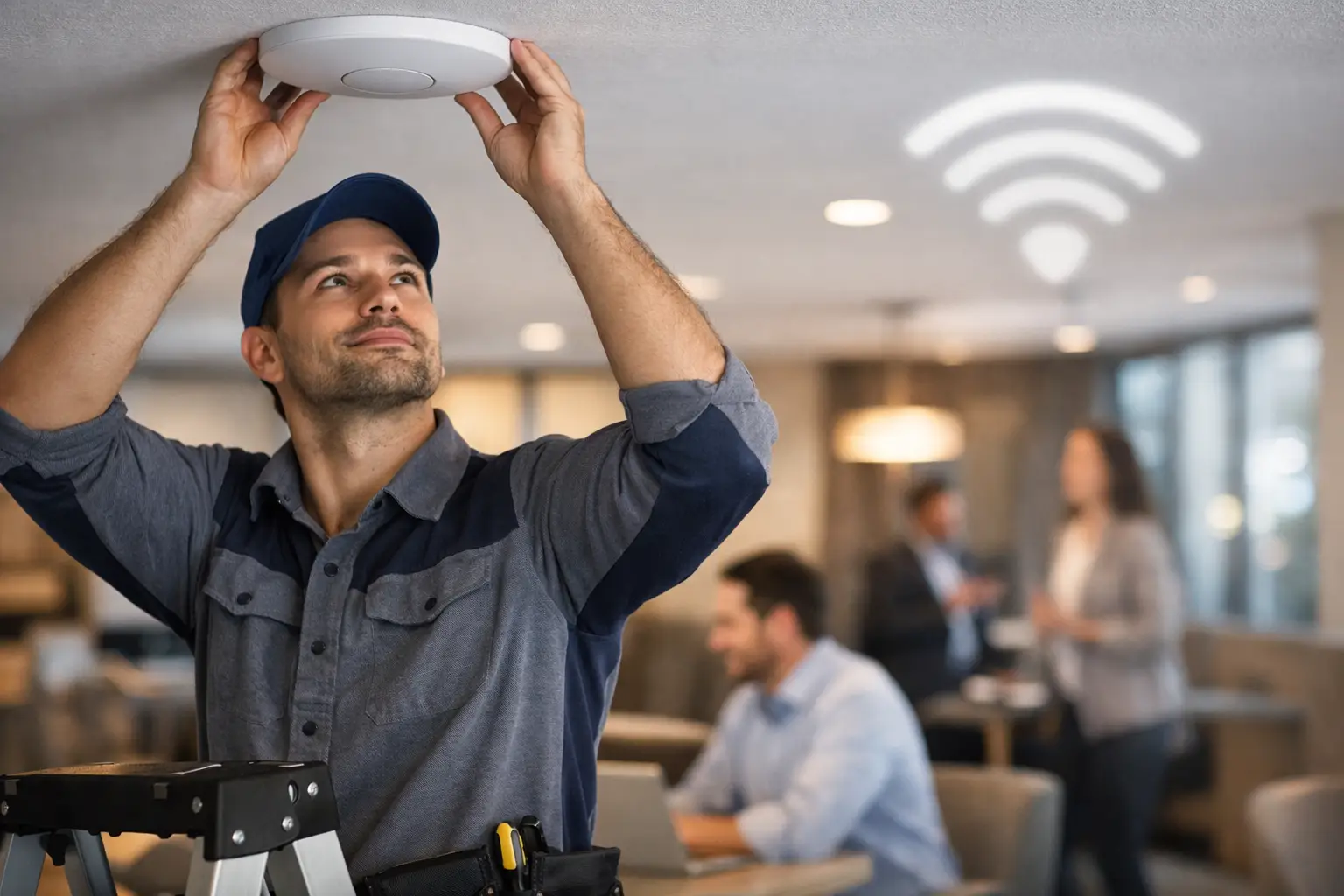
A weak guest network usually shows up in the same places first – front desk complaints, low return visits, poor review sentiment, and a marketing database that never seems to grow. That is why a guest wifi installation service should be treated as a revenue and retention project, not just an IT task. If customers are already in your building, your Wi-Fi should help you identify them, engage them, and bring them back.
For hotels, restaurants, retail stores, clinics, malls, and transportation hubs, guest Wi-Fi is one of the few digital touchpoints that begins inside the physical location. That matters. It gives businesses a direct way to connect in-person traffic with first-party data, automated follow-up, audience segmentation, and measurable campaign performance. The installation itself is only the starting point. The real value comes from how the network is designed, configured, and connected to your marketing workflow.
What a guest wifi installation service should actually include
A basic install gets people online. A business-grade guest wifi installation service should do far more than that. It should assess the venue layout, expected user load, access point placement, bandwidth requirements, security controls, captive portal setup, branding, and cloud management. It should also account for how the network will support data capture and customer communication after the login.
That distinction matters because many businesses have already learned the hard way that consumer-grade hardware or a generic network setup does not hold up under real traffic. A coffee shop with 40 users is different from a resort with hundreds of connected devices. A retail chain with multiple locations needs centralized control, consistent policy, and reporting across stores. A hospital or airport has a very different risk profile from a boutique salon.
A strong service model usually combines installation support with remote configuration, dashboard setup, and staff training. That reduces friction during deployment and gives operators confidence that the system will keep working after the installer leaves.
Why installation quality affects marketing results
If the login experience is unreliable, the marketing layer never gets off the ground. Slow authentication, poor coverage, dropped sessions, and confusing portal design all lower conversion. Fewer logins mean less first-party data, weaker audience segmentation, and fewer opportunities to trigger email, SMS, or WhatsApp campaigns.
This is where many businesses miss the bigger picture. Guest Wi-Fi is not just internet access. It is an acquisition and retention channel. When installed correctly, it can capture verified customer data, identify repeat visitors, and trigger campaigns based on visit behavior, dwell time, frequency, or location. That turns everyday foot traffic into a usable marketing asset.
For businesses facing rising ad costs, that shift is significant. Instead of paying repeatedly to reach unknown audiences, you can build remarketing audiences from people who already visited your location. The economics are better because the audience is warmer, the intent is stronger, and the data belongs to you.
Guest wifi installation service for different venue types
The right deployment depends on the operating environment. In hospitality, coverage and guest experience are usually the top priorities, but so are branding and post-stay communication. Hotels often need the guest network to support a smooth login while feeding data into campaigns for upgrades, loyalty offers, and return bookings.
In restaurants and cafes, the emphasis may shift toward quick access, location-based promotions, and repeat visit tracking. The network has to be simple enough for guests to join in seconds, but still capable of capturing the data needed for offers, promotions, and retention campaigns.
Retail environments usually care about multi-site consistency and audience insights. Store operators want to know who visited, how often they return, and which segments respond to campaigns. A good setup helps unify foot traffic data with digital marketing execution.
Public venues such as malls, airports, and transit hubs need broader scalability. The user volume is higher, traffic patterns are less predictable, and access policies may vary by tenant, zone, or brand. In those environments, centralized cloud management and flexible policy controls are essential.
What to look for before you choose a provider
The best provider is not necessarily the one quoting the lowest installation cost. It is the one that understands both network performance and business outcomes. That means asking practical questions. Can they work with multiple hardware brands? Do they support cloud-based management? Can the system handle captive portals, data capture, and remarketing integrations? Will your team receive training on reporting and campaign use?
It also helps to ask how much of the deployment can be managed remotely. Remote configuration speeds up rollout, reduces on-site delays, and makes multi-location expansion much easier. For operators with several venues, that flexibility can make a major difference in cost and consistency.
Another factor is ownership of the data and the platform logic. If your guest Wi-Fi captures customer information but does not connect it to messaging, segmentation, and analytics, the commercial upside is limited. The provider should be able to show how login data becomes action – not just how access points get mounted.
Security, compliance, and network separation
Security is often treated as a back-room issue until something goes wrong. In reality, it should be built into the installation plan from day one. Guest traffic must be separated from business-critical systems such as POS terminals, payment devices, internal staff tools, and operational applications. This is one of the most basic requirements of a professional deployment.
There are trade-offs here. A highly locked-down network can create login friction if it is not designed carefully. On the other hand, a wide-open guest network may create unnecessary exposure and make policy enforcement difficult. The goal is a balance: easy enough for customers to use, controlled enough for the business to trust.
For regulated or high-traffic environments, logging, access controls, and centralized monitoring become even more important. The installation service should account for those requirements upfront rather than treating them as add-ons later.
Why captive portals matter more than most businesses think
The captive portal is often the first branded digital interaction a visitor has on-site. If it looks outdated or asks for too much too soon, conversion suffers. If it is clear, fast, and relevant, it can support both user access and marketing goals at the same time.
A good captive portal can collect customer details, present terms clearly, promote offers, and route users into automated campaigns. It can also vary by location, audience, or time of day. That is especially useful for multi-location brands and venue operators that want consistency with room for local promotions.
This is where installation and marketing strategy meet. The network has to be configured properly, but the customer journey also has to be intentional. A login page is not just a utility screen. It is an entry point into a measurable communication funnel.
From installation to automation
The real performance of a guest network is measured after launch. Once the system is live, the next question is simple: what happens to the customer data? If the answer is nothing, the business is leaving value on the table.
A stronger model connects guest Wi-Fi access to automation. New visitors can receive a welcome offer. Repeat visitors can be segmented by frequency. Lapsed customers can be re-engaged through email, SMS, or WhatsApp. High-value audiences can be pushed into paid remarketing channels. Some businesses also benefit from customized concierge flows that help customers request information, receive offers, or continue the conversation after the visit.
This is where a company like Wifi Marketing fits naturally. The advantage is not only in getting the network deployed, but in turning that infrastructure into an active communication system tied to conversion, loyalty, and reporting.
The business case for doing it right
A guest wifi installation service pays off when it reduces friction for visitors and creates more usable customer data for the business. Better connectivity improves experience. Better login flows improve identification. Better segmentation improves campaign efficiency. Over time, that can lower acquisition costs and increase repeat revenue from audiences you already earned on-site.
That does not mean every business needs the same setup. A single-location restaurant may prioritize ease and promotion. A hotel group may need central control and richer automation. A marketing agency may care most about white-label deployment and measurable client ROI. The right installation approach depends on traffic volume, customer journey, and what the business plans to do with the data afterward.
The smartest buyers do not ask only whether the Wi-Fi works. They ask whether it supports growth. If your locations are already generating foot traffic every day, your network should help convert that traffic into identifiable customers, targeted audiences, and repeat business. That is where installation stops being a technical checkbox and starts becoming a commercial advantage.
When guest Wi-Fi is planned with the end result in mind, it becomes far more than free internet. It becomes one of the most practical ways to connect the visit happening in front of you with the marketing results you want next.
Comments are closed