
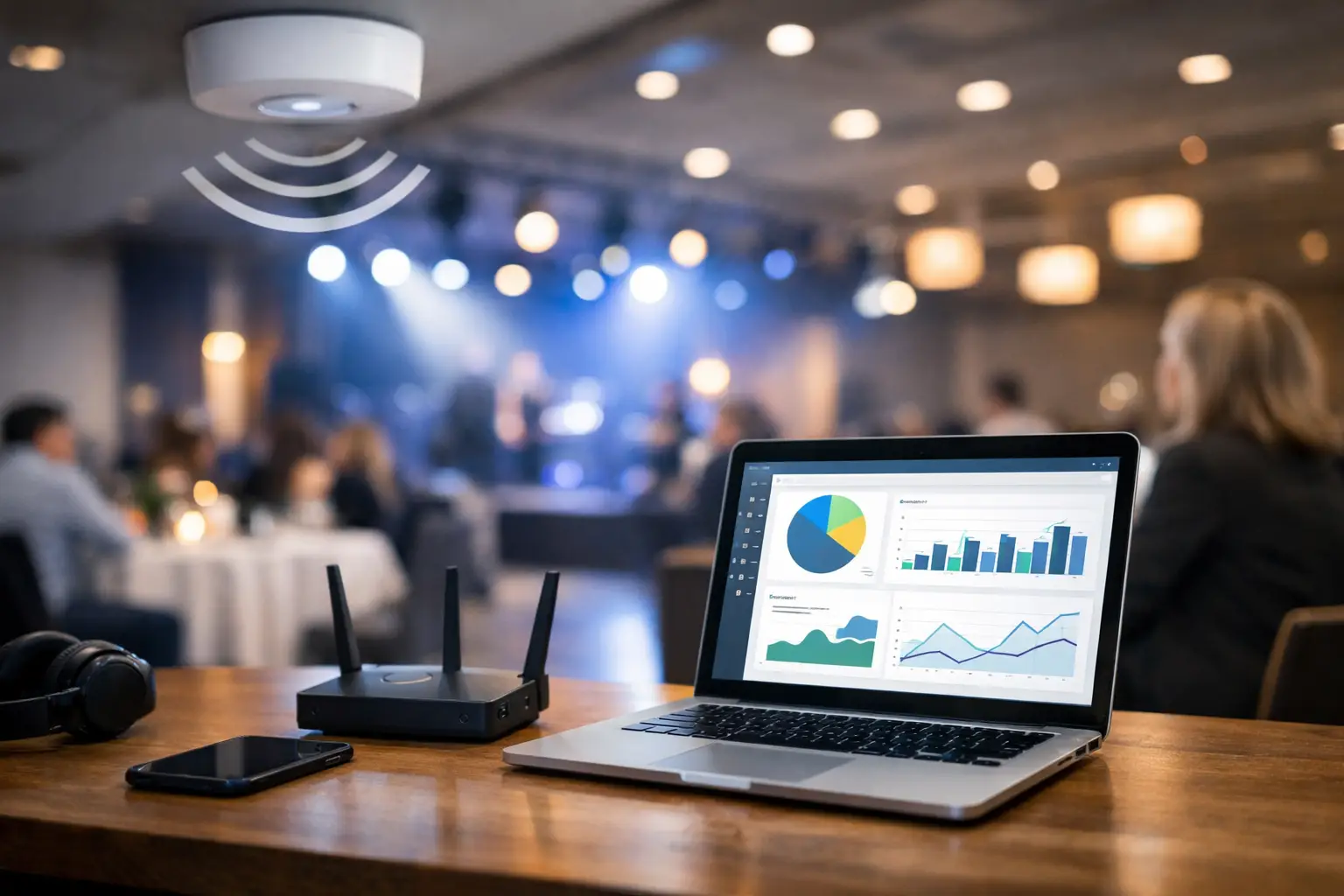
A guest connects to Wi-Fi in your restaurant, hotel, store, or waiting area. That moment can be more than a utility transaction. A well-designed wifi automation software review should examine whether a platform turns that connection into permission-based customer data, relevant follow-up, and measurable revenue without creating more work for staff.
For venue operators, the real question is not whether a captive portal looks polished. It is whether the platform can connect a physical visit to a useful marketing action: a welcome message, a return-visit offer, a loyalty prompt, or a campaign tailored to what that guest actually did. The strongest systems make this process practical across locations, brands, and existing Wi-Fi hardware.
What WiFi Automation Software Should Actually Do
WiFi automation software sits between your guest network and your customer marketing stack. It gives visitors a simple way to access Wi-Fi, then uses their consented information and visit behavior to support communication after they leave the venue.
At a minimum, the software should support configurable captive portals, data capture forms, customer segmentation, and automated messaging. Better platforms add integrations with email, SMS, WhatsApp, CRM tools, Facebook Pixel, Google Pixel, and loyalty systems. The value is not in collecting a large list of contacts. It is in collecting usable first-party data with a clear connection to a real-world visit.
That distinction matters as paid acquisition becomes more expensive and audience targeting becomes less dependable. A business that knows a customer visited three times in the past month can communicate more intelligently than one relying only on broad ad audiences or a generic email database.
For multi-location operators, centralized control is equally important. Marketing teams should be able to update a portal, campaign, or audience rule remotely, while local teams continue focusing on service. A platform that requires a technician for every campaign adjustment will slow down the very automation it is supposed to enable.
WiFi Automation Software Review: The Criteria That Matter
A useful evaluation starts with the customer journey, not a feature checklist. Consider what happens from the first connection through re-engagement, and whether every step supports a commercial goal.
Captive portal flexibility and brand control
The portal is the first customer-facing interaction. It should match your brand, work cleanly on mobile devices, and make login easy enough that guests do not abandon the process. Social login, email capture, SMS verification, vouchers, and terms acceptance may all be appropriate, depending on the venue and the data you need.
There is a trade-off. A longer form can capture more information, but it can reduce Wi-Fi access completion. A coffee shop with rapid turnover may prioritize a fast email or social login. A hotel or medical facility may need more detailed consent, multilingual communication, or controlled access rules. The right software lets operators adjust the experience by location and use case rather than imposing one workflow everywhere.
Segmentation based on real visits
Basic platforms store names and email addresses. More valuable platforms build audiences from visit behavior: first-time versus returning guests, dwell time, frequency, location visited, time of day, device type, and campaign response.
These segments make automation commercially relevant. A retailer can send a new-arrival promotion to frequent visitors who have not returned recently. A restaurant can invite first-time Wi-Fi users back with a weekday offer. A hotel can provide concierge assistance or local recommendations through WhatsApp during the stay, then request feedback after checkout.
Segmentation must be understandable to marketing teams. If creating an audience requires database skills or IT support, most operators will fall back to mass messaging. Look for a dashboard that makes customer groups visible and campaign rules easy to manage.
Campaign automation across channels
Email remains useful, but it should not be the only automation channel under review. Depending on consent and customer preference, SMS and WhatsApp can be highly effective for time-sensitive communication. Retargeting audiences through advertising platforms can also extend the value of a Wi-Fi login beyond a single message.
The key is orchestration. A customer who receives a welcome email should not immediately receive three duplicate promotions through other channels. The software should support delays, exclusions, frequency controls, and outcome tracking. Good automation feels timely and helpful. Poor automation feels like a venue collected contact details simply because it could.
An intelligent WhatsApp concierge is particularly relevant for hospitality, transportation, hospitals, malls, and other complex venues. It can answer common questions, route requests, share relevant information, and maintain a direct communication path without forcing guests to download another app. Its effectiveness depends on clear handoff rules when a human response is needed.
Hardware compatibility and deployment support
Software quality means little if deployment disrupts network performance or requires replacing equipment that is still fit for purpose. Review whether the provider supports multi-brand Wi-Fi hardware, cloud-based configuration, remote management, and location-level policies.
This is where implementation support becomes a major differentiator. Operators should understand who configures the hardware, tests the captive portal, handles troubleshooting, and trains the dashboard users. A self-service platform may cost less upfront, but it can create delays for businesses without internal network expertise. Conversely, a fully managed service may be unnecessary for a small venue with straightforward requirements.
For agencies and technology integrators, compatibility also determines whether Wi-Fi marketing can become a scalable service offering. A platform that can be configured remotely across client sites makes it easier to package installation, campaigns, reporting, and ongoing optimization under one relationship.
Analytics that connect activity to outcomes
A dashboard full of connection counts is not enough. Connections indicate demand for Wi-Fi, but they do not prove marketing value. The reporting should show new versus returning visitors, opt-in rates, campaign sends, opens or clicks where applicable, message responses, audience growth, and conversion signals tied to offers or loyalty activity.
No platform can perfectly attribute every in-store sale to a Wi-Fi campaign. Customers may see an email and return days later without using a coupon. Still, operators can make better decisions when reporting connects visits, segments, campaigns, and repeat engagement. The goal is directionally credible performance data, not a false promise of perfect attribution.
Where Different Venue Types Need Different Workflows
The best workflow depends on how and why customers use the space. Restaurants may focus on repeat visits, review requests, event promotion, and slower daypart offers. Retailers may prioritize return-visitor segments, product launches, and remarketing audiences. Hotels need pre-arrival, in-stay, and post-stay communications that complement their property management systems rather than compete with them.
Hospitals and clinics require more restraint. Guest Wi-Fi can improve communication and visitor experience, but data collection and messaging need careful consent practices and a clear separation from protected health information. Airports, malls, and public venues may place more emphasis on wayfinding, tenant promotions, dwell-time insights, and multilingual portal experiences.
This is why generic marketing automation software is often not enough. It may manage contacts well but have no reliable understanding of who physically visited a location. Wi-Fi automation adds that missing context when it is deployed responsibly.
Questions to Ask Before Selecting a Platform
Before committing, ask the provider to demonstrate the full operating flow rather than just the login page. You should see how a visitor becomes a contact, how that contact enters a segment, how an automated campaign is triggered, and how the result appears in reporting.
Ask how consent is captured and stored, how unsubscribe requests are managed, and what controls exist for communication frequency. Confirm whether your team can export data, connect existing marketing systems, and manage multiple locations without rebuilding campaigns from scratch. Also ask what happens when network equipment changes, a new venue opens, or a local manager needs support on a busy weekend.
Pricing deserves scrutiny as well. A low monthly fee may exclude hardware configuration, installation assistance, support, SMS usage, WhatsApp messaging, or advanced integrations. Compare total operating cost against the labor required to run the platform and the realistic value of improved retention. The least expensive option is not always the lowest-cost operating model.
The Commercial Standard for a Strong Review
The best Wi-Fi automation platform is not necessarily the one with the longest feature list. It is the one that gives your business a dependable way to recognize visitors, earn permission to communicate, personalize follow-up, and measure progress toward repeat visits and stronger customer value.
Wifi Marketing is built around this operational reality: guest Wi-Fi, customer data capture, automated outreach, retargeting, and deployment support should work as one system, not as disconnected tools. For operators, the most useful next step is to map one high-value guest journey and evaluate every platform against its ability to make that journey more personal, measurable, and profitable.
Comments are closed