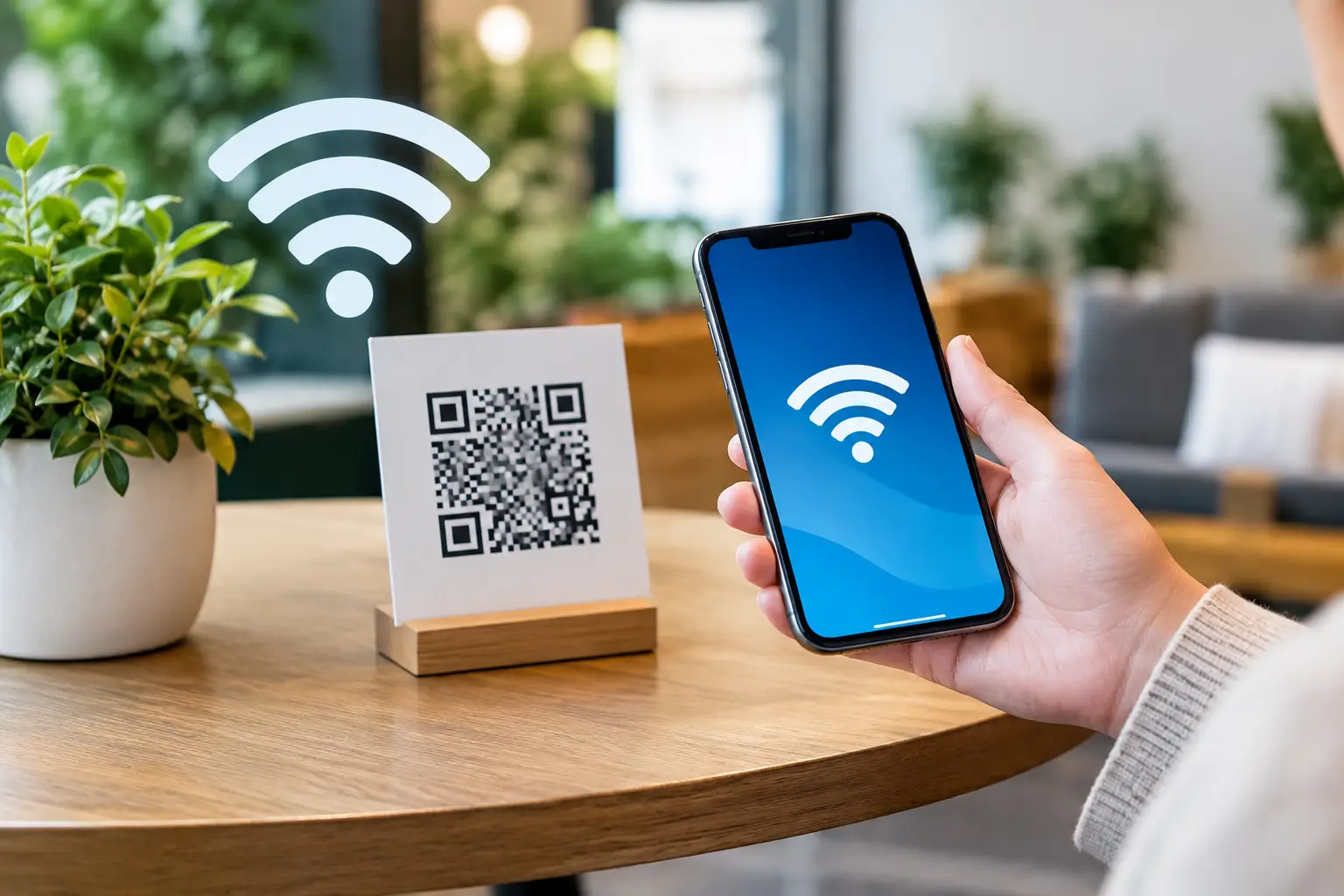
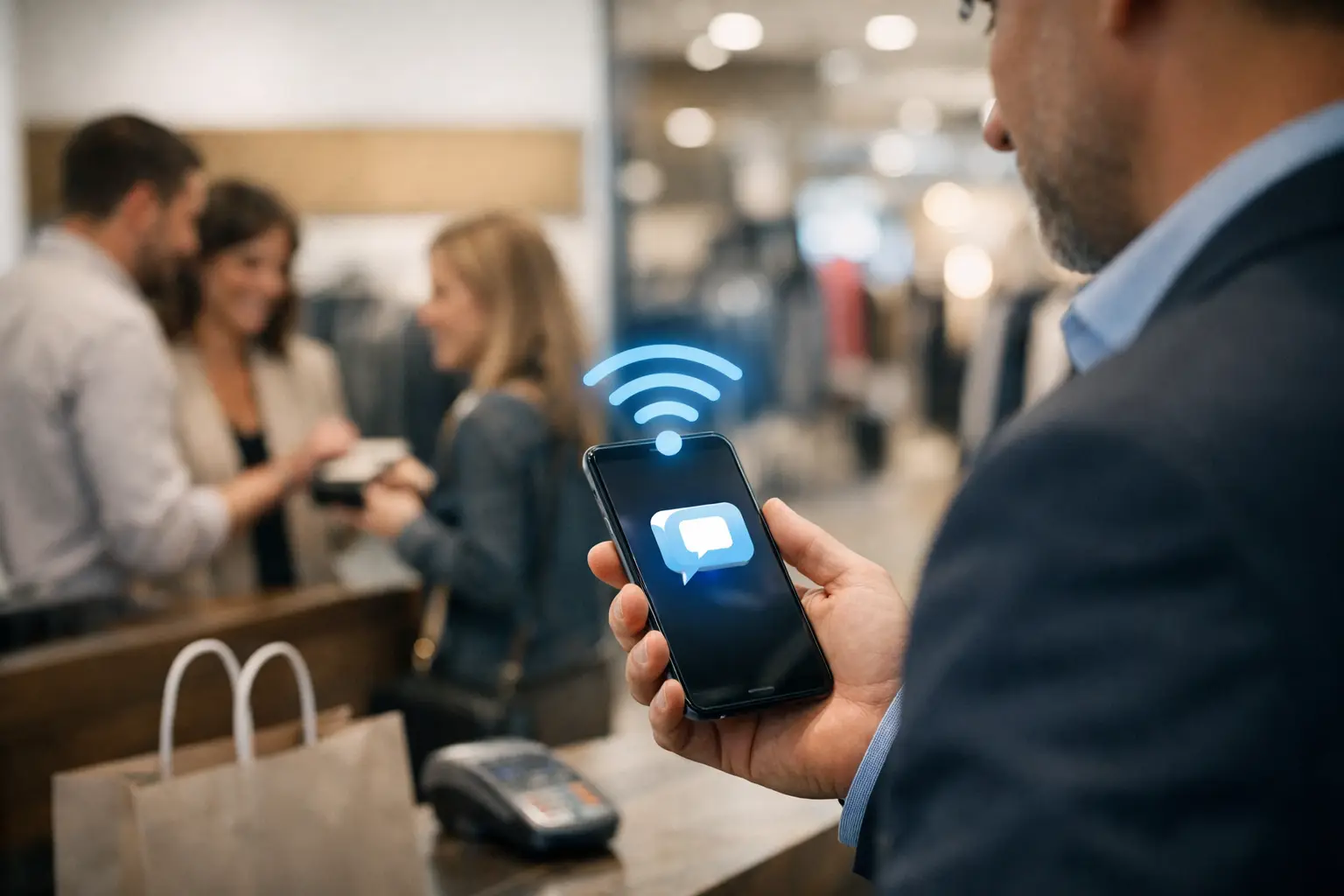
A guest joins your Wi-Fi while waiting for a table, browsing a store display, or checking into a hotel. That moment is more valuable than a generic social media impression because the customer is physically present and already engaged. Can WiFi messages boost sales? Yes, but only when they are relevant to the visit, permission-based, and connected to a clear commercial goal.
For customer-facing businesses, guest Wi-Fi is no longer just an expected amenity. It can become a first-party data and communication channel that helps operators recognize visitors, encourage immediate purchases, and bring customers back after they leave. The difference is not the Wi-Fi connection itself. The difference is what happens after a guest connects.
How WiFi Messages Can Boost Sales
A WiFi marketing platform uses a branded captive portal to collect customer-approved information when guests access the network. Depending on the login method and consent settings, this may include a name, email address, mobile number, birthday, language preference, or social login data. It can also record visit behavior such as location, time of connection, frequency, and device activity.
That information creates a useful bridge between a physical visit and digital follow-up. Instead of treating every visitor as anonymous, a restaurant, retailer, hotel, or venue can segment audiences based on real interactions with the location.
The sales impact usually comes from three types of messages: real-time offers sent during or immediately after a visit, automated campaigns that encourage a return visit, and personalized outreach based on customer behavior. A coffee shop might send a same-day pastry offer to guests who connect in the morning. A hotel can provide an arrival message with an upgrade, dining offer, or concierge option through WhatsApp. A retailer can invite first-time visitors back with a time-limited discount.
The message works because it is attached to context. A customer who was in the building an hour ago is far more likely to respond than someone reached through broad advertising with no recent connection to the business.
Timing Determines Whether Messages Feel Helpful or Intrusive
WiFi messaging is not a license to send more promotions. Poorly timed or repetitive messages can damage trust, increase opt-outs, and make an otherwise useful channel feel invasive. Strong campaigns start with a simple question: what would be useful to this customer at this point in their journey?
For a restaurant, a message delivered shortly after Wi-Fi login may be best used for service information, a menu highlight, loyalty enrollment, or a digital ordering prompt. Sending a discount while the guest is still deciding what to order can increase average ticket size. Sending a survey or return-visit offer after the meal may be more appropriate.
For a retail store, the right message may depend on the visitor’s status. A first-time guest could receive a welcome incentive. A repeat visitor who has not purchased recently may receive a focused invitation to return. Customers who frequently visit a mall or airport may benefit more from location-specific offers than from general brand campaigns.
Hotels have longer customer journeys and more touchpoints. Pre-arrival communication can promote transportation, early check-in, upgrades, and on-property services. During the stay, messaging can guide guests toward dining, spa, events, or an intelligent WhatsApp concierge. After departure, the focus shifts to reviews, loyalty enrollment, and future bookings.
The principle is straightforward: send fewer messages with a clearer reason for each one. Relevance protects the customer relationship and improves conversion rates.
First-Party Data Makes Offers More Valuable
Rising ad costs and tightening third-party tracking have made first-party data more commercially important. Guest Wi-Fi gives physical businesses a practical way to collect permission-based customer data where the relationship begins: at the venue.
This matters because an operator can build segments based on actual visits rather than assumptions. A business can distinguish between first-time and returning guests, frequent visitors and infrequent visitors, visitors to one location versus another, or customers who engage with a specific offer. Multi-location brands can also compare performance by store, region, venue type, or campaign.
These segments improve the quality of follow-up. Rather than sending the same promotion to every contact, a business can tailor an offer to the customer’s likely intent. A frequent lunch customer may respond to a loyalty reward. A customer who connected at a hotel event may be a candidate for future group booking communication. A guest who visited a retail location once may need a stronger first-purchase incentive.
Better segmentation also reduces wasted spend. When audiences are built from verified, on-site visits, marketing teams can use them for email, SMS, WhatsApp, and remarketing campaigns through advertising platforms. This helps concentrate budget on people who have already shown real-world interest.
Use WiFi Messages Across the Customer Lifecycle
The strongest WiFi programs are not built around a single coupon. They support a connected communication strategy before, during, and after the customer visit.
Convert the visit while the customer is on-site
On-site messages should solve a problem or make a purchase easier. This could include a welcome offer, a digital menu, a booking link, a product recommendation, event information, or a loyalty prompt. For public venues, it could mean directing visitors to nearby merchants, services, or amenities.
A message with a direct call to action performs better than a vague brand statement. “Show this message for 15% off dessert today” is measurable. “Thanks for visiting us” is polite, but it does not create a commercial next step.
Bring customers back after they leave
Post-visit automation is where guest Wi-Fi often produces its largest long-term value. A restaurant can send a return offer two weeks after a first visit. A salon can trigger a rebooking reminder based on a typical service cycle. A retailer can notify a local customer about a relevant promotion or new arrival.
The timing should match the buying cycle. A daily-use business may benefit from a short follow-up window. A hotel, furniture showroom, or event venue may need longer nurture sequences. There is no universal interval, which is why campaign testing matters.
Strengthen loyalty with useful communication
Loyalty does not come from discounts alone. It comes from making customers feel recognized and giving them a reason to choose the business again. Birthday rewards, visit milestones, exclusive access, service reminders, and personalized recommendations can all be more effective than continuously lowering prices.
For businesses that serve diverse audiences, language preferences and location data can make messaging more practical. A message that reflects the guest’s preferred language, venue, and recent interaction is more likely to earn attention.
Measurement Turns Guest Wi-Fi Into a Revenue Channel
If a WiFi message cannot be measured, it is difficult to improve. Businesses should define the action that matters before launching a campaign. That may be coupon redemption, online order value, table reservation, repeat visit, loyalty sign-up, booking inquiry, or revenue from an upgraded service.
Start by tracking a small group of operational metrics: Wi-Fi login rate, consent rate, contact capture rate, message delivery, clicks, offer redemptions, repeat visits, and revenue attributed to each campaign. These numbers show where the customer journey is breaking down.
For example, a high Wi-Fi connection rate with a low contact capture rate may indicate that the portal asks for too much information. Strong opens but weak offer redemption may point to an unconvincing promotion, poor timing, or friction at checkout. A campaign that produces many first-time redemptions but few repeat visits may need a better loyalty follow-up.
Integrations matter here. When guest Wi-Fi data connects with CRM tools, point-of-sale data, booking systems, email platforms, SMS tools, and Facebook or Google remarketing pixels, teams can see more of the path from visit to revenue. Cloud-based dashboards and remote configuration also make it easier to manage campaigns across multiple sites without adding pressure to on-site staff.
Where WiFi Messaging Produces the Best Results
WiFi messages are especially effective in businesses with regular foot traffic, meaningful dwell time, or repeat-purchase potential. Restaurants can promote add-ons and return visits. Retailers can build local customer audiences. Hotels can monetize more of the guest stay. Hospitals and clinics can improve service communication while respecting privacy requirements. Airports, malls, transportation providers, and public venues can create targeted offers across large visitor populations.
Results depend on the quality of the customer experience. A slow network, confusing login screen, or message that ignores consent rules will undermine the program. Businesses also need to follow applicable privacy, email, SMS, and WhatsApp communication requirements, including clear opt-in and easy opt-out processes.
Technology partners and agencies have an additional opportunity. WiFi marketing can extend an existing portfolio of managed IT, digital advertising, CRM, or hospitality services by adding an on-site data capture channel that clients can understand and measure.
The most productive first step is not a complex automation map. Start with one high-value customer moment, such as a first-visit offer or a return-visit reminder, and measure the response. Once the message, timing, and audience are working, expand the program into a communication system that makes every guest connection more valuable.