A guest who has just connected to your hotel Wi-Fi, checked in after a delayed flight, or searched for late-night dining is giving you a clear signal: the right message has a much better chance of being useful now than a generic campaign sent next week. The best hotel guest messaging ideas turn those moments into better service, stronger ancillary revenue, and first-party data your property can use long after checkout.
For hotel operators, messaging should not mean adding more noise to a guest’s phone. It should mean delivering relevant help at the point of need, through a channel the guest has chosen. When Wi-Fi data capture, PMS data, guest preferences, and messaging automation work together, communication becomes measurable rather than manual.
What Makes Hotel Guest Messaging Effective?
Timing matters as much as content. A pre-arrival message has a different job than an in-stay offer, and a post-stay message should build on the experience rather than repeat the booking confirmation. The goal is to make each interaction feel operationally useful first and commercially valuable second.
Hotels also need to respect channel preference and consent. SMS may be ideal for urgent service updates. WhatsApp can support conversational concierge requests. Email works well for confirmations, detailed itineraries, and post-stay offers. A captive Wi-Fi portal can collect permission-based contact details and preferences while creating a direct path to these channels.
12 Best Hotel Guest Messaging Ideas
1. Send a pre-arrival message that removes friction
Two to three days before arrival, send practical details guests often have to search for: parking instructions, check-in time, directions, mobile check-in options, and a direct contact route for special requests. This message reduces front-desk calls and establishes that your hotel is prepared.
Include a simple question such as, “Are you celebrating an occasion or arriving with any special requirements?” The response can inform room assignments, concierge recommendations, and relevant upgrades. Do not force an offer into every pre-arrival message. For a business traveler, speed may matter more than a suite upgrade.
2. Offer early check-in or room upgrades when inventory allows
A room-ready alert is one of the most valuable messages a hotel can send. If housekeeping status and inventory allow, notify guests that they can check in early, either as a complimentary service for loyalty guests or as a paid option.
The same logic applies to upgrades. Rather than asking every guest to “upgrade now,” segment offers by length of stay, party size, booking source, room type, and available inventory. A family staying three nights may value connecting rooms or a larger suite. A solo traveler on a one-night corporate stay may respond better to late checkout.
3. Make the welcome message a concierge entry point
A welcome message should do more than say, “We hope you enjoy your stay.” Give guests a short menu of useful actions: request towels, ask about breakfast, reserve a table, arrange transportation, or get local recommendations.
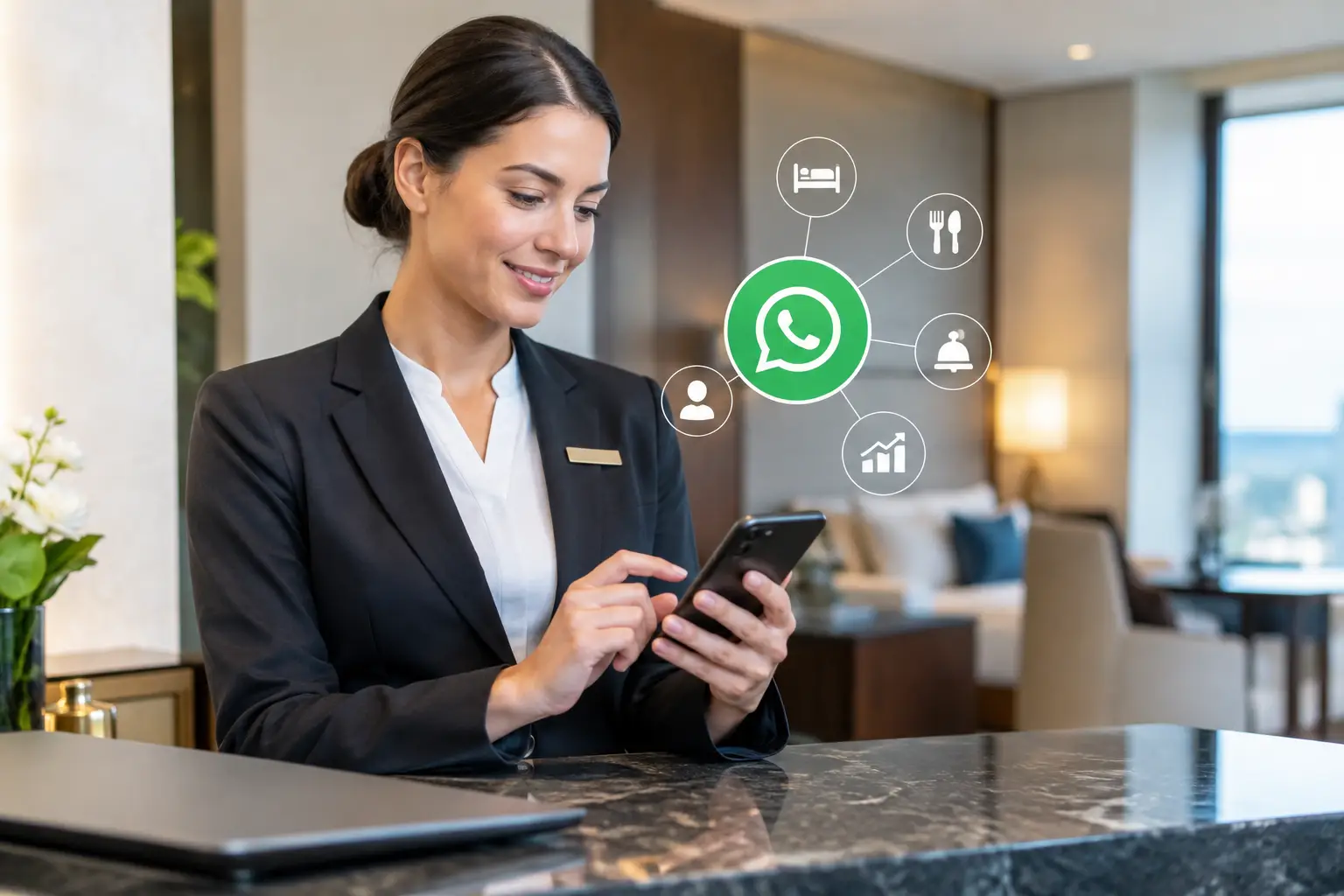
An intelligent concierge service through WhatsApp can handle routine questions around the clock while routing complex issues to staff. That protects the guest experience during busy periods and gives hotel teams a clearer record of common requests. It also reveals operational gaps, such as frequent questions about parking, pool hours, or airport transfers.
4. Promote dining when guests are most likely to act
Restaurant and bar messages work best when they are tied to time and context. A guest connecting to Wi-Fi at 5:30 p.m. may be a strong candidate for a dinner invitation. A morning connection may call for breakfast hours, coffee service, or room-service options.
Keep the offer specific. “Tonight: priority seating for hotel guests from 6 to 7 p.m.” is more actionable than “Visit our restaurant.” If your outlet has slower periods, use messaging to fill them without resorting to broad discounts that weaken the property’s positioning.
5. Turn Wi-Fi login into a preference capture opportunity
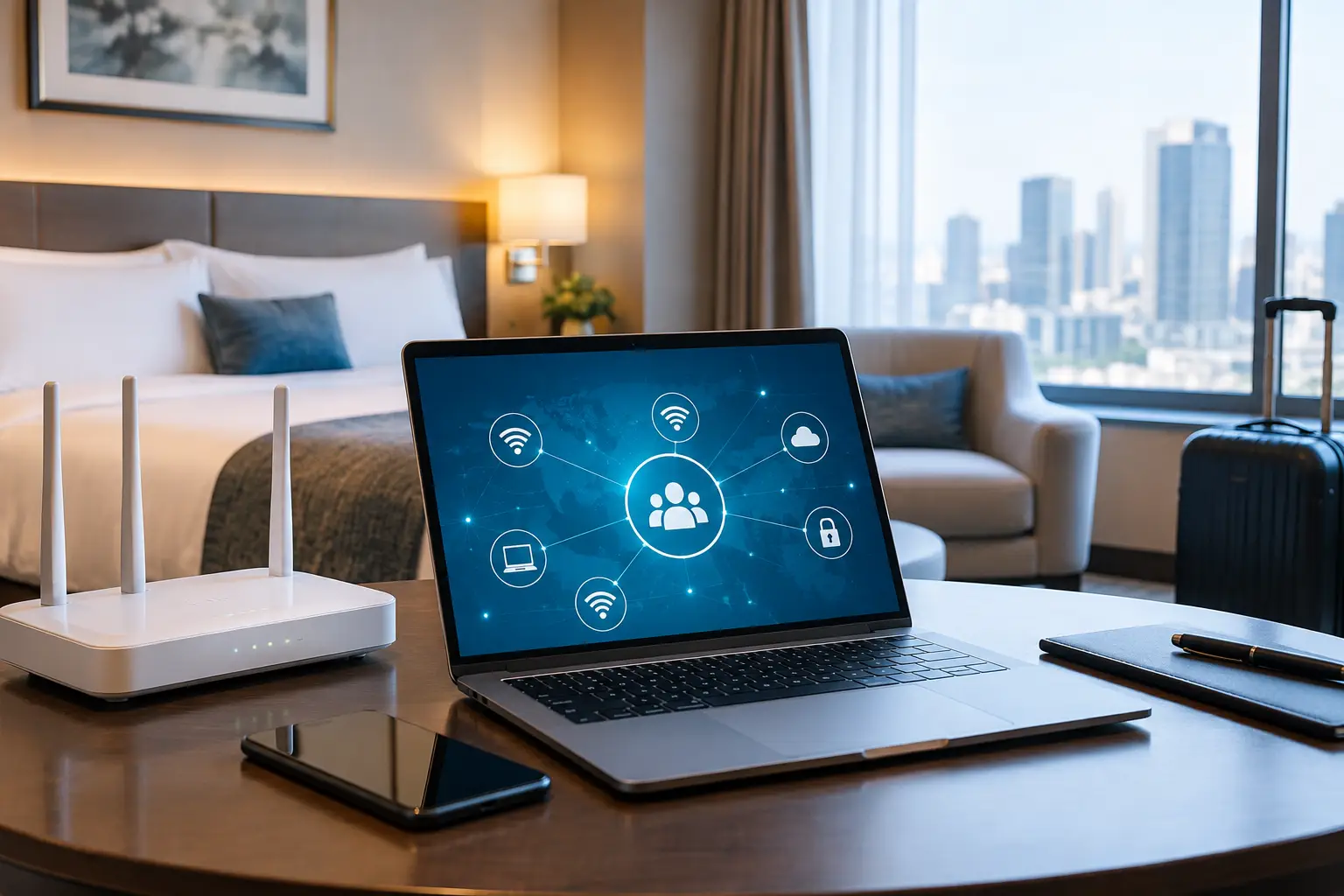
Free guest Wi-Fi is already part of the stay. It can also become a permission-based customer data channel. A well-designed captive portal can capture email addresses, phone numbers, consent, language preferences, and optional interests such as dining, wellness, local attractions, or business services.
The form should be short. Ask only for information you will use. A hotel that captures preferences and never changes its messages based on them creates frustration, not loyalty. A hotel that uses the data to send relevant recommendations gains a more useful guest profile with every visit.
6. Use real-time messages to recover service issues
Not every complaint needs to start as a negative online review. Give guests a direct, low-effort way to report problems while your team can still resolve them. A message after Wi-Fi login or shortly after check-in can ask, “Is everything in your room as expected? Reply here if you need assistance.”
This is not an invitation to automate apologies. It is an early-warning system. Build clear escalation rules so maintenance, housekeeping, or the duty manager receives urgent issues quickly. Measure response time and resolution time, not just the number of messages sent.
7. Recommend local experiences based on the guest’s stay
Concierge recommendations become more valuable when they reflect the reason for travel. Guests staying for a conference may need transport options and quick dinner recommendations. Families may want kid-friendly activities. Weekend leisure travelers may be interested in spa appointments, late checkout, or local events.
This does not require invasive profiling. Use stated preferences, booking information, and behavior guests have willingly shared. If a guest asks about museums through WhatsApp, a follow-up recommendation for nearby cultural attractions is helpful. Sending the same attraction list to every guest is not.
8. Drive spa, golf, parking, and other ancillary revenue
The most effective hotel guest messaging ideas often focus on services that are already available but under-promoted. A spa with open appointments, a paid airport transfer, valet parking, cabana rentals, meeting room availability, or a late checkout window can all be promoted through targeted messages.
Use scarcity carefully and honestly. If only two spa appointments remain, say so. If the message is an automated promotion, avoid language that implies a personal reservation has been held when it has not. Clear offers protect trust and make campaign performance easier to evaluate.
9. Support event and group guests without overwhelming them
Group blocks create a different messaging challenge. Attendees need schedules, venue directions, shuttle information, and changes in real time, but they do not all need the same marketing messages.
Create a separate segment for the event and send operational updates through the approved channel. Then offer relevant additions, such as group breakfast details, after-hours dining, or transportation. For the organizer, this reduces repetitive questions. For the hotel, it creates a more controlled guest experience during high-volume stays.
10. Ask for feedback before checkout
A pre-checkout message can identify dissatisfaction while there is still time to act. Ask one focused question: “How has your stay been so far?” Give guests an easy way to respond privately.
Positive responses can trigger a gentle review invitation after departure. Negative responses should create a staff task, not an automated request for a public rating. The difference matters. Review generation is valuable, but service recovery is more valuable when a guest is still on property.
11. Create a post-stay campaign that earns the next booking
The post-stay message should not be a generic thank-you followed immediately by a discount code. Start with relevance: a receipt or folio confirmation, a request for feedback, a note from the property, or recommendations for a future visit based on the guest’s prior stay.
Segment former guests by stay type, spend, source, and recency. A local weekend guest may respond to a seasonal package. A frequent corporate traveler may value flexible booking terms or a direct-booking benefit. This is where first-party data reduces dependence on costly third-party acquisition channels.
12. Re-engage past guests with audience-based remarketing
Hotels can use consented guest data and Wi-Fi interaction data to build smarter remarketing audiences for email, SMS, WhatsApp, and paid media. The advantage is not simply reaching more people. It is reaching people whose previous on-property behavior makes the message more relevant.
For example, guests who visited the rooftop bar can receive a future event announcement. Guests who used meeting-room Wi-Fi can receive weekday corporate offers. Guests who connected during a local festival can be invited back when that event returns. With integrations for platforms such as Facebook and Google Pixel, on-site traffic can inform digital follow-up without treating every past guest as identical.
Build the Messaging Program Around Operations, Not Just Campaigns
A strong hotel messaging program needs ownership. Marketing may create campaigns, but front desk, housekeeping, food and beverage, and concierge teams must know what guests are receiving and how to respond. Start with a small number of high-value automations: pre-arrival information, welcome concierge access, in-stay service recovery, and post-stay feedback.
Then review performance by segment. Track opt-in rates, response times, ancillary revenue, offer redemptions, complaint resolution, repeat bookings, and the cost to re-engage guests compared with paid acquisition. Wifi Marketing can help hotels connect captive Wi-Fi, customer data capture, automated communication, and remarketing into one operational system rather than a collection of disconnected tools.
The best next message is usually not the most promotional one. It is the one that answers a guest’s immediate question, solves a small problem, or makes a worthwhile part of the property easier to find.