
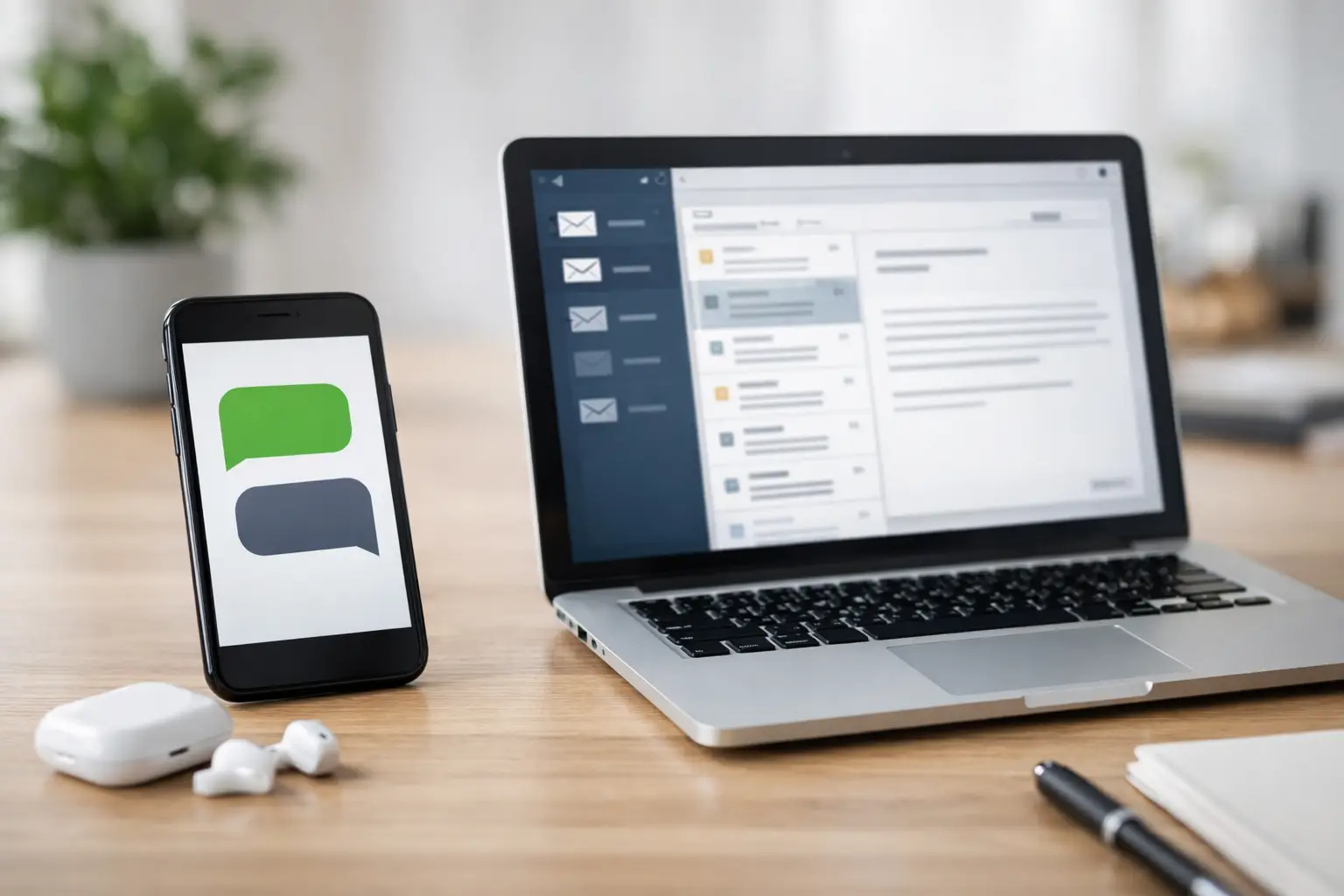
A customer leaves your store, hotel, clinic, or venue, and the clock starts immediately. If your follow-up is late, generic, or sent through the wrong channel, that customer may not come back. That is why sms vs email for retention is not a theoretical marketing debate. It is an operational decision that affects repeat visits, loyalty, and how much revenue you generate from the traffic you already paid to acquire.
For physical businesses, retention works best when communication matches customer behavior. Some messages need speed. Some need detail. Some need both. The right answer is rarely choosing one channel forever. It is choosing the right channel for the right moment, then connecting both to first-party data so each follow-up feels timely and relevant.
SMS vs Email for Retention: The Core Difference
SMS is immediate. Email is expandable. That single distinction drives most retention outcomes.
Text messages are opened quickly and usually read within minutes. They are ideal when timing is critical, such as a same-day bounce-back offer, an appointment reminder, a limited-time promotion, or a post-visit thank-you that needs fast visibility. For businesses with regular foot traffic, SMS can move customers back on-site with very little delay.
Email gives you more room to sell, educate, and segment. It is better suited to welcome sequences, loyalty updates, personalized recommendations, event promotion, reactivation campaigns, and content that needs context. If you want to explain value, showcase multiple offers, or nurture over time, email gives you more control.
The mistake many businesses make is treating these channels as interchangeable. They are not. SMS is a prompt. Email is a fuller conversation. When retention programs underperform, it is often because the message format does not match the urgency or complexity of the message itself.
Where SMS Wins
SMS performs best when you need quick action from a customer who already knows your business. Restaurants use it to bring customers back during slow periods. Hotels use it for upsells, pre-arrival reminders, and service follow-up. Retailers use it for flash promotions tied to recent in-store visits. Transportation hubs and public venues use it for time-sensitive updates that cannot wait for an inbox check.
The strength of SMS is friction reduction. There is no subject line to compete with, no heavy design requirement, and no need for the customer to sort through a crowded promotions tab. If a guest visited your location this afternoon and you send a relevant offer at 5 p.m., SMS gives that message a strong chance of being seen before the decision window closes.
That speed comes with limits. SMS is intrusive when overused, and customers have a lower tolerance for irrelevant texts than for irrelevant emails. Message length also matters. If the offer is confusing, the value is unclear, or the cadence is too aggressive, unsubscribe rates can rise quickly. SMS works best when segmentation is tight and the message is directly tied to customer behavior.
Where Email Wins
Email remains one of the most cost-efficient retention channels because it supports richer communication at scale. If you run a hotel group, a healthcare location, a retail chain, or a multi-site venue, email allows you to build structured retention programs without paying per message at the same level as SMS.
It also supports better storytelling. You can highlight loyalty benefits, feature seasonal campaigns, explain service updates, introduce new products, and personalize based on visit history. A customer who connected to guest Wi-Fi, opted in, and later receives an automated email series can be moved from one-time visitor to repeat buyer through steady, segmented communication.
Email is particularly strong when the buying cycle is not immediate. A customer may not act on the first message, but a well-timed sequence can keep your brand visible until they are ready. It also handles design, branding, and multi-offer promotions far better than SMS.
The downside is obvious. Attention is harder to win in email. Deliverability, subject lines, send timing, and creative quality all matter. If your database is weak or your messages are generic, email can become background noise. It rewards businesses that organize their customer data and build campaigns around behavior, not batch-and-blast assumptions.
Retention Performance Depends on Context, Not Hype
Businesses often ask which channel has the higher ROI. The more useful question is which channel performs better for the customer moment you are targeting.
If the goal is to get a recent visitor back within 24 to 72 hours, SMS often has the edge. If the goal is to deepen loyalty over several weeks or months, email usually carries more of the load. If the goal is appointment compliance, SMS can outperform because of immediacy. If the goal is cross-sell, upsell, or education, email often converts more efficiently because it gives you room to present options.
Industry also matters. Restaurants, quick-service hospitality, entertainment venues, and retail stores often benefit from SMS because visit cycles can be short and offer-driven. Hotels, healthcare providers, transportation services, and larger venue operators usually need both channels because the customer journey includes confirmations, reminders, post-visit surveys, and longer-term relationship building.
This is where first-party data changes the equation. If you know when a customer visited, what location they visited, how often they return, and what they opted in for, you can stop debating channels in the abstract. You can trigger each one based on behavior.
The Best Strategy Is Usually SMS and Email Together
For most customer-facing businesses, the strongest retention system combines SMS and email rather than choosing one side. SMS handles urgency. Email handles depth. Together, they create a communication rhythm that feels coordinated instead of repetitive.
A simple example makes this clear. A guest connects to your Wi-Fi at a restaurant. They are captured into your system with consent and tagged by location and visit date. Later that day, they receive a short text with a bounce-back offer valid for the next 48 hours. If they do not return, an email follows two days later with a broader incentive, menu highlights, or loyalty enrollment. If they visit again, the automation changes. If they do not, a reactivation sequence begins after a defined period.
That is a retention engine, not just a campaign.
The same pattern works in hotels, clinics, malls, airports, and retail groups. Data from on-site interactions feeds segmentation. Messaging is triggered by visit behavior. Customers receive communication in the format most likely to drive the next step. This is where platforms that connect guest Wi-Fi, automation, and messaging channels become commercially valuable. They turn anonymous foot traffic into known audiences you can re-engage with precision.
How to Decide Between SMS and Email for Retention
Start with urgency. If the message loses value in a few hours or a day, SMS is usually the better first touch. Then look at complexity. If the customer needs more explanation, images, multiple offers, or branded content, email is the better vehicle.
Next, consider cost and audience tolerance. SMS may drive faster action, but it is generally more expensive per send and less forgiving when misused. Email is more scalable, but weaker targeting can drag down performance. Neither channel works well when opt-in quality is poor or customer data is outdated.
Finally, evaluate the operational side. Can your team segment by location, visit frequency, customer type, and behavior? Can you automate based on real-world actions instead of manual lists? Can you measure repeat visits, redemptions, and revenue impact? Retention improves when channel choice is tied to infrastructure, not guesswork.
At Wifi Marketing, this is exactly where many businesses create leverage. Guest Wi-Fi becomes more than an amenity. It becomes the point where customer identity, consent, segmentation, and automated follow-up start working together.
What Businesses Should Avoid
The biggest mistake is over-messaging customers simply because you finally have their contact details. Retention is not about volume. It is about relevance. Sending every promotion through both channels to every contact will create fatigue fast.
Another common issue is poor coordination. A customer should not receive an SMS reminder and an email promotion that conflict with each other or arrive at awkward intervals. Channel strategy needs timing rules, suppression logic, and clear campaign goals.
There is also a measurement problem in many organizations. Opens and clicks matter, but they are not the whole story for physical businesses. The more useful metric is whether the message contributed to a repeat visit, a booking, a purchase, or a higher lifetime value.
The businesses that get retention right are not the ones with the loudest campaigns. They are the ones with the best timing, the cleanest data, and the discipline to match message type to customer intent.
If you are deciding between SMS and email, do not ask which channel is better in general. Ask which one gives this customer the best reason to come back, at this moment, through the path they are most likely to notice and act on. That is where retention stops being a marketing expense and starts becoming a measurable growth system.
Comments are closed