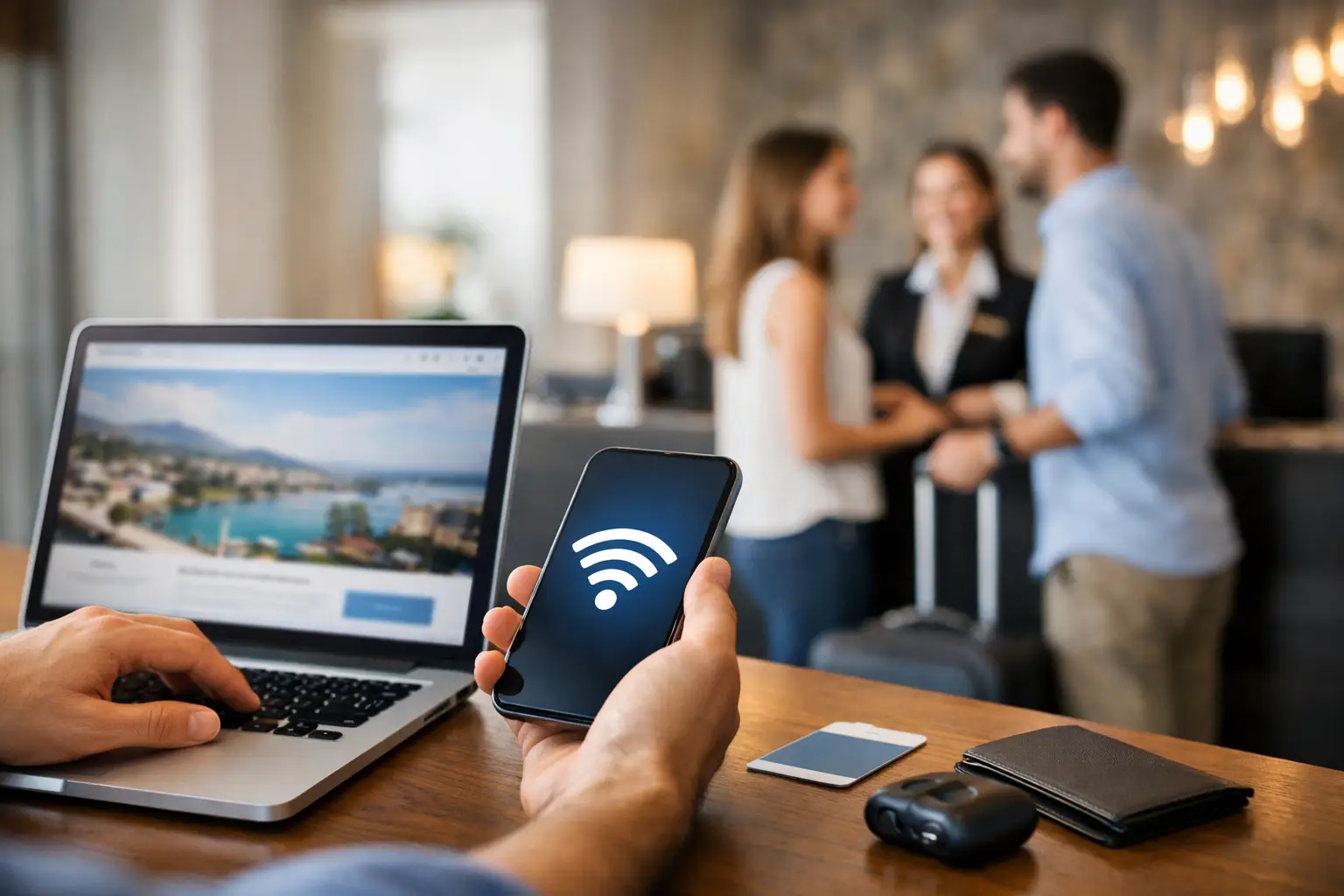
A hotel can have hundreds of guests on property every week and still leave with very few reliable ways to speak to them again. This hotel WiFi conversion case study examines how an independent property can turn a standard guest amenity into a measurable acquisition and retention channel – without adding another manual task to the front desk.
The scenario below is representative of the operational challenge many US hotels face: occupancy is healthy, OTA commissions are expensive, and the guest database is fragmented across the PMS, booking channels, restaurant systems, and occasional email sign-up forms. Free WiFi is already available. The missing piece is a strategy for using that connection to build permission-based guest relationships and create future direct revenue.
The Property Challenge: Occupancy Without Ownership
Consider a 120-room urban boutique hotel with a lobby bar, a small event space, and a mix of leisure and business travelers. The property has an average occupancy of 72%, with most reservations originating through OTAs, corporate travel programs, and the hotel website.
Its team can see room nights and booking sources, but has limited visibility into who visits the lobby, uses the bar, attends an event, or returns to the neighborhood after checkout. Marketing activity is largely broad: seasonal emails sent to an incomplete list, paid social campaigns aimed at wide geographic audiences, and occasional promotional offers that are difficult to attribute to actual stays.
Guest WiFi presented an overlooked point of contact. Thousands of devices connected each month, yet the network only displayed a generic password on a lobby sign. There was no branded experience, no opt-in data capture, no segmentation, and no way to connect a WiFi session to future communication.
The objective was not to put friction in front of guests trying to get online. It was to create a short, mobile-friendly login experience that gave the hotel a better first-party data foundation while preserving the service standard guests expect.
Hotel WiFi Conversion Case Study: The Conversion Design
The hotel implemented a branded captive portal through a cloud-managed WiFi marketing platform. Instead of entering a shared password, guests selected a login method, reviewed the WiFi terms, and could opt in to hotel updates and offers. The portal reflected the property’s visual identity and was configured remotely across guest rooms, the lobby, bar, and event spaces.
The conversion flow was deliberately simple. A guest connects to the network, sees the hotel brand, enters basic information or uses a supported social login method, accepts the access terms, and reaches the internet. The entire process needs to work comfortably on a phone screen. Every unnecessary field reduces completion rates.
For this property, the initial data strategy focused on email address, mobile number where voluntarily provided, consent status, language preference, and visit location. The hotel did not try to collect a long demographic profile at the login screen. That information can be developed over time through behavior, campaign engagement, preference centers, and guest service interactions.
This distinction matters. A portal that asks for too much may generate more data fields but fewer usable contacts. A concise portal produces a larger pool of verified, permission-based records that the hotel can segment and activate.
Segmenting by Context, Not Just Contact Details
The WiFi network was divided into meaningful zones: guest rooms, lobby, bar, and event space. This gave the marketing team context that a typical booking record did not always provide.
A device connecting from the bar on a Friday evening could enter a different communication path than a device connecting in a guest room during a Tuesday business stay. An event attendee could receive a post-event message that invites them to plan a future meeting or return for a weekend package. A guest who reconnects several times across separate visits may be a strong loyalty candidate even if the hotel does not yet have a formal loyalty program.
The point is not to send more messages. It is to make messages relevant to why the person was on the property in the first place.
The Automation That Turned Data Into Revenue Opportunities
Data capture alone does not create conversion. The hotel built a small set of automated journeys tied to the guest lifecycle.
New WiFi registrants who opted in received a welcome message shortly after login. It included practical information such as bar hours, local recommendations, and a direct channel for assistance. This is where an intelligent customized concierge on WhatsApp can be especially useful. Guests can ask routine questions in a familiar messaging environment, while the hotel can guide conversations toward amenities, reservations, and service recovery when appropriate.
After checkout, opted-in guests entered a follow-up sequence based on their visit context. Leisure travelers received a return-stay offer built around weekends and local events. Business travelers received messaging focused on reliable workspaces, flexible arrival options, and direct-booking benefits. Event attendees were introduced to group booking and meeting options.
The property also created audience segments for remarketing. A guest who had connected to WiFi, engaged with a hotel email, and visited the direct booking site could be added to a more qualified advertising audience than a broad regional campaign. This does not eliminate paid media costs, but it can reduce wasted impressions by prioritizing people who have already demonstrated an on-property relationship.
What the Hotel Measured
A WiFi conversion program should be judged by commercial performance, not by login volume alone. Connections are useful only when they lead to permission-based contacts, engagement, bookings, ancillary spend, or a clearer understanding of guest behavior.
The property established a dashboard that tracked the journey from WiFi access to marketing outcome. Its core metrics included:
- WiFi connection volume and unique devices by property zone
- Portal completion rate and marketing opt-in rate
- New verified contact records collected each month
- Email, SMS, and WhatsApp engagement by audience segment
- Direct booking visits, booking inquiries, and attributable revenue from follow-up campaigns
- Repeat visit signals, including devices returning after a meaningful time gap
A useful internal benchmark was not simply, “How many people logged in?” The better question was, “What percentage of connected guests became reachable, consenting contacts, and what did the hotel do differently because of that information?”
For example, if 3,000 unique devices connect monthly and 55% complete the portal with valid contact details, the hotel adds roughly 1,650 usable records before accounting for duplicate devices and existing guests. If only a portion opt in to promotional communication, that is still a growing first-party audience built from people who have physically visited the property.
Actual outcomes will depend on occupancy, guest mix, portal design, local privacy requirements, consent language, network coverage, and the quality of the offers that follow. A resort with long leisure stays will use different triggers than an airport hotel with frequent one-night business travelers. The model should fit the property, not force every hotel into the same campaign calendar.
The Operational Lessons
The most successful part of the implementation was not the portal design alone. It was the decision to treat WiFi as part of the hotel’s marketing operations rather than as an isolated IT utility.
Marketing owned the audience strategy and campaign calendar. Operations ensured that the guest experience remained easy and that on-site teams understood what guests would see. IT or the managed provider handled network configuration, access policies, device compatibility, and cloud administration. When these responsibilities are unclear, WiFi marketing often becomes a promising project that never reaches consistent execution.
There were trade-offs. Requiring a login can create a small amount of friction, especially for guests arriving late or trying to connect multiple devices. The hotel addressed this by keeping the form minimal, allowing returning devices to reconnect efficiently, and maintaining a support path for guests who needed help. Convenience remained the priority.
Consent also required discipline. Marketing permissions need to be clear, records must be stored appropriately, and message frequency must respect the relationship. A contact captured through WiFi is not permission to send daily promotions. The strongest programs use timely, useful communication and give guests control over their preferences.
Building the Next Step From Guest WiFi
Once the hotel had a functioning portal, segmented audiences, and automated follow-up, it could expand strategically. The lobby bar could promote quieter midweek offers to local repeat visitors. Event organizers could receive tailored group sales outreach. Returning leisure guests could be invited to book direct with a value-added package instead of a generic discount.
Wifi Marketing helps properties bring those components together across compatible hardware, cloud configuration, data capture, automation, analytics, and team training. The goal is practical: make every guest connection more useful to both the traveler and the hotel.
A guest who uses your WiFi has already chosen to spend time on your property. The next opportunity is to make that moment the beginning of a relevant, measurable relationship rather than the end of an anonymous visit.
Comments are closed