
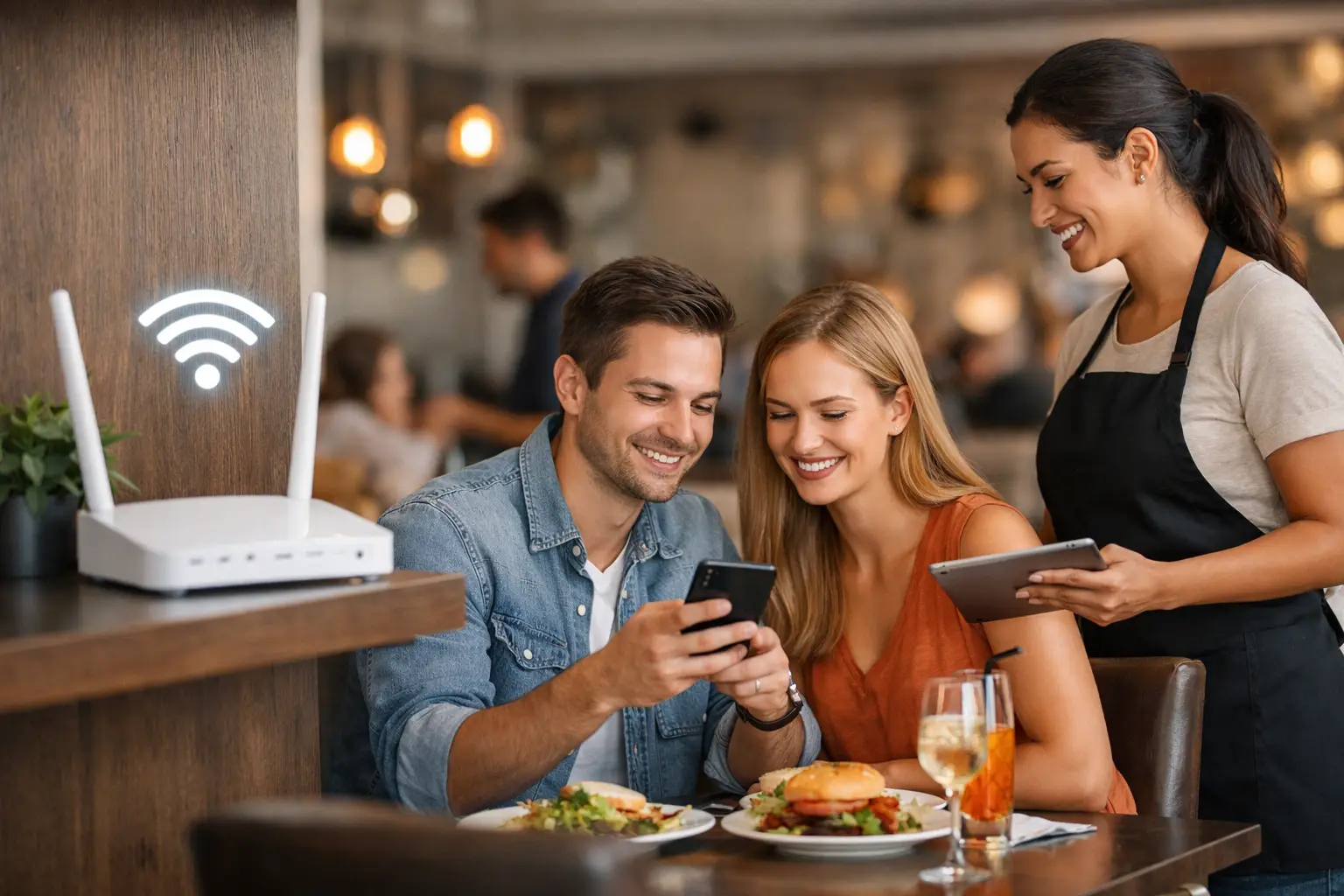
A guest sits down for lunch, joins the restaurant’s free Wi-Fi, and receives a relevant offer before the check arrives: add a dessert for $4, upgrade to a premium side, or save 15% on their next visit. That is the commercial logic behind a strong restaurant WiFi upsell campaign example. The Wi-Fi connection is not the product. It is the moment a restaurant can turn an anonymous visit into a permission-based customer relationship and a measurable sales opportunity.
For operators dealing with thin margins and rising acquisition costs, this matters because the guest is already on-site, engaged, and close to a purchase decision. The right campaign should improve the current visit without making the login process feel like a sales interruption. It should also create a path to bring the guest back when they are no longer in the dining room.
The campaign scenario: lunch traffic with a higher average check
Consider a fast-casual restaurant with strong weekday lunch traffic but limited dinner repeat business. Many guests visit because the location is convenient, place a familiar order, and leave without joining a loyalty program or sharing contact information. The restaurant is paying for guest Wi-Fi but receives little commercial value from it.
The goal is straightforward: increase average order value during lunch, capture first-party customer data with consent, and convert first-time lunch guests into future dinner or weekend customers. Rather than sending the same promotion to every person who connects, the restaurant uses a captive portal and automated follow-up based on visit behavior.
A guest selects the restaurant’s Wi-Fi network and sees a branded login page. They can connect through a short form, social sign-in, or a loyalty enrollment option, depending on the restaurant’s data strategy. The page asks only for the information needed to support the campaign, such as email address, mobile number with consent, birthday month, and preferred visit occasion. Keeping this form short is critical. Every additional field can reduce completion rates.
After connecting, the guest sees a simple on-screen offer: “Add any dessert or premium beverage today and receive a $5 credit for your next dinner visit.” This is stronger than a generic discount because it links an immediate upsell to a future return visit. The server can recognize the offer through a code, a POS note, or a QR-based redemption process.
Why this restaurant WiFi upsell campaign example converts
The campaign works because it addresses two different decisions at the right time. During the meal, it prompts a low-friction add-on that can lift the current check. After the visit, it gives the customer a reason to return for a different occasion.
Timing is the difference between useful marketing and background noise. A lunch guest may not respond to a dinner promotion at 11:45 a.m. while ordering. But a dessert, beverage, or premium side offer is relevant when the guest is actively spending. The dinner credit creates value without requiring the restaurant to discount the entire lunch order.
This approach also protects margins better than broad couponing. A blanket 20% discount may attract attention, but it can train regular customers to wait for deals and reduce revenue from purchases that would have happened anyway. An upsell campaign should focus on incremental items with favorable margins, such as desserts, specialty drinks, appetizers, upgrades, or meal bundles.
The offer still needs to match the operating model. A full-service restaurant may promote wine pairings, shareable appetizers, or a chef’s special. A quick-service location may get better results from meal upgrades, cold beverages, or a limited-time add-on. The campaign is not about pushing the highest-priced item. It is about presenting the most relevant next purchase with a clear reason to act.
Campaign flow from Wi-Fi login to repeat visit
A practical setup begins with a branded captive portal connected to the restaurant’s guest Wi-Fi network. The portal should display the restaurant’s visual identity, terms of use, and clear consent language for marketing communications. It should also collect data in a way that supports privacy requirements and respects the permissions the guest has provided.
Once the guest connects, the system records a first-party interaction that can be used for segmentation. At a minimum, the restaurant can distinguish new visitors from returning visitors. With the right configuration, it can also evaluate visit frequency, daypart, location, and campaign engagement. A multi-location brand can compare results by store instead of relying on a single blended number.
The first message should appear on the Wi-Fi welcome screen, where attention is highest. The offer needs one clear action. Avoid presenting a menu of six promotions, a long loyalty explanation, and an email subscription request all at once. A guest who is trying to get online wants speed. The marketing value comes from relevance, not from making the login experience complicated.
After the connection, automation carries the campaign forward. A guest who accepts the offer can receive a confirmation by email, SMS, or WhatsApp where consent permits. A guest who does not redeem can receive a different follow-up after the visit, such as an invitation to try a dinner special within seven days. If the guest returns, the restaurant can suppress introductory offers and instead reward repeat behavior.
A restaurant may also use a customized WhatsApp concierge to answer questions about menu items, reservations, hours, catering, or loyalty rewards. This is particularly useful for venues where guests often need quick answers before choosing where to eat. The conversation should be helpful first and promotional second.
Building offers that staff can actually support
A campaign can fail even when the marketing logic is sound if the dining room team does not know how to honor it. Managers should brief staff before launch, define the redemption process, and make sure the offer is easy to explain. If a guest has to show three screens, wait for a manager, or debate eligibility at the register, the perceived value disappears.
Use a unique campaign code or a POS button so redemptions can be tracked accurately. This also helps identify whether the offer drove a genuinely incremental purchase. For example, compare the average check of Wi-Fi guests who redeemed the dessert offer with similar guests who did not. Review product mix as well. A higher average check is useful, but not if the promotion simply replaces a higher-margin item with a discounted one.
The best offer structure depends on the restaurant’s capacity. If the kitchen is already overloaded during peak lunch, a complex made-to-order add-on can create operational friction. A bottled beverage, prepped dessert, or simple premium upgrade may be more appropriate. Marketing should support service quality, not create a bottleneck.
The follow-up automation that creates retention
The restaurant should not treat captured contact data as a reason to send frequent, untargeted promotions. The value comes from using visit signals to send fewer, more relevant messages.
A first-time lunch guest might receive a dinner credit within two hours of leaving, followed by a reminder three days later if they have not returned. A returning guest who visits twice in a month might receive an invitation to a loyalty tier, a birthday reward, or early access to a seasonal menu. A guest who has not returned in 45 days can receive a win-back offer tied to the daypart they usually visit.
This is where guest Wi-Fi becomes more than a connectivity expense. It gives restaurant marketers an owned audience that can support email automation, SMS and WhatsApp outreach, and remarketing audiences for paid media. Instead of advertising broadly to people who may never visit, the restaurant can re-engage people who have already chosen to walk through the door.
Wifi Marketing can help operators configure the hardware, captive portal, data capture flow, and automated communications so the program is practical across one location or an entire portfolio. The objective is not more technology for its own sake. It is a campaign workflow that the operations and marketing teams can measure and manage.
What to measure beyond Wi-Fi logins
Wi-Fi connections are a starting metric, not a business outcome. A campaign dashboard should track portal conversion rate, contact capture rate, offer views, redemptions, average check lift, return visits, and revenue attributed to follow-up communications. For multi-location groups, compare performance by restaurant, daypart, and offer type.
Pay close attention to repeat-visit rate. A lunch upsell that generates a modest immediate lift but brings guests back for dinner can be more valuable than a large one-time discount. It is also useful to track opt-outs and complaint rates. High opt-outs usually signal that message frequency, offer relevance, or consent expectations need adjustment.
Test one variable at a time. Try a dessert offer against a beverage upgrade, or a $5 dinner credit against a complimentary appetizer with purchase. Keep the audience and time window comparable. Restaurants often make decisions based on anecdotes from one busy shift; controlled testing produces a more reliable view of what improves revenue.
Start with one useful guest moment
The most effective restaurant WiFi upsell campaign is rarely the most elaborate one. Start with a clear business problem, one high-margin offer, and a follow-up that gives guests a credible reason to return. When the Wi-Fi experience respects the guest’s time and the campaign respects the restaurant’s operations, every connection becomes a chance to build a more valuable customer relationship.
Comments are closed