
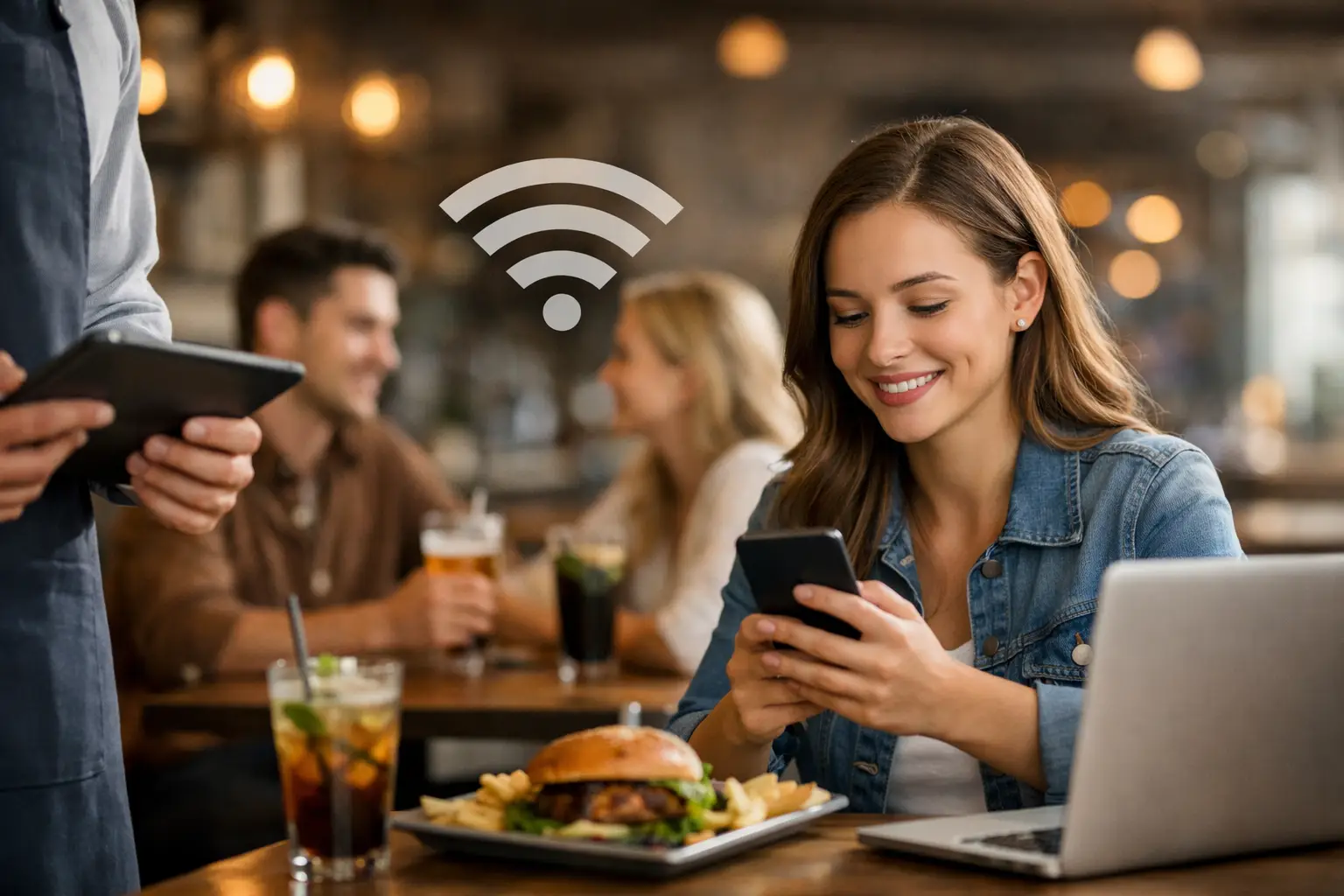
Friday dinner rush is over, the tables are turning, and your restaurant just served a few hundred guests. Most of them paid, left, and disappeared. That is the core problem restaurant guest wifi marketing solves. Instead of treating free Wi-Fi as a utility cost, smart operators use it as a practical channel for capturing first-party data, building repeat traffic, and improving marketing performance after the meal ends.
For restaurant owners and marketing teams, this matters more than ever. Paid ads cost more, third-party data is less reliable, and loyalty is harder to build when guests split their attention across delivery apps, review platforms, and competing offers. If your restaurant already provides guest Wi-Fi, you are sitting on a customer touchpoint that can do more than keep people online. It can help you identify visitors, segment them, and follow up with relevant messages that drive another visit.
What restaurant guest wifi marketing actually does
At its simplest, restaurant guest wifi marketing turns guest internet access into a permission-based marketing engine. Instead of offering an open network with no visibility, restaurants present a branded captive portal where guests log in through email, SMS, social sign-in, or another approved method. That interaction becomes the start of a measurable customer journey.
The value is not the login screen alone. The value comes from what happens next. A restaurant can collect contact data, trigger automated follow-up campaigns, build audience segments, and connect in-store visits with digital remarketing. That means one dine-in visit can lead to a review request, a bounce-back offer, a birthday promotion, or a reactivation message sent weeks later.
This is where many operators shift their thinking. Guest Wi-Fi is not just an amenity. It is infrastructure that supports customer acquisition, engagement, and retention when configured correctly.
Why restaurants are a strong fit for guest WiFi marketing
Restaurants generate frequent, high-intent foot traffic. Guests arrive in person, spend time on-site, and often connect to Wi-Fi because they want to browse, work, share photos, or avoid using mobile data. That creates a natural opportunity to start a direct relationship.
Compared with some other venue types, restaurants also benefit from shorter buying cycles. A guest who had a good experience last week may return this weekend if the follow-up offer is timely and relevant. A family that visited for lunch might respond to a kids-eat-free promotion. A customer who comes every Tuesday may be a strong candidate for loyalty messaging instead of broad discounting.
That said, results depend on the concept. Fast casual, full service, cafes, bars, and multi-location restaurant groups all use guest Wi-Fi differently. A coffee shop may focus on repeat frequency and time-of-day promotions. A fine dining venue may use Wi-Fi more selectively, prioritizing brand experience and post-visit review generation over aggressive messaging. The best strategy fits the operating model, not the other way around.
The real business case: data, retention, and lower ad waste
Restaurant marketing often struggles with one basic issue: weak ownership of customer data. If most of your traffic comes through walk-ins, marketplaces, or third-party apps, you may have limited ability to bring people back without paying again.
Restaurant guest wifi marketing changes that by creating a first-party data stream tied to real visits. When a guest logs in, you can begin building a cleaner database of diners who have physically entered the location. That is more useful than a cold list because it reflects actual foot traffic, not just online interest.
This has several practical effects. First, retention gets easier because you can automate follow-up instead of relying on memory or manual outreach. Second, paid media gets more efficient because remarketing audiences can be built from known visitors. Third, marketing becomes more relevant because guests can be grouped by location, visit frequency, dwell time, or campaign behavior.
None of this guarantees results on its own. If the food, service, or offer is weak, marketing automation will not fix the business. But for restaurants that already deliver a solid guest experience, Wi-Fi marketing gives that experience a longer commercial life.
How a strong restaurant guest wifi marketing setup works
The most effective programs are designed around the guest journey, not just the network settings. The login process should be fast, mobile-friendly, and branded. If it feels clunky or invasive, conversion rates drop and the experience creates friction at the wrong moment.
After login, automation is where performance starts to compound. A first-time visitor might receive a thank-you message and a future offer. A repeat guest could get loyalty-focused messaging instead of another acquisition discount. A lapsed customer might receive a time-sensitive incentive after a set period of inactivity.
Restaurants with multiple locations can go further by segmenting audiences at the store level. This matters because customer behavior is rarely uniform across a region. Urban lunch traffic behaves differently than suburban family dinner traffic. If every location runs the same campaign without considering visit patterns, messaging gets less relevant and less profitable.
The technology also needs to fit restaurant operations. That means compatibility with existing hardware, reliable connectivity, remote configuration, and reporting that busy operators can actually use. If the system requires constant manual intervention, adoption usually fades.
What to measure beyond logins
Too many businesses stop at vanity metrics. High Wi-Fi usage may look positive, but it does not say much about marketing impact. Restaurants should evaluate guest Wi-Fi performance based on commercial outcomes.
Start with contact capture rate and consent quality. Then look at return visit behavior, campaign response, review generation, audience growth, and attributed revenue from follow-up promotions. If you are running email, SMS, or WhatsApp outreach, compare segment performance rather than just top-line sends. A smaller, better-timed audience often outperforms a broader blast.
There is also value in operational data. Visit frequency trends, dwell time patterns, and location-level behavior can help operators make better decisions about staffing, offers, and store performance. Wi-Fi analytics should support both marketing and day-to-day management.
Common mistakes that limit ROI
The first mistake is treating guest Wi-Fi as a standalone tactic instead of part of the wider marketing stack. If captured data never flows into automation, remarketing, or CRM activity, the business leaves most of the value on the table.
The second is asking for too much too early. Restaurants sometimes build login flows with too many fields, too many screens, or too much legal language upfront. That reduces login completion. In most cases, the better approach is to capture the minimum needed to begin the relationship and collect more over time.
The third is sending generic offers to everyone. Discount-heavy campaigns may create short-term response, but they can train customers to wait for deals. Segmentation matters. Frequent guests, occasional diners, and inactive visitors should not receive identical messaging.
Finally, some operators underestimate compliance and guest trust. Permission-based communication must be handled carefully, with transparent consent and responsible data practices. Short-term list growth is not worth long-term brand damage.
Where this fits in a modern restaurant marketing strategy
The strongest restaurant brands do not rely on a single channel. They combine on-site experience, customer data capture, automated follow-up, and paid media into one connected system. Guest Wi-Fi fits this model because it bridges physical visits and digital communication.
That bridge is valuable at a time when first-party data matters more and ad efficiency matters more. Instead of guessing which guests might come back, restaurants can build audiences from actual diners and communicate based on observed behavior. Instead of sending broad promotions to everyone, they can target likely returners, re-engage quiet customers, and support loyalty with less waste.
This is also why implementation matters. The right partner does more than provide software. They help configure hardware, align the captive portal with the brand, connect automation tools, and train teams to read the data. For many operators, that practical support is the difference between a Wi-Fi network that just works and a Wi-Fi marketing system that produces measurable returns.
Wifi Marketing approaches this as both a technology platform and an implementation partner, which is often what restaurant groups need when they want results without adding operational complexity.
A restaurant already has one of the hardest parts figured out: getting people through the door. The next step is making each visit more valuable after the check is paid, and guest Wi-Fi is one of the most underused ways to do it.
Comments are closed