
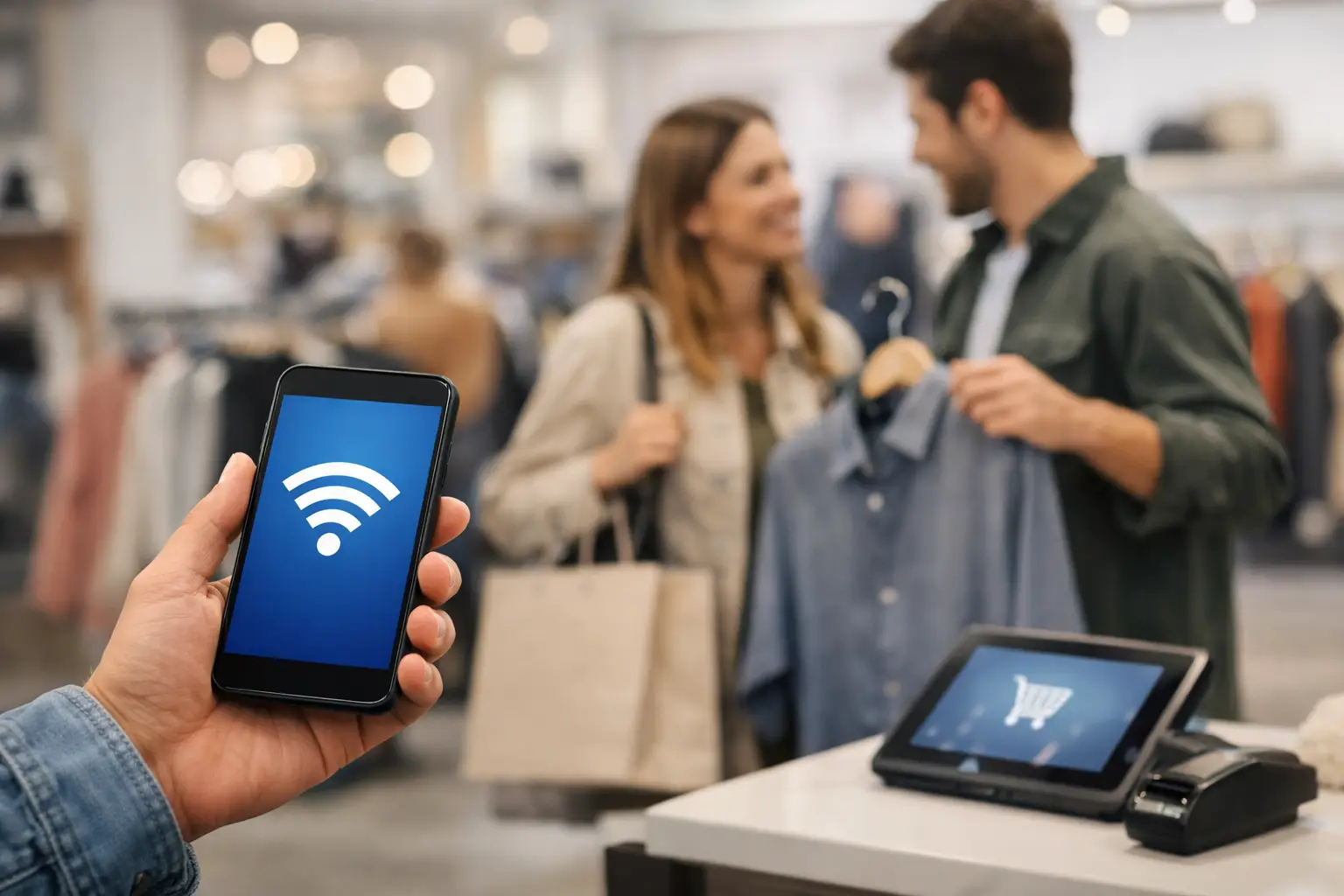
A shopper walks into your store, connects to guest Wi-Fi, browses three departments, and leaves without buying. For most retailers, that visit disappears into foot traffic data. With the right retail wifi conversion tactics, it becomes the start of a measurable marketing journey – one that can drive a same-day offer, a follow-up message, or a repeat visit next week.
That is the real value of retail Wi-Fi. It is not just a convenience feature for customers who want a better signal. It is a low-friction channel for capturing first-party data, identifying intent, and connecting in-store behavior to digital conversion activity. As paid media gets more expensive and anonymous traffic gets harder to retarget, retailers need better ways to turn physical visits into known audiences.
Why retail WiFi conversion tactics matter now
Retailers are under pressure from both sides. Acquisition costs keep rising, while store teams are still expected to increase basket size, repeat visits, and loyalty signups. At the same time, many stores already provide guest Wi-Fi but treat it as a utility expense instead of a revenue asset.
That gap creates an opportunity. When guest Wi-Fi is tied to a captive portal, CRM workflows, and remarketing audiences, the network starts producing commercial value. A store can identify new versus returning visitors, trigger campaigns based on visit behavior, and use consented customer data to support email, SMS, or WhatsApp outreach.
Not every retail environment should use the same playbook. A fashion retailer may prioritize repeat visits and post-visit offers. A grocery or convenience format may care more about frequency and time-sensitive promotions. The tactics need to match buying cycle, foot traffic patterns, and average order value.
Retail WiFi conversion tactics that create measurable lift
1. Reduce login friction without giving up data quality
The first conversion point is the Wi-Fi sign-in itself. If the portal asks for too much too soon, shoppers abandon it. If it asks for almost nothing, the data becomes less useful. The best balance is a short, mobile-friendly flow that captures one or two key identifiers, usually email or mobile number, plus clear consent.
Social login can still work in some settings, but direct data capture is often more reliable for long-term remarketing. The objective is simple: collect enough to identify and re-engage the shopper, without turning Wi-Fi access into a form-filling exercise.
2. Match the portal offer to shopper intent
A generic «Join our Wi-Fi» screen does little for conversion. A better approach is to attach a relevant value exchange to access. That could be 10 percent off today, early access to new arrivals, loyalty enrollment, or entry into a giveaway tied to the brand.
The offer matters because it sets the tone for the relationship. Discount-heavy stores may benefit from immediate incentives. Premium retailers may convert better with exclusivity or style updates rather than price cuts. The tactic works when the portal message feels like a retail offer, not an IT screen.
3. Segment by visit behavior, not just sign-up source
Capturing a contact record is only the beginning. The higher-performing strategy is to segment based on what the shopper does in the physical location. Visit frequency, dwell time, repeat visits, store location, and time of day can all help identify where someone sits in the buying journey.
A first-time visitor who spent 20 minutes in-store but did not return may need a welcome offer. A repeat visitor with multiple long visits may be close to purchase and respond better to product-specific messaging or concierge outreach. This is where retail Wi-Fi becomes more than a lead capture tool. It becomes an intent signal.
Using automation to convert store traffic after the visit
4. Trigger fast follow-up while the store visit is still fresh
Timing changes performance. If someone connects today and gets a message five days later, the impact is weaker. If they receive a branded thank-you, product reminder, or limited-time incentive shortly after the visit, conversion rates tend to improve.
This is especially effective when the message reflects the retail context. A beauty retailer can follow up with a consultation offer. A mall tenant can push a same-week return incentive. A specialty store can send a category-specific promotion based on where the shopper spent time. Speed matters, but relevance matters more.
5. Use email, SMS, and WhatsApp differently
One common mistake is sending the same message across every channel. Email works well for richer content, lookbooks, product launches, and ongoing nurture. SMS is better for short, urgent, conversion-focused prompts. WhatsApp can be particularly effective when the brand has a concierge-style service that supports product questions, appointment scheduling, or personalized assistance.
The channel mix should reflect shopper expectations and consent. For some retailers, email will drive the highest total revenue. For others, SMS or WhatsApp will outperform on immediate action. The right answer depends on customer profile, frequency tolerance, and the complexity of the purchase.
6. Build remarketing audiences from in-store visitors
One of the strongest retail wifi conversion tactics is using Wi-Fi sign-ins to support paid media efficiency. Instead of targeting broad local audiences, retailers can build remarketing pools from real store visitors and serve ads based on recent behavior.
This creates a tighter connection between physical traffic and digital spend. A shopper who visited but did not buy can be retargeted with product ads, a local store promotion, or a reminder tied to recent store activity. That usually performs better than cold audience campaigns because the shopper already knows the brand and has shown location-based intent.
The in-store experience still determines the outcome
7. Connect Wi-Fi data to store operations
Better marketing cannot fully compensate for poor execution on the floor. If a shopper signs in for a promotion but the staff does not recognize it, trust drops. If traffic spikes at a specific hour but staffing is light, conversion suffers. Wi-Fi data becomes more valuable when operators use it beyond marketing.
Footfall patterns, repeat visitor trends, and dwell times can help inform scheduling, merchandising, and store-level promotion planning. The more the operation responds to actual traffic behavior, the more likely marketing efforts will convert.
8. Personalize by location and store format
Multi-location retailers often make the mistake of running one national Wi-Fi journey for every store. That is rarely optimal. Urban stores, outlet locations, mall units, and flagship formats attract different customer mixes and different visit intent.
Location-aware messaging improves performance because it reflects what the shopper is likely to want from that store. A downtown location may push convenience and speed. A larger suburban format may promote events, bundles, or departments with longer dwell times. The infrastructure can be centralized, but the conversion strategy should not be one-size-fits-all.
9. Measure revenue, not just logins
A high Wi-Fi login count can look impressive and still have little commercial impact. The real question is whether the program is producing opted-in contacts, repeat visits, higher basket value, and attributable sales.
Retailers should track portal conversion rate, consent rate, return visit rate, campaign engagement, and downstream purchase behavior. Where possible, compare locations with and without triggered follow-up or test different portal offers by store cluster. The goal is not to prove that people use Wi-Fi. It is to prove that Wi-Fi changes customer behavior in profitable ways.
What separates average programs from high-performing ones
The difference is usually not hardware. It is execution. Average retail Wi-Fi programs stop at access. High-performing programs treat the network as part of the marketing stack, the customer data strategy, and the store growth model.
That means the portal is branded and conversion-focused. The captured data flows into real workflows. Audiences are segmented by behavior. Messages are timed around store visits. Reporting connects store traffic with campaign outcomes. When all of that is in place, guest Wi-Fi stops being a background service and starts acting like a measurable acquisition and retention channel.
For retailers managing multiple locations or working through agency and integration partners, implementation also matters. The right platform should support cloud-based deployment, remote configuration, analytics visibility, and compatibility with different hardware environments. If the program is hard to maintain, teams stop using it. If it is easy to scale, it becomes part of standard retail operations. This is where a provider such as Wifi Marketing can add value by combining software, setup, and campaign execution support in one system.
Retail Wi-Fi will not fix weak merchandising or poor customer service, and it will not replace broader CRM strategy. But it can make your existing traffic more valuable, your follow-up more precise, and your ad spend more efficient. For most retailers, that is not a minor improvement. It is a practical way to turn store visits into a marketing asset you actually control.
The stores that win this year will not just drive traffic. They will identify it, segment it, and act on it while the buying intent is still warm.
Comments are closed