
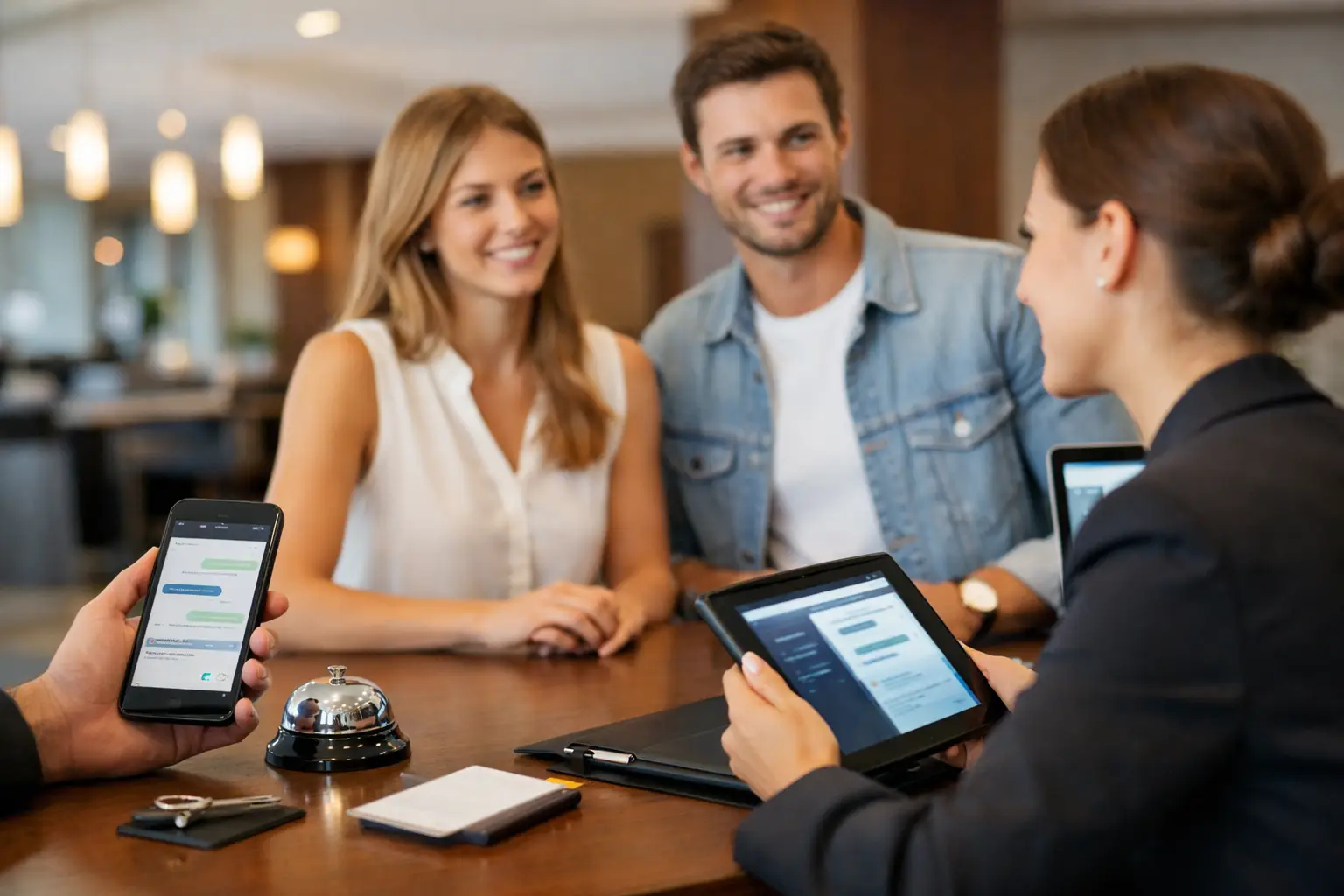
A guest lands at 9:40 p.m., connects to the hotel Wi-Fi, and sends a WhatsApp message asking whether room service is still available. If the property cannot respond until the front desk clears its queue, the opportunity is already fading. This hotel guest messaging case study examines how a mid-market property can turn that moment into better service, more ancillary revenue, and a useful first-party data asset.
The example below is a composite based on common hotel operating conditions rather than a promise of identical results for every property. Room count, staffing model, guest mix, PMS connectivity, and local consent requirements all affect the outcome. The operating lesson is consistent: messaging performs best when it is connected to guest intent and a clear response process, not treated as another broadcast channel.
The operational problem: guests had questions, but no clear channel
Consider a 140-room independent hotel serving a mix of business travelers, weekend leisure guests, and small event groups. The property offered free Wi-Fi, but the network was simply an amenity. Guests joined with a generic password, and management had no practical way to understand who was on-site, what stage of the stay they were in, or whether a guest had agreed to receive future communications.
The front desk managed most guest requests by phone and in person. That worked during quiet periods. It broke down at check-in, before breakfast, and after local events, when a small team had to answer repetitive questions while handling arrivals, payments, room changes, and service recovery.
Marketing had a separate challenge. The hotel spent money on paid search, online travel agency commissions, and occasional social campaigns, yet had limited first-party data to support direct rebooking. Post-stay emails were broad and often arrived after the guest had forgotten the property. There was no reliable way to distinguish a one-night corporate traveler from a family that used the pool, ordered lunch, and asked about local attractions.
The management team did not need more messages. It needed a practical communication system that could reduce friction for guests while giving staff a better view of demand.
The hotel guest messaging case study approach
The property replaced its open-access Wi-Fi experience with a branded captive portal. Guests could connect quickly, while the hotel collected permission-based contact details and preference data appropriate to its privacy policy. The portal also gave guests a direct path to request help through WhatsApp rather than searching for a front-desk number or waiting in line.
Wifi Marketing configured the guest Wi-Fi environment, the cloud dashboard, and messaging workflows around the hotel’s actual guest journey. The focus was not on sending a large volume of promotions. It was on making each communication useful at the time it was received.
A returning guest, for example, could be recognized through the Wi-Fi platform and shown a shorter connection flow. A first-time visitor could receive a welcome message with the hotel’s WhatsApp concierge number, breakfast hours, parking guidance, and a link-free prompt to reply with common needs such as towels, late checkout, or restaurant recommendations. For a property with a full PMS integration, the workflow can be even more precise. Without that integration, the Wi-Fi connection event and guest-selected preferences still provide meaningful triggers.
What changed in the guest journey
At connection, the portal established the hotel as available and responsive. The welcome message did not try to sell every amenity. It answered the questions that generate the most calls: where to get help, when breakfast is served, how to access parking, and how to request basic services.
During the stay, the intelligent WhatsApp concierge handled routine requests through guided replies and routed exceptions to the correct team member. A request for extra pillows could go to housekeeping. A question about airport transportation could reach the front desk or a local transportation partner. A complaint about air conditioning could be escalated with the room number or guest identifier, subject to the property’s data-handling procedures.
The system also created selective revenue moments. Guests who asked about dining could receive the current restaurant hours and a reservation prompt. Guests connecting near the spa area could be offered availability. Weekend guests could receive a late-checkout option on their departure morning, while business travelers could be offered a direct-booking benefit for a future weekday stay.
That distinction matters. A blanket 20% discount sent to every connected device may generate unsubscribes and train guests to wait for offers. A relevant message tied to an observable need is more likely to feel like service.
Building the automation around staff capacity
Automation is only valuable when the handoff is defined. In this case, hotel management mapped common inquiries and assigned ownership before activating guest messaging. The concierge could answer approved informational questions immediately, but maintenance, billing disputes, safety concerns, and service failures required a human response.
The property created a simple service-level model. Urgent operational issues were flagged for immediate staff attention. Standard requests were acknowledged automatically and routed to the appropriate department. Marketing inquiries, such as event space availability or future group bookings, were captured with enough context for sales follow-up.
This prevented a common failure point: launching a messaging number that guests use enthusiastically, only to leave requests unanswered. Fast acknowledgment helps, but it does not substitute for resolution. Hotels should set messaging hours, escalation rules, and staff accountability before advertising the channel across Wi-Fi, in-room materials, and booking confirmations.
Measuring value beyond message opens
The hotel’s dashboard was designed to show more than delivery and open rates. Those metrics can indicate whether messages are being seen, but they do not prove commercial value. Management reviewed guest Wi-Fi connections, consent rates, repeat visitor recognition, conversation categories, response times, and campaigns associated with ancillary purchases or direct return bookings.
Over the first 90 days, the most useful operational metric was not promotion clicks. It was the reduction in repetitive front-desk questions during peak windows. Staff could focus on arrivals and complex guest needs while routine information was available through the concierge flow.
The marketing value appeared over a longer period. The hotel began building segmented audiences based on consented data and behavior. Guests who connected during a conference week could receive a relevant future corporate offer. Leisure guests who engaged with restaurant or local attraction content could receive seasonal weekend campaigns. Past visitors could also be included in paid remarketing audiences through approved platform integrations, reducing the dependence on anonymous prospecting alone.
Attribution still required discipline. A guest may receive a message, visit an OTA, and later call the hotel to book. Rather than claiming every booking came from messaging, management compared campaign periods, tracked coupon or offer codes where appropriate, and watched repeat-visit patterns across identifiable guests. The goal was a credible performance picture, not inflated reporting.
Trade-offs the hotel had to manage
Guest messaging introduces real decisions. WhatsApp can be highly convenient for travelers, but opt-in language must be clear, and the hotel should respect channel rules and guest preferences. SMS may reach more guests in some markets, but it can feel more intrusive and carries separate compliance obligations. Email remains useful for longer-form pre-arrival and post-stay communication, though it is less immediate during the stay itself.
There is also a balance between personalization and privacy. Asking for too much information at Wi-Fi login can reduce connection completion. The hotel in this case kept the initial portal concise, then gathered preferences gradually through voluntary interactions. It also limited access to guest information by role, maintained retention policies, and trained staff not to discuss sensitive stay details in unsecured messages.
Finally, no automation can correct a weak service operation. If breakfast is consistently understaffed or rooms are not ready at check-in, messaging may reveal the problem faster, but it will not solve the underlying issue. The hotel used message categories and recurring complaints as operational intelligence, then adjusted staffing and service procedures accordingly.
What other hotel operators can apply
The strongest lesson from this hotel guest messaging case study is that guest Wi-Fi should not end at internet access. It is a high-intent digital touchpoint inside the property, where the hotel can offer immediate help, capture permission-based data, and create more relevant follow-up.
Start with the moments that create the most friction for your team and your guests. Build a small number of useful workflows, define who owns escalations, and measure response quality alongside revenue outcomes. A well-run messaging program does not make hospitality less personal. It gives staff more room to deliver personal attention where it matters most.
Comments are closed