
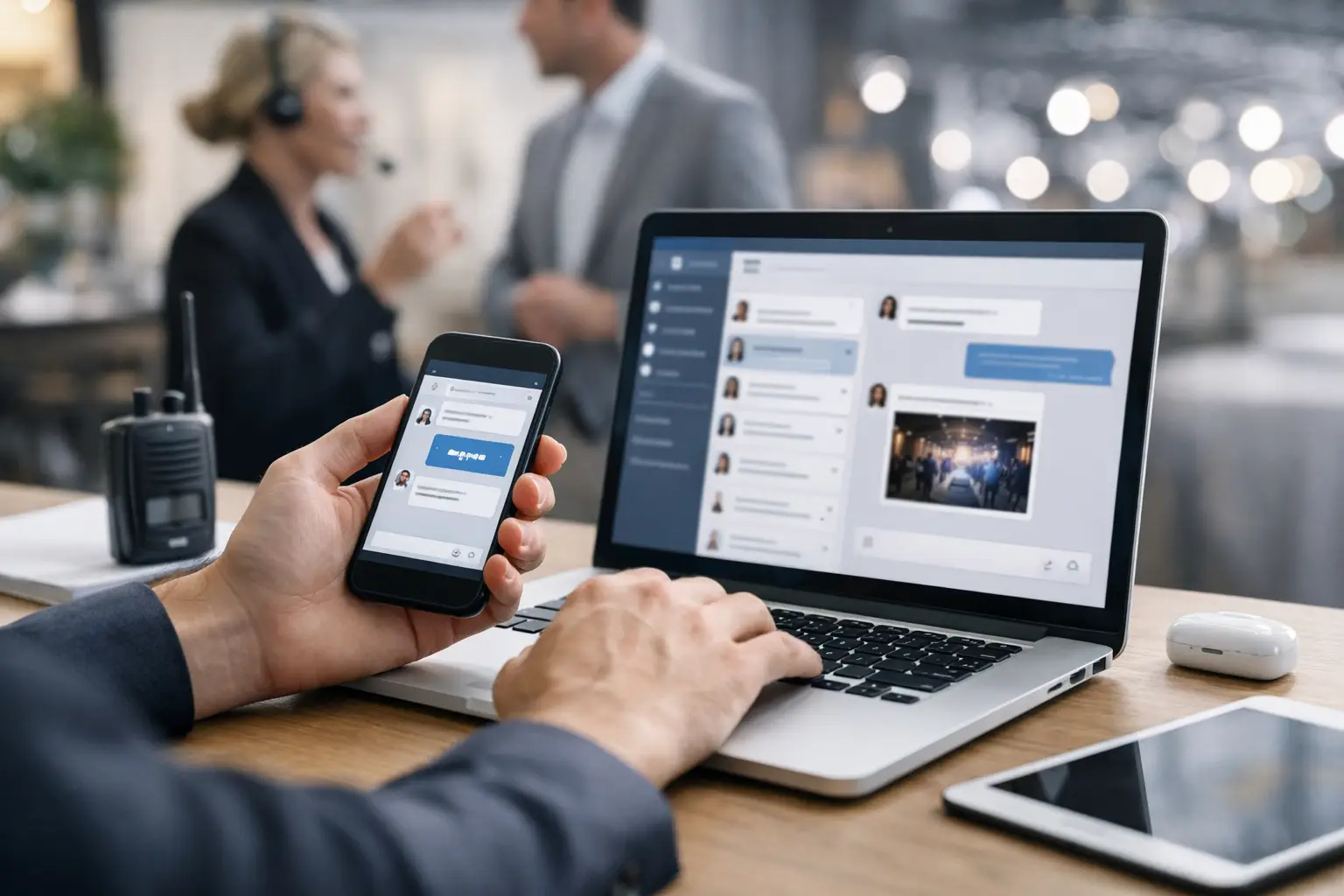
A guest messaging software review should not begin with a feature checklist. It should begin with a business question: can this platform help your venue turn a guest interaction into a repeat visit, a direct booking, a loyalty enrollment, or a measurable campaign audience? For hotels, restaurants, retailers, hospitals, transportation operators, and public venues, the right answer depends on how well the software connects guest communication with first-party data and on-site behavior.
Many platforms can send a text or confirm a reservation. Fewer can capture permission-based guest data through Wi-Fi, segment visitors by location or visit patterns, and continue the conversation through email, SMS, WhatsApp, and remarketing audiences. That distinction matters when paid acquisition costs keep climbing and a large share of customer traffic is already walking through your doors.
What Guest Messaging Software Should Actually Do
Guest messaging software is often evaluated as a communications tool. That is only part of the job. A useful platform should support the full customer journey, from the first connection or inquiry to post-visit follow-up and reactivation.
For a hotel, this may mean sending pre-arrival information, answering common questions on WhatsApp, promoting late checkout, and requesting a review after departure. For a restaurant, it could mean welcoming a guest onto Wi-Fi, offering a return-visit incentive, and identifying customers who have not returned in 60 days. In retail, the focus may shift toward store-specific campaigns, new product alerts, and building audiences for paid social remarketing.
The strongest systems make these interactions operationally practical. They centralize communication, retain guest consent records, use templates and automation rules, and give managers visibility into campaign performance. Without those foundations, messaging becomes another manual task for an already busy front-line team.
The Core Criteria in a Guest Messaging Software Review
A credible guest messaging software review needs to assess outcomes, not just channels. A platform that supports email, text, and WhatsApp may look complete on paper, but it will underperform if it cannot identify who the guest is, why they should receive a message, and what action the business wants them to take.
First-Party Data Capture and Consent
Start with the source of your data. Reservation systems and point-of-sale platforms provide valuable information, but they do not always capture every walk-in visitor or explain how often a person visits across locations. Guest Wi-Fi can fill that gap when the captive portal is configured to collect consented contact details and relevant preference data.
Look for flexible login options, branded captive portal pages, consent language controls, and a clear process for collecting and storing opt-ins. The goal is not to collect every possible field. It is to gather enough accurate information to build usable guest profiles without creating friction at sign-in.
This is particularly valuable for venues with high walk-in traffic. A mall, café group, airport lounge, or hotel lobby may have thousands of visitors who never complete a transaction or reservation that feeds into a CRM. Wi-Fi-based data capture provides a way to recognize that traffic and market responsibly after the visit.
Automation That Matches the Guest Journey
Automated messaging should reduce repetitive work while making communications more relevant. Basic automation includes welcome messages, booking confirmations, review requests, and birthday offers. More advanced workflows respond to behavior: first-time connection, repeat visitation, extended dwell time, abandoned booking activity, or a guest who has not returned within a defined period.
Evaluate how easily your team can build these workflows. A marketing manager should be able to set campaign triggers, audience criteria, timing, and message content without waiting on a developer. At the same time, the platform should allow central teams to maintain brand standards across multiple locations.
Automation needs restraint. A restaurant guest who connected to Wi-Fi once should not receive three promotions in a week. Frequency controls, suppression rules, and channel preferences are as important as the ability to send more messages. Good software helps your team protect the customer relationship, not exhaust it.
Two-Way Messaging and Intelligent Concierge Support
One-way promotions can drive offers and repeat visits, but many guest interactions require a response. Hotels may receive questions about check-in, parking, amenities, or local recommendations. Hospitals and transportation venues may need to share practical information quickly. Restaurants may need to manage waitlists, menu questions, or private-event inquiries.
Two-way messaging becomes more valuable when it includes routing, response templates, business hours, and escalation to a human team member. An intelligent customized concierge that communicates through WhatsApp can handle common questions at scale while preserving a personal service experience. The key is to define its scope clearly. Automation should solve predictable requests, while staff should take over when a guest needs judgment, reassurance, or an exception.
Segmentation Beyond a Contact List
A contact database is not automatically a marketing asset. Segmentation is what turns it into one. In your review, ask whether the system can distinguish first-time visitors from regulars, guests by location, visitors by time of day, customers who engaged with a campaign, and audiences that have gone inactive.
For multi-location brands, location-level segmentation is essential. A national promotion may be appropriate for a retail chain, while a local restaurant promotion needs to reflect the guest’s nearest venue. Hotels may segment by property, booking status, stay history, or loyalty tier. The more closely a message reflects the guest’s real relationship with the business, the more likely it is to earn attention.
Integrations Determine Whether Data Becomes Action
Guest messaging software does not need to replace every system you already use. It does need to connect to the systems that shape the guest experience and marketing workflow. Depending on your industry, that may include property management systems, reservation platforms, CRM tools, point-of-sale data, email platforms, customer data systems, and advertising pixels.
Ask practical questions during evaluation. Can the platform pass customer data into your CRM? Can it build audiences for Facebook and Google advertising? Can it trigger follow-up communications based on Wi-Fi activity or venue visits? Can it support data exports if your team uses a separate analytics environment?
Integration depth is a trade-off. A simple standalone messaging platform may launch quickly but create another data silo. A highly customized deployment can connect more systems but may require more planning, configuration, and support. The right choice depends on your current stack and whether your priority is speed, unified customer visibility, or both.
Wifi Marketing approaches this through an integrated Wi-Fi marketing model: branded access, guest data capture, automated outreach, and remarketing capabilities are designed to work as one operational channel rather than as separate tools.
Reporting: Measure Revenue Signals, Not Message Volume
Open rates and delivery rates are useful health checks, but they are not the final measure of performance. A strong reporting layer should show how campaigns influence the actions that matter to your business: return visits, offer redemptions, booking inquiries, direct sales, loyalty sign-ups, and audience growth.
For physical locations, visit-based reporting is especially valuable. If a campaign targets guests who have not visited in 45 days, your team should be able to see whether those guests return after receiving the message. If a captive portal campaign promotes a loyalty program, track sign-ups by location and compare performance across venues.
Do not expect perfect attribution in every case. A guest may see an email, return a week later, and make an untracked purchase. Still, the platform should provide enough campaign and audience data to make informed decisions about what to repeat, adjust, or stop.
Deployment and Support Matter More Than Most Buyers Expect
Guest messaging projects often fail at the operational level, not the strategy level. Weak Wi-Fi coverage, inconsistent hardware configuration, unclear staff ownership, or poorly designed consent flows can undermine an otherwise capable platform.
For that reason, review the provider’s implementation model. Determine who configures hardware, designs the captive portal, connects integrations, trains teams, and provides support after launch. Businesses with multiple properties or older network infrastructure may benefit from a provider that can support remote configuration and work across multi-brand hardware environments.
Marketing agencies and technology integrators should also consider partner readiness. Can the platform be deployed consistently across client accounts? Are branding, reporting, permissions, and campaign templates manageable at scale? A tool that works for one location but creates manual work for 50 clients is not a durable service offering.
The Best Choice Depends on Your Commercial Goal
There is no universal winner in guest messaging software. A boutique hotel may prioritize two-way WhatsApp service and pre-arrival automation. A quick-service restaurant group may care more about Wi-Fi data capture, win-back campaigns, and location-level reporting. A retail operator may place the highest value on building permissioned audiences for email and paid-media remarketing.
Use the review process to identify the revenue problem you want to solve first. If repeat visits are low, focus on segmentation and reactivation. If you lack customer data from walk-ins, prioritize captive portal capture and consent management. If staff are overwhelmed by routine questions, assess intelligent concierge workflows and escalation tools.
The most effective guest messaging platform is the one your team can deploy, measure, and improve week after week. Treat guest Wi-Fi and messaging as connected parts of a customer communication system, and every on-site visit has a better chance of becoming a relationship your business can continue to grow.
Comments are closed