
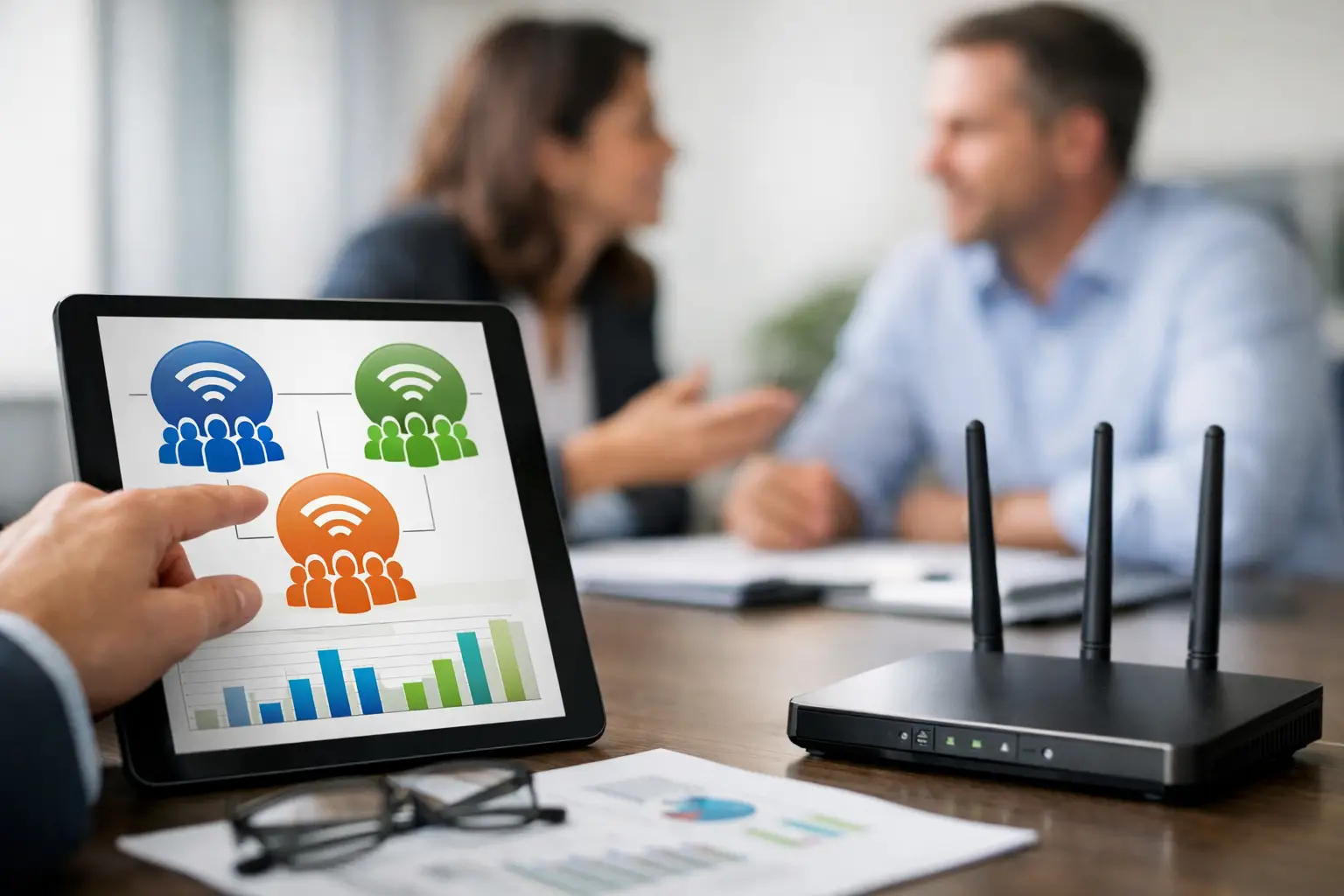
A guest connects to your Wi-Fi, enters an email, and walks your store, hotel, or venue for 22 minutes. If that person gets the same follow-up message as every other visitor, you are wasting valuable intent data. The real opportunity in how to segment WiFi audiences is not collecting more contacts. It is turning on-site behavior into targeted communication that improves conversion, retention, and marketing efficiency.
For most physical businesses, guest Wi-Fi is one of the few channels that connects foot traffic with first-party data. That matters more now because paid media costs keep rising and anonymous visits are harder to monetize. When segmentation is done well, your Wi-Fi network stops being a utility and starts functioning like a performance marketing asset.
Why segmentation matters in WiFi marketing
Not every Wi-Fi user has the same commercial value. A first-time cafe visitor, a hotel guest staying three nights, and a shopper who visits every Saturday should not enter the same campaign flow. Segmentation helps you match the message to the visit pattern, location, and likely intent.
That has practical implications. Your welcome message becomes more relevant. Your remarketing audiences become cleaner. Your email and SMS campaigns produce better response rates because they reflect actual customer behavior instead of broad assumptions. In many cases, segmentation also reduces waste by limiting promotions to the people most likely to respond.
There is a trade-off, though. More segmentation is not always better. If you create too many micro-audiences without enough volume, reporting gets messy and campaigns lose momentum. The goal is not complexity for its own sake. The goal is commercially useful groups that support clear action.
How to segment WiFi audiences in a way that drives results
The best place to start is with the business question, not the data field. Ask what outcome you want to improve. Are you trying to increase repeat visits, lift average order value, promote premium services, reduce churn, or reactivate dormant customers? Your segments should answer those goals directly.
For most venues, five practical segmentation layers create the strongest foundation.
Segment by visit frequency
Frequency is one of the clearest signals of customer value. People who visit once behave differently from people who return consistently. A first-time visitor may need an introductory offer or simple brand education. A repeat visitor may respond better to loyalty messaging, VIP perks, or personalized recommendations.
This is especially useful in restaurants, retail, and hospitality. If a visitor has connected three or more times in 30 days, that person likely belongs in a retention or upsell campaign rather than a generic acquisition sequence. On the other hand, a user who connected once and never returned may need a reactivation message with a stronger incentive.
Segment by dwell time
Time spent on-site can reveal intent and engagement. Someone who connects briefly in a transit hub is different from someone who stays 90 minutes in a restaurant, dealership, or clinic. Longer dwell times can suggest deeper consideration, higher-value interactions, or stronger brand engagement.
This data becomes even more useful when paired with venue type. In retail, long dwell time may indicate active browsing and a higher chance of purchase. In hospitality, it may align with guest experience and amenity usage. In healthcare or public venues, it can help separate pass-through traffic from real visitors.
Dwell time should be used carefully, though. It is a directional indicator, not a perfect measure of purchase intent. A long stay can mean interest, but it can also reflect waiting time or operational delays. That is why it performs best when combined with other attributes.
Segment by location or venue
Multi-location businesses often miss one of the most valuable forms of segmentation: where the connection happened. A chain restaurant in an airport serves a different audience from one in a suburban shopping center. A hotel group may see different guest behavior by property tier, region, or travel pattern.
Location-based segmentation helps operators tailor campaigns to local demand, store performance, and customer context. It also helps agencies and multi-brand operators standardize reporting while keeping promotions relevant at the site level. If one location attracts high-frequency regulars and another relies on occasional visitors, the messaging strategy should reflect that difference.
Segment by customer profile data
A captive portal can collect more than an email address. Depending on your setup and compliance approach, you may capture name, phone number, birthday, language preference, loyalty status, or stated interests. This turns Wi-Fi access into a practical first-party data source for personalization.
The key is restraint. Every extra field creates friction. If your login form asks for too much, completion rates can drop. For high-volume venues, a lighter capture flow often performs better. For premium environments such as resorts, healthcare, or membership-based spaces, customers may accept richer forms if the value exchange is clear.
Segment by campaign source or acquisition path
Not all Wi-Fi users enter the funnel the same way. Some connect through an in-store QR code. Some arrive after seeing a social ad. Some are prompted by staff, and others are returning guests who recognize the network. Tracking the acquisition path gives you a stronger view of which marketing sources are producing quality foot traffic and better downstream engagement.
This matters because the same contact count can hide very different outcomes. Two audiences may each generate 500 Wi-Fi sign-ins, but one may convert into repeat visits at twice the rate. Segmenting by source helps you allocate budget with more confidence.
Build segments around actions, not just attributes
A common mistake is creating static audience groups that never trigger anything useful. Good segmentation should lead directly to an action. If a visitor falls into a repeat-guest segment, what happens next? If someone has not connected in 45 days, do they enter a win-back campaign? If a high-dwell-time shopper visited a specific location twice in a month, should they receive a tailored product promotion?
This is where automation matters. Segments become far more valuable when they feed email, SMS, WhatsApp, and ad remarketing workflows in real time. Instead of exporting lists manually, you can move users into campaigns based on actual visit behavior. That shortens the gap between the on-site event and the follow-up message, which usually improves relevance and response.
For example, a hotel can identify returning guests and deliver pre-arrival or concierge messaging through WhatsApp. A retailer can trigger a bounce-back promotion to visitors who browsed but have not returned. A restaurant group can separate lunch regulars from weekend customers and promote the right offer to each audience.
How to keep WiFi audience segmentation useful
If you want segmentation to hold up over time, keep it tied to reporting. Every segment should be measurable against a business outcome such as repeat visit rate, campaign conversion, average spend, or reactivation performance. If a segment is not improving decisions or revenue, it probably does not need to exist.
It also helps to review segment logic regularly. Customer behavior changes by season, by location, and by business model. What works for a boutique hotel may not work for a quick-service restaurant. What performs during peak travel periods may lose value in quieter months. Segmentation should evolve with operations, not sit frozen in a dashboard.
Privacy and consent also matter. Wi-Fi marketing works best when customers understand the value exchange and data use is handled responsibly. Clear opt-in language and compliant workflows protect both customer trust and long-term campaign performance.
A practical model for how to segment WiFi audiences
If you are building from scratch, start simple. Create a core framework with new visitors, repeat visitors, lapsed visitors, high-dwell visitors, and location-based audiences. Then connect each segment to one campaign objective. This gives you enough structure to improve targeting without overengineering the system.
As your data volume grows, you can add more nuance. Layer in profile data, preferred location, visit recency, and channel preference. At that stage, the Wi-Fi network becomes more than a sign-in tool. It becomes a reliable source of first-party behavioral data that supports lower acquisition costs and stronger customer retention.
That is where the commercial value compounds. Businesses stop sending generic promotions and start communicating based on real-world behavior. For operators with multiple venues, or agencies managing campaigns across clients, that shift creates a cleaner path from physical visit to measurable marketing action. Platforms like Wifi Marketing make that process easier by combining captive portal data capture, audience segmentation, automation, and real-time messaging in one operating layer.
The smartest segmentation strategy is usually not the most complicated one. It is the one your team can actually use every week to drive better campaigns, clearer reporting, and more revenue from traffic you already have.
Comments are closed